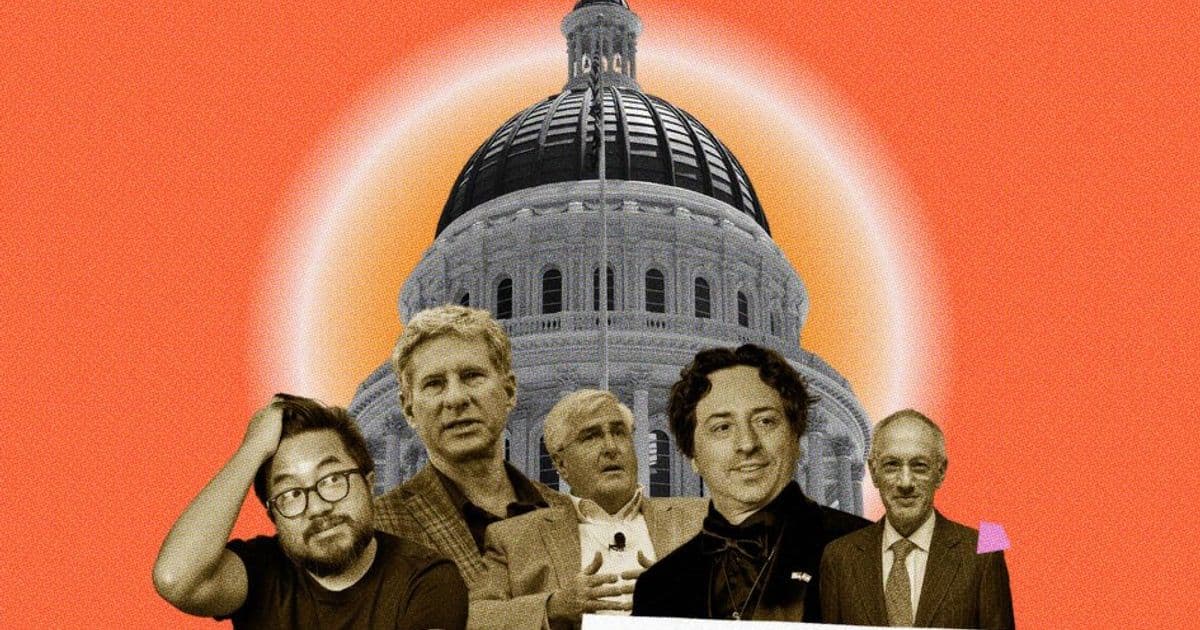
Tech titans organized in secret Signal chats, backed losing candidates, and spent millions trying to kill a wealth tax. The effort exposed their inexperience in politics.
A coalition of California's wealthiest tech executives spent eight months trying to stop a proposed 5% tax on their net worth. They organized secret chats, backed political candidates, and poured money into new PACs. Their efforts failed at nearly every turn.
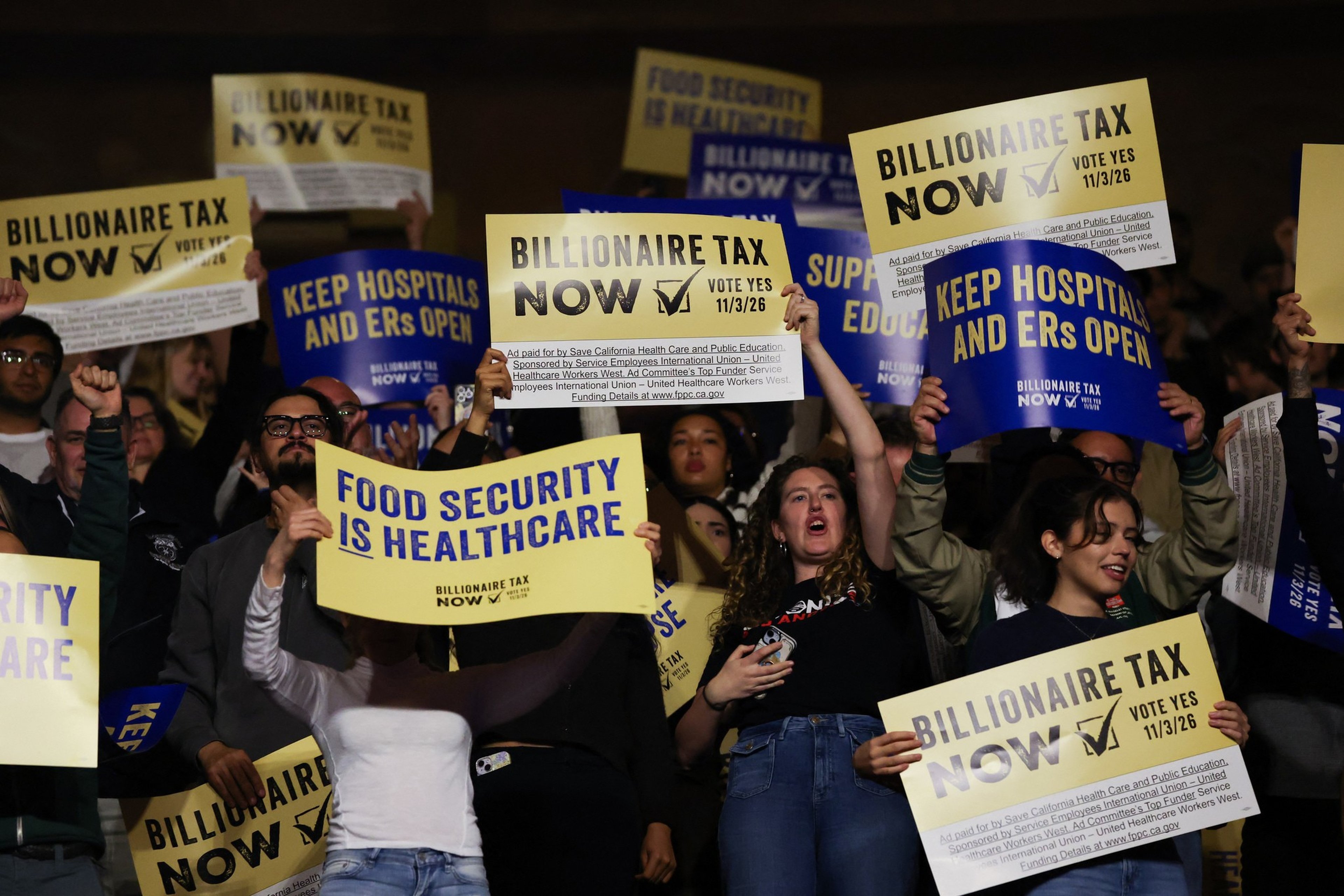
The SEIU United Healthcare Workers West union launched the Billionaire Tax Act campaign in fall 2025. The measure would tax 5% of the net worth of roughly 200 billionaires, with proceeds directed toward healthcare funding. The union collected 1.6 million signatures, almost double what was needed to qualify for the November ballot.
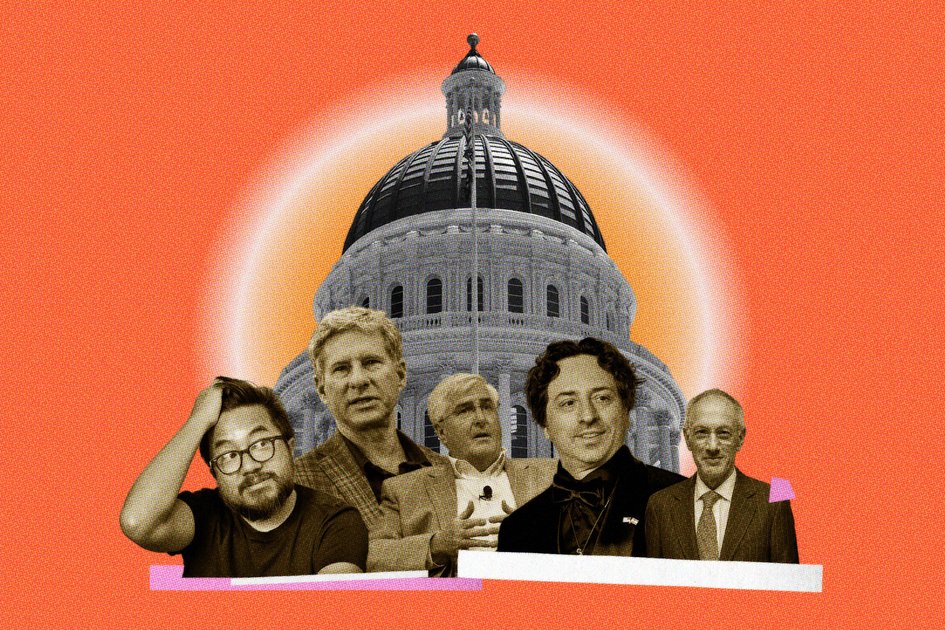
The tech industry's response played out in a Signal group chat that read like a Forbes list. Google cofounder Sergey Brin, venture capitalist Marc Andreessen, Y Combinator CEO Garry Tan, Stripe CEO Patrick Collison, and Ripple cofounder Chris Larsen were among the participants. Some contributed actively. Others never spoke.
At one point, a participant floated an idea that captured the group's thinking: buy the signature-collecting company the union used and shut down the operation. "That's what you would do in business: If there's an impediment, just buy it," one person familiar with the chat said.
The proposal went nowhere. What followed was a series of strategies that Silicon Valley donors brought from the startup world into Sacramento. None of them worked as planned.

Ron Conway, the longtime Democratic donor, was among the first to act. He gave $100,000 in November to Stop the Squeeze, a group run by Governor Gavin Newsom's advisers. In an email to allies, Conway called the tax "devastating" and argued it would drive out high net worth individuals, jobs, and investment.
Conway's peers stayed quiet publicly until December, when Representative Ro Khanna tweeted in defense of the tax and mocked billionaires fleeing the state. "I will miss them very much," Khanna wrote sarcastically.
The tweet from Khanna, who had previously received support from Andreessen, Conway, and former Google CEO Eric Schmidt, triggered a response. Garry Tan fired back: "Passing this tax will destroy innovation in California." All-In podcast host Jason Calacanis called it "confiscating 5% of people's assets." Fellow host David Friedberg added, "why stop with billionaires?! why stop at 5%?!"
Khanna's office received dozens of angry texts, calls, and emails from Silicon Valley figures. Some offered jobs to Khanna's chief political strategist, Cooper Teboe, to undermine the congressman's fundraising.
The donors also began recruiting candidates. Evan Low, a former California assemblymember, said multiple tech founders and venture capitalists approached him with promises of $15 million in funding if he would challenge Khanna in the primary. Low declined.
The tech elite found a willing candidate in Ethan Agarwal, a tech founder and political unknown, who agreed to switch races for governor. Within weeks, Tan, Armstrong, Conway, and Blake Byers all contributed the maximum to his campaign. All-In host Chamath Palihapitiya cohosted fundraisers at the Atherton home of Sacramento Kings owner Vivek Ranadivé.
Around the same time, members of the Signal chat began promoting Matt Mahan, the moderate mayor of San Jose, as their preferred candidate for governor. They discussed how to convince Mahan to enter the race and how to support him once he did. Eric Jaye, Mahan's former campaign director, called it a "loosely organized recruitment campaign" of tech donors.
By late January, Mahan had entered the race. He collected donations from Moritz, Brin, Collison, and Netflix cofounder Reed Hastings. Mahan rejected the idea that billionaire funding drove his decision. "I launched my campaign when it became clear to me that no one else was going to run on the things we need to be successful in San Jose and across California," he said.
Jaye said the money talk was "clearly part of the calculation." Another political consultant was blunter: "He was clearly led into the race by the siren song of billionaire money that swore it was going to be there for him."
Meanwhile, tech leaders tried building political infrastructure. Larsen, Armstrong, and others contacted consultants behind Fairshake, the crypto PAC that scored legislative wins in the 2024 election cycle. The team launched Golden State Promise, a PAC with a $30 million fundraising goal. It raised $10 million from a single donor, Larsen.
Other groups proliferated. Building a Better California, seeded with $25 million from Brin, launched ballot initiatives aimed at invalidating the tax. California Renewal, backed by Mehta and other venture capitalists, promised to build a lasting counterforce to the labor movement. The California Business Roundtable, a 50-year-old institution, began fundraising aggressively.
The proliferation created coordination problems. Two donors tried organizing a Zoom call where all the groups would pitch their strategies, with participants appearing on black screens to maintain privacy, "like an episode of 'Shark Tank' in the dark." The idea was scrapped over concerns about press leaks.
The groups also disagreed on tactics. Golden State Promise ran attack ads immediately. Building a Better California refused to take a public stance, sponsoring ballot initiatives that would invalidate the tax if passed. The groups even argued over terminology: Golden State Promise used "billionaire tax" while Building a Better California preferred "wealth tax."
Then came the primaries. Mahan, the tech donors' candidate for governor, earned 3.7% of the state vote and conceded immediately. Agarwal, the challenger to Khanna, finished fourth with 6.5% of the vote, behind two Republicans.
"Many of them are bold, and their tactics are stupid," Teboe said of the billionaire donors. "They're trying to deploy the same tactics they've used in business into politics. None of it has worked, because they don't know what they're doing."
The fight continues. The state Legislature has until June 25 to negotiate a compromise that would remove the tax from the ballot. Newsom has been working to round up opposition groups. Three healthcare groups and the California Teachers Association have publicly denounced the initiative.
Public support for the measure sits at roughly 50%, leaving it vulnerable to well-funded opposition. The defeat of San Francisco's Proposition D, a tax on companies that pay their CEOs significantly more than their workers, suggests limits to California's appetite for taxing the rich.
Building a Better California has raised more than $100 million, mostly from Brin, but also from Moritz, Collison, DoorDash CEO Tony Xu, and John Doerr. The group qualified two counter-initiatives for the ballot just days after the union qualified the Billionaire Tax Act.
The last eight months produced one outcome the tech donors did not plan: they are now embedded in California politics. They have experience building political organizations, hiring Sacramento consultants, and recruiting candidates. Whether or not the tax passes, that network persists.
"We're going to have a new political era with a new governor and with all these billionaires involved," one strategist said. "If there's a way that Building a Better California can make this permanent, they have now solidified their real estate in the new political world."
Comments
Please log in or register to join the discussion