
Croatia wants Rijeka to move from regional port to strategic Adriatic gateway, and the numbers show why tech supply chains should pay attention.
Business news
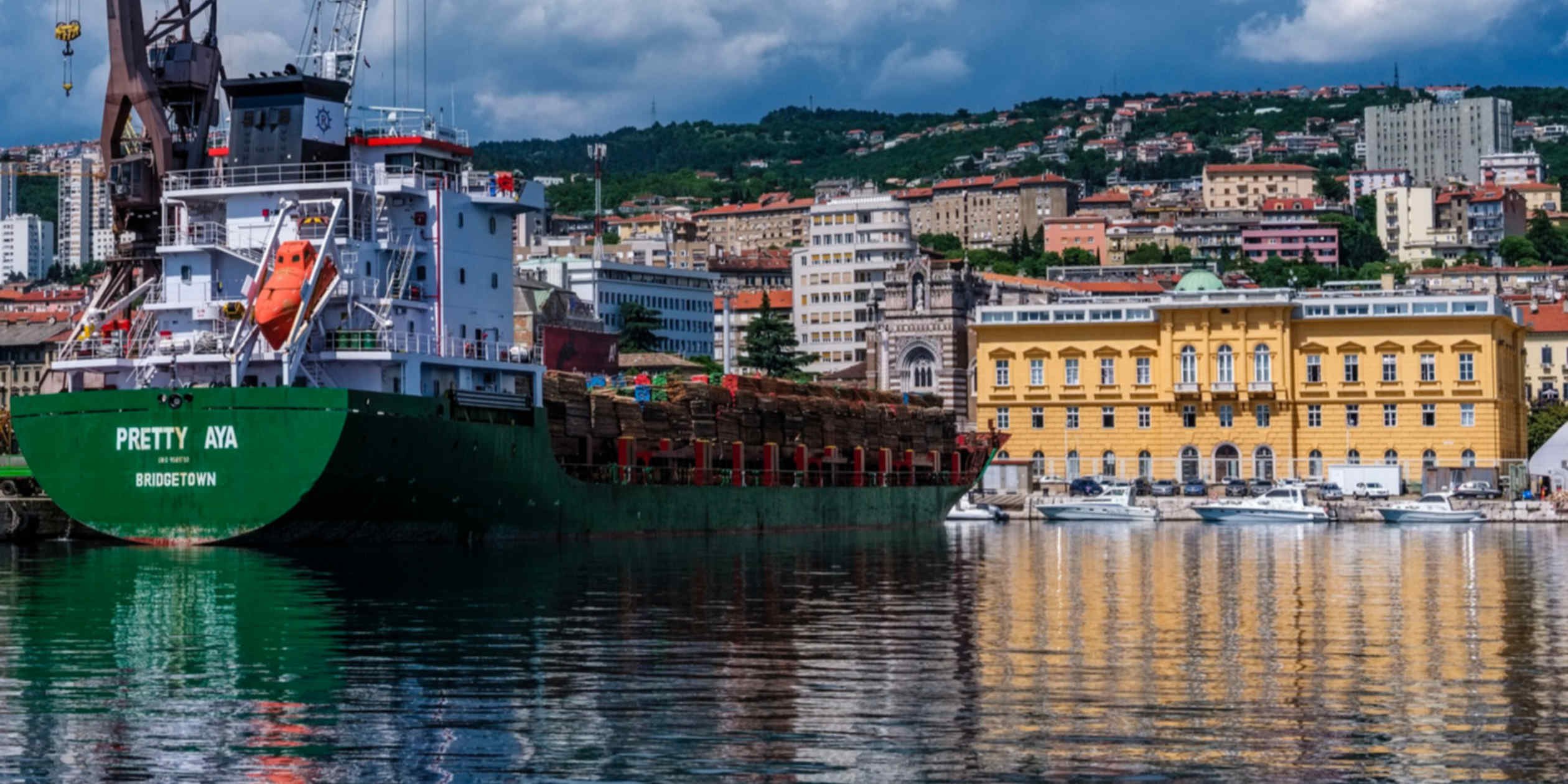
Croatia is positioning the Port of Rijeka as a higher-capacity maritime gateway between Asia and Central Europe, with Deputy Prime Minister Oleg Butkovic telling Nikkei Asia that the country plans terminal upgrades that would sharply expand container handling on the northern Adriatic.
The core business point is capacity. Rijeka is not merely adding marginal dock space. The plan described by Croatia would quintuple handling capacity at the container terminal, turning the port into a more credible alternative for cargo moving between Asian manufacturing centers and inland markets such as Hungary, Austria, Slovakia, Czechia, southern Germany and the western Balkans.
The main asset behind the strategy is Rijeka Gateway, the Zagreb Deep Sea Container Terminal operated by APM Terminals and Croatia's ENNA Logic. Publicly reported terminal specifications point to a first-phase annual capacity of roughly 600,000 TEU, with a second phase that could take the site above 1 million TEU. The terminal is designed for the largest container vessels, with capacity for ships of up to 24,000 TEU, which matters because direct ocean calls reduce reliance on smaller feeder networks and can improve schedule economics for high-volume shippers.
For Croatia, the commercial model is also long term. The Rijeka Gateway concession has been structured around a multi-decade operating horizon, giving the private operators an incentive to invest in equipment, crane productivity, yard systems and rail-linked hinterland services rather than treating the port as a short-cycle infrastructure project. That makes the port relevant not only to shipping lines, but also to electronics distributors, automotive suppliers, battery manufacturers and cloud hardware buyers that increasingly evaluate logistics resilience as part of procurement cost.
Market context
Rijeka's pitch lands at a time when Europe's supply chains are being repriced. Asian exports to Europe still depend heavily on large maritime gateways in northern Europe, including Rotterdam, Antwerp-Bruges and Hamburg. Those ports benefit from scale, deep carrier relationships and dense inland networks. The drawback is distance. For cargo ultimately bound for Central and Eastern Europe, routing through the North Sea can add inland kilometers, congestion exposure and time.
The Adriatic route offers a different equation. A container unloaded at Rijeka can move north by rail or road toward Zagreb and then into Hungary, Austria and other Central European markets. The European Commission's Mediterranean Corridor already recognizes Rijeka and Zagreb as part of a branch linking the Adriatic to Budapest and wider European freight networks. That matters because port growth is only valuable if inland transport can absorb the volume.
This is where the technology sector fits. The most visible products in Asia-Europe trade are not only apparel or household goods. They include servers, networking gear, consumer electronics, industrial controls, EV components, solar equipment and battery materials. These products have different logistics profiles, but they share a common business problem: inventory is expensive, delay risk is costly and supply chain visibility has become a board-level issue after years of pandemic disruption, Red Sea shipping risk, U.S.-China trade controls and European industrial policy shifts.
A larger Rijeka gives shippers another routing option. For a hardware company assembling in Hungary or Slovakia, or a distributor serving Central Europe, a southern European gateway can reduce dependence on northern ports. That does not automatically make Rijeka cheaper on every lane. Port fees, rail frequency, customs processing, vessel schedules and carrier contracts decide the real landed cost. But scale changes the negotiation. Once a terminal can handle hundreds of thousands of TEU annually and accommodate larger vessels, shipping lines have a stronger case for direct services, and cargo owners have more credible options when tendering logistics contracts.
The financial implications extend beyond port revenue. A fivefold capacity expansion can pull investment into warehousing, customs brokerage, rail terminals, trucking fleets, cold storage, maintenance services and digital freight systems. For Croatia, the multiplier is the prize. The port itself earns handling income and concession-linked payments, but the broader economic value comes from becoming a logistics control point between Asian exporters and European industrial buyers.
What it means
Rijeka's rise should be read as part of a broader reordering of trade infrastructure, not as a single-port story. Central Europe has become more important to manufacturing, especially in autos, electronics, batteries and industrial equipment. Asian suppliers want access to that demand without being tied to one congested route. European buyers want optionality because freight disruption now carries direct working-capital costs.
For technology companies, the strategic question is not whether Rijeka replaces Rotterdam or Hamburg. It will not. The question is whether Rijeka becomes a meaningful secondary route that improves resilience and price discovery. In supply chain terms, that can be valuable even before it captures dominant market share. A company that can route some Asian inbound freight through the Adriatic gains a hedge against northern port congestion, labor disruption, low-water constraints on inland waterways or carrier schedule changes.
The terminal's size targets are also significant because container logistics has strong scale effects. A small port can serve regional demand, but it struggles to attract frequent large-vessel calls. A 600,000 TEU terminal is a different commercial proposition. A path toward more than 1 million TEU puts Rijeka closer to the threshold where carriers, freight forwarders and large cargo owners can build repeatable service patterns rather than opportunistic shipments.
The constraint is execution. Ports do not become hubs through quay capacity alone. Rijeka needs inland rail reliability, competitive dwell times, digital customs processing, predictable labor availability and enough return cargo to keep carrier economics balanced. If containers arrive full from Asia but leave empty, the route becomes less attractive. If rail slots into Hungary and beyond are limited, the port becomes a bottleneck rather than a gateway.
Competition will also be direct. Slovenia's Koper and Italy's Trieste already serve Central European cargo flows and have established relationships with shipping lines and inland rail operators. Rijeka's advantage is not guaranteed by geography. It must be earned through service frequency, cost discipline and operational performance.
Still, Croatia's move is commercially logical. The tech sector's physical supply chain is becoming more regionalized at the destination end, even while production remains heavily Asian. More assembly, packaging, distribution and after-sales operations are being placed closer to European customers. That increases the value of ports that can connect Asian ocean freight with Central European inland nodes quickly and at scale.
The market signal is clear: infrastructure once treated as background plumbing is now part of competitive strategy. Croatia is trying to turn Rijeka into that kind of asset. If the capacity buildout is matched by rail and terminal performance, the port could become a more important route for the hardware economy that sits behind AI data centers, connected vehicles, factory automation and consumer electronics across Europe.
Comments
Please log in or register to join the discussion