
Kimi’s credit card is less a new model than a distribution and metering experiment: turn everyday card spend into AI compute credits, then see whether agent usage becomes as habitual as cashback.
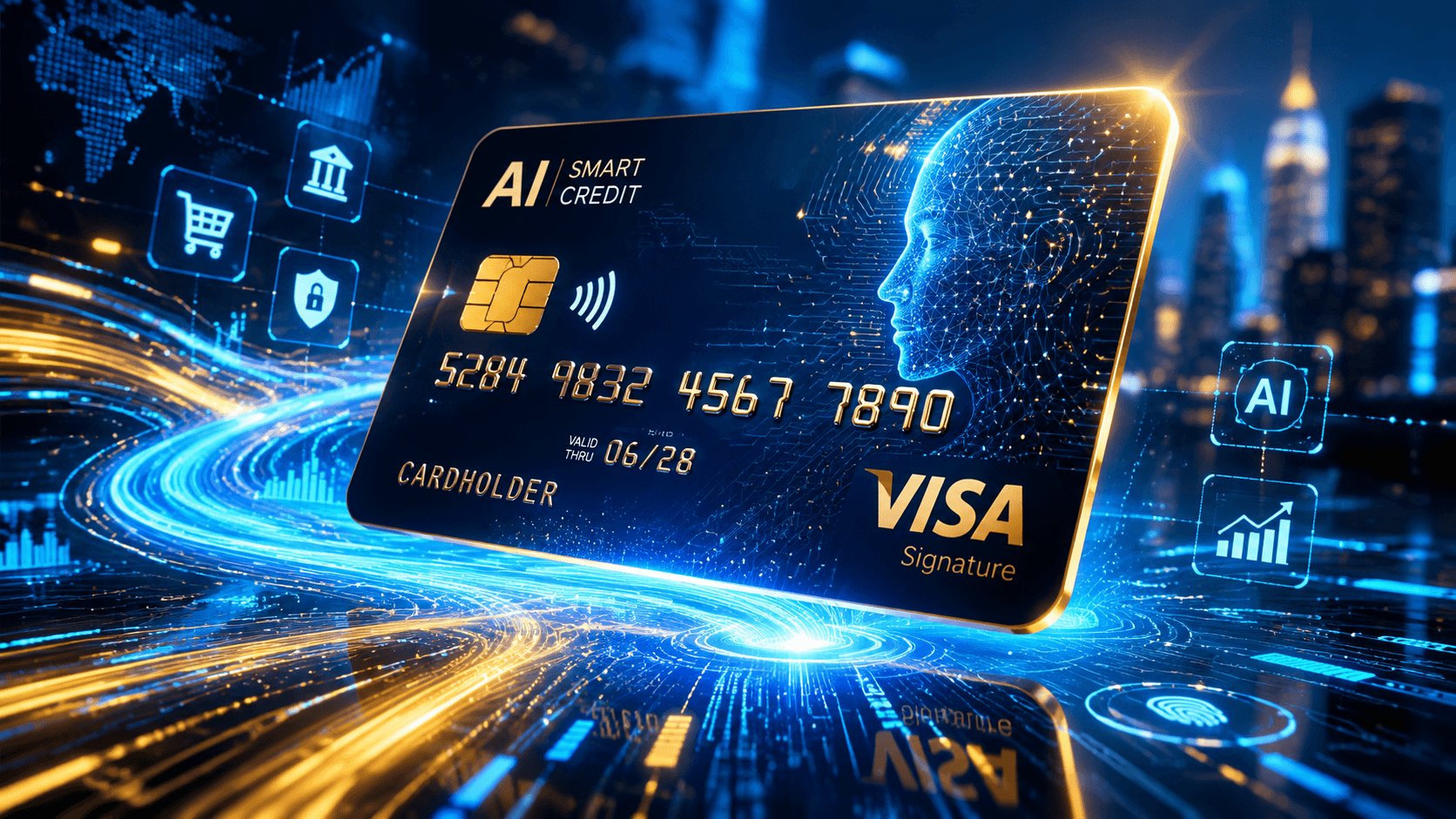
Moonshot AI’s Kimi is taking a familiar consumer finance mechanic, credit card rewards, and pointing it at a much newer scarcity: access to AI inference. According to the announcement reported by Pandaily, the Kimi Credit Card lets users earn AI compute credits from purchases, then redeem those credits for Kimi Agent usage quotas, premium feature access, priority service during peak periods, and early access to new Kimi models.
What's claimed
The headline claim is that Kimi and a large Chinese state-owned bank have launched the world’s first AI-native credit card. The card is described as a physical credit product where AI services are not an add-on promotion but the central membership benefit. Instead of airline miles, hotel points, or cashback, spending generates AI compute credits that flow into a user’s Kimi account.
That framing matters because it shifts AI from software subscription to financial reward currency. If the card works as described, a user could buy groceries, pay bills, or book travel, then receive credits usable for agent runs inside the Kimi ecosystem. The practical rewards listed are concrete: more Agent task capacity, premium features, priority access during high-demand periods, and beta access to newer model releases.
Moonshot’s product context makes the offer easier to understand. Kimi is no longer only a chat interface. The official Moonshot AI site presents Kimi around agents, coding, documents, slides, spreadsheets, deep research, and API access. The Kimi API platform currently lists models including K2.7 Code, K2.6, and K2.5, with per-token pricing exposed to developers. That pricing layer is what makes compute credits plausible as a rewards unit. Inference already has a meter. The credit card simply wraps that meter in a consumer loyalty program.
The more aggressive claim is strategic: Kimi is trying to make AI usage feel like a default part of daily life. A conventional subscription asks users to decide that an AI service is worth paying for every month. A rewards card changes the psychology. The user spends as usual, receives credits as a byproduct, and then has a reason to return to Kimi to use those credits before they expire or become less valuable.
What's actually new
The technical novelty is not in the model. The announcement does not introduce a new architecture, training run, benchmark suite, context window, tokenizer, or inference method. There is no evidence in the provided announcement that the card changes Kimi K2.6, K2.7 Code, or any other model’s capability.
What is new is the packaging of inference as a rewards asset. Compute is being treated like a consumer loyalty currency. That is not a small business-model detail. For agent products, marginal usage cost is real. A multi-step agent can call a model repeatedly, search the web, inspect files, invoke tools, generate artifacts, retry failures, and keep context alive across a workflow. Compared with a single chatbot answer, agent usage burns more tokens and more infrastructure time. If Kimi wants users to run agents for research, document generation, coding, or financial analysis, it needs a way to normalize higher consumption.
A credit card rewards loop helps with three hard problems in AI product adoption.
First, it reduces sticker shock. Paying directly for agent quotas can feel abstract, especially when users do not yet know which tasks are worth delegating. Rewards credits make experimentation cheaper from the user’s point of view, even though someone still pays the inference bill through interchange economics, bank marketing spend, user fees, or Moonshot subsidy.
Second, it creates a reason to centralize usage. If credits only redeem inside Kimi, the reward system nudges users toward Kimi’s app, Kimi Agent, and the Kimi API rather than rival assistants. That is the same retention logic behind airline miles, but applied to model access.
Third, it connects AI usage to identity and payments. A bank-issued card gives the AI platform a distribution partner, a compliance-heavy onboarding channel, and potentially richer segmentation. That does not mean Kimi receives raw transaction data, and the announcement does not prove such sharing. It does mean the product sits at the intersection of finance, identity, and compute allocation, which is more commercially interesting than the phrase “AI-native credit card” might suggest.
The model backdrop is relevant, but it should not be confused with the credit card itself. Kimi’s recent model line is aimed at long-context, multimodal, and agentic workflows. The Kimi K2.6 technical blog claims K2.6 supports open-source coding, long-horizon execution, and agent swarm capabilities. Its published benchmark table reports Kimi K2.6 at 54.0 on Humanity’s Last Exam with tools, 83.2 on BrowseComp, 92.5 F1 on DeepSearchQA, 58.6 on SWE-Bench Pro, 80.2 on SWE-Bench Verified, and 89.6 on LiveCodeBench v6. Those are model claims, not credit card claims, but they explain why Kimi would want a consumer mechanism that drives repeated agent usage.
The API docs also show the direction of travel. Kimi K2.6 supports text, image, and video input, thinking and non-thinking modes, agent tasks, and a 256K context window across several Kimi model variants. Kimi K2.7 Code is positioned as Kimi’s strongest coding model, with long-context instruction following, multi-step tool invocation, and coding workflows across Rust, Go, Python, frontend work, DevOps, and performance optimization.
Those details matter because the credit card’s value depends on what the credits can buy. If credits only bought short chatbot responses, the product would be a novelty. If they buy long-running agent work, code editing, deep research, document analysis, or spreadsheet automation, the card becomes a way to subsidize expensive workflows that users might otherwise ration.
A practical example: a Kimi user who receives compute credits from card spending might apply them to a research workflow that reads a long report, extracts claims, builds a comparison table, and drafts a memo. Another user might spend credits on Kimi Code sessions for debugging or refactoring. A business user might put credits toward slide generation or spreadsheet analysis. None of that requires a new model. It requires a rewards system tightly wired into model quotas, billing, priority scheduling, and entitlement management.
That is probably the real product work: mapping financial transactions to an internal compute-credit ledger, syncing that ledger with Kimi accounts, defining redemption rates, deciding which features credits unlock, preventing abuse, handling refunds and chargebacks, and making the experience understandable enough that users trust it. The machine learning system is only one part of the stack. Payments infrastructure and entitlement accounting may be the harder integration.
Limitations
The announcement leaves out the details that would determine whether the card is useful or mostly promotional.
The biggest missing piece is the conversion rate. “Every transaction generates compute credits proportional to spending” sounds straightforward, but the economics depend on the ratio. If a large monthly spend buys only a few extra agent tasks, the card is branding. If ordinary spending buys enough agent capacity to replace a paid tier for some users, then Moonshot and the bank are subsidizing meaningful inference.
The second missing piece is the redemption model. AI compute is not a stable unit from a user’s perspective. One short answer, one deep research run, and one long coding agent session have very different costs. Kimi will need to define whether credits map to tokens, tasks, minutes, priority windows, feature flags, or a blended quota. A vague “Agent usage quota” may be good enough for marketing, but serious users will want predictable accounting.
The third limitation is model access. The announcement says cardholders get priority beta access to latest Kimi models, but early access is not the same as production reliability. A beta model can be useful for evaluation and curiosity while still being unsuitable for legal, financial, medical, or critical engineering tasks. Priority access also does not answer whether cardholders get K2.6, K2.7 Code, future reasoning models, higher rate limits, larger contexts, or simply earlier UI availability.
Benchmark claims should also be read carefully. Kimi’s published numbers for K2.6 are impressive in several categories, but many are vendor-reported and tied to specific harnesses, tool settings, effort levels, and agent scaffolds. Agent benchmarks are especially sensitive to orchestration, retries, tools, time budgets, and whether the model is evaluated as a raw model or as part of a larger system. For a credit card user, the lived metric is simpler: does the agent finish the task, how often does it need supervision, and how much quota did it consume?
There is also a privacy question. A credit card that rewards AI usage does not automatically imply transaction-level data will train models or personalize agents. The announcement does not establish that. But any product connecting banking identity, spending behavior, and AI entitlements needs clear boundaries. Users should know which party sees what, whether purchase categories influence AI offers, whether compute-credit activity is shared back to the bank, and how account linking can be revoked.
Regulation and financial risk are not side issues. Credit products carry underwriting, consumer protection, disclosures, chargeback handling, data protection obligations, and marketing restrictions. AI products carry safety, reliability, content policy, and sometimes sector-specific compliance concerns. Combining the two increases surface area. A bad chatbot answer is one type of failure. A disputed financial reward, unclear fee, or misleading redemption promise is another.
The other constraint is geographic and ecosystem lock-in. This launch appears aimed at Kimi’s home market and depends on a Chinese banking partner plus an international card organization. It does not mean AI compute cards will quickly become global. Credit card rewards are shaped by local interchange rules, banking regulation, consumer behavior, and platform competition. A model that works in China may not map cleanly to the United States, Europe, or markets with tighter interchange caps.
The useful way to read this launch is as a distribution experiment, not an AI capability milestone. Moonshot is asking whether compute can become a reward currency and whether that reward can pull users deeper into Kimi Agent, Kimi Code, and the broader Kimi workspace. If the redemption rates are meaningful and the agent products are reliable, the card could make high-consumption AI workflows feel normal for consumers. If the credits are thin, opaque, or tied to beta access that users do not need, the product will be another finance co-brand with better terminology.
The substance is in the meter. AI agents are expensive because they turn one user intent into many model calls and tool actions. Kimi’s credit card tries to hide some of that cost inside a familiar rewards loop. That is commercially clever. It is not, by itself, evidence of a better model.
Comments
Please log in or register to join the discussion