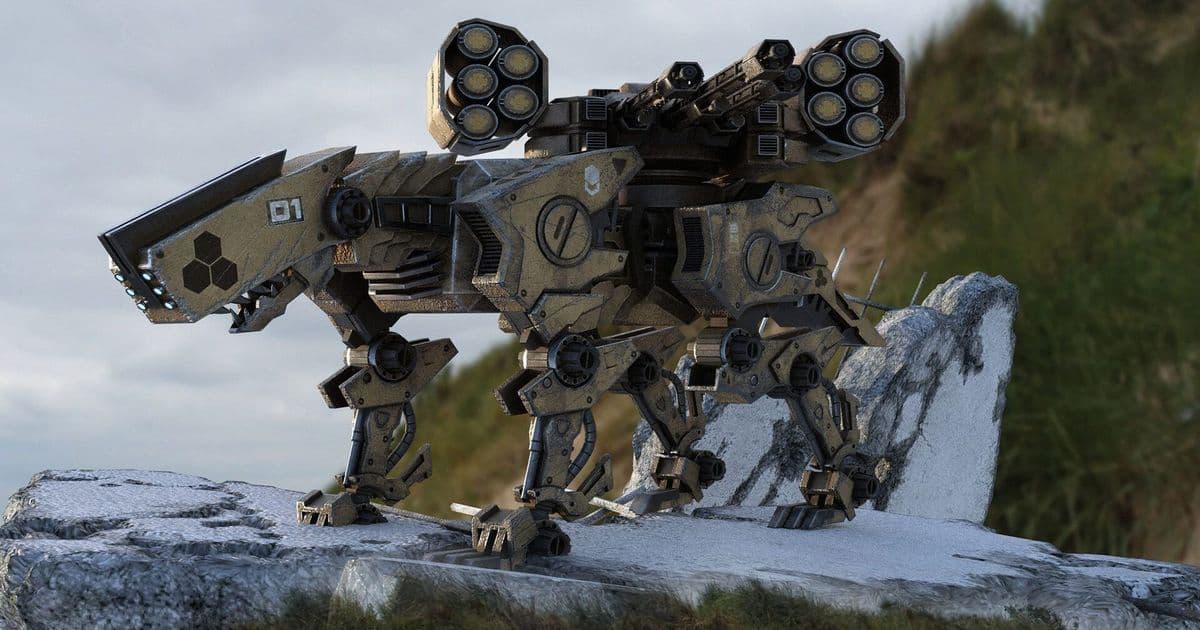
The Chinese People's Liberation Army has revealed intelligent robotic canines capable of coordinated swarm operations, marking a significant advancement in autonomous military technology.
The Chinese People's Liberation Army (PLA) has unveiled a new generation of intelligent robotic canines capable of operating in coordinated swarms for urban combat scenarios. These autonomous systems, showcased on the state television documentary Unmanned Competition on CCTV, represent a significant leap in military robotics and artificial intelligence integration.
Specialized Drone Variants for Combined Operations
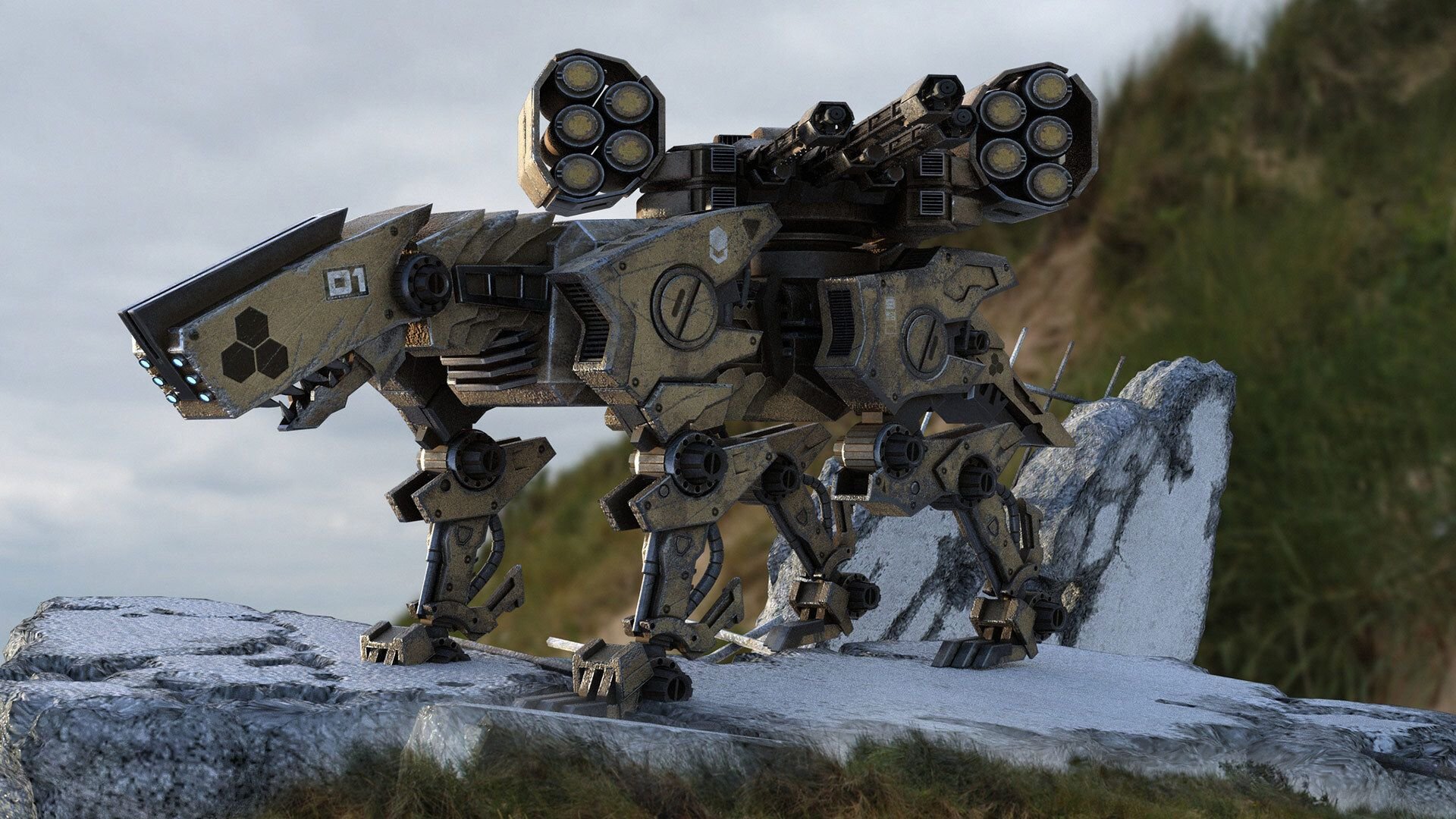
The robotic wolf pack consists of three distinct variants, each designed for specific operational roles. The Shadow variant serves as the reconnaissance specialist, providing situational awareness and intelligence gathering capabilities. The Polar variant handles logistical support functions, while the Bloody variant operates at the forefront of combat operations, equipped with various weapon systems including small missiles, grenade launchers, and automatic weapons.
These land drones demonstrate impressive mobility characteristics, achieving speeds of up to 9 mph (14.5 km/h) while carrying payloads of 55 pounds (25 kg). Their four-legged construction enables traversal of extreme environments and rough terrain, allowing independent movement without reliance on road networks.
Advanced Control Systems and Swarm Coordination
Control of the entire drone task force can be achieved through multiple interfaces, including voice commands, tactical gloves, or control sticks that mount directly on rifles. While the systems possess autonomous identification and targeting capabilities, they still require human confirmation before conducting strikes, maintaining a degree of human oversight in the decision-making process.
The swarm coordination extends beyond the robotic canines. The PLA demonstrated the Atlas unmanned aerial vehicle, which can operate as a single swarm with up to 96 individual drones performing specialized tasks including reconnaissance, electronic jamming, and strike operations. This builds upon earlier demonstrations of a 200-strong AI drone swarm controlled by a single operator.
Anti-Drone Countermeasures and Naval Applications
Recognizing the threat posed by airborne drones, the Chinese military also showcased two anti-drone laser weapons. The Guangjian 11-E employs energy-efficient low-power lasers designed to neutralize smaller commercial drones, while the more powerful 21-A version is built for "hard destruction" of airborne targets.
Naval applications were demonstrated through the L30 unmanned surface vessels deployed by police in Zhuhai, Guangdong. These autonomous boats can reach speeds of 35 knots (65 km/h) with a range of 300 nautical miles (556 km). Like their land-based counterparts, the L30 fleet can operate in coordinated groups using AI for targeting and response, including the capability to perform blockades and ram other vessels when necessary.
Satellite-Denied Navigation and Full Autonomy Goals
Chinese researchers are developing "satellite-denied navigation" technology that would enable these weapons systems to operate and coordinate even in environments with active jamming and signal denial. The ultimate objective is achieving "large-scale full autonomy," allowing the PLA to deploy combined arms drone task forces capable of executing military objectives without human intervention.
This development represents a significant advancement in autonomous military technology, with implications for modern warfare doctrine and the future of combat operations. The integration of AI-driven coordination, specialized task forces, and multi-domain operations (land, air, and sea) suggests a comprehensive approach to next-generation military capabilities.
The PLA's investment in these autonomous systems reflects broader trends in military modernization across major powers, with implications for strategic balance and the nature of future conflicts. As these technologies continue to evolve, questions about the role of human oversight, ethical considerations, and international arms control will become increasingly important in the global security landscape.
Comments
Please log in or register to join the discussion