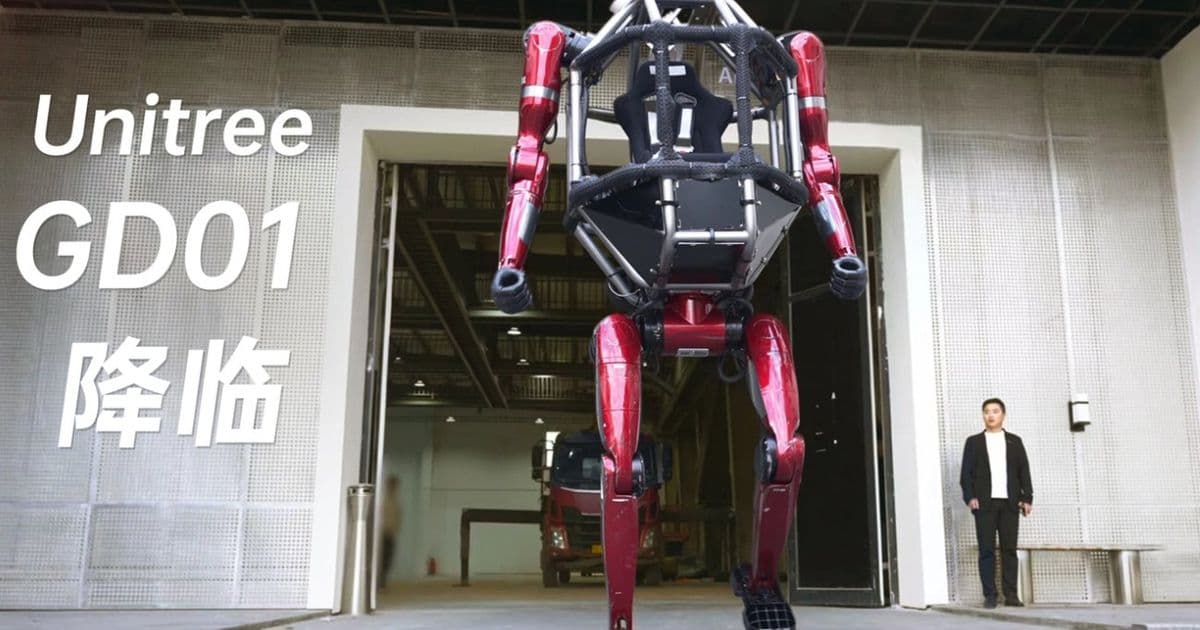
Unitree Robotics unveiled the GD01, a 500 kg ride‑able transforming robot priced at 3.9 million yuan, and drew a brief endorsement from Elon Musk. The launch marks the first attempt at mass‑producing a civilian‑grade mech, raising questions about market demand, regulatory hurdles, and the engineering trade‑offs behind the platform.
Elon Musk applauds Unitree’s GD01 rideable mech, calls it “cool”
The product and the claim
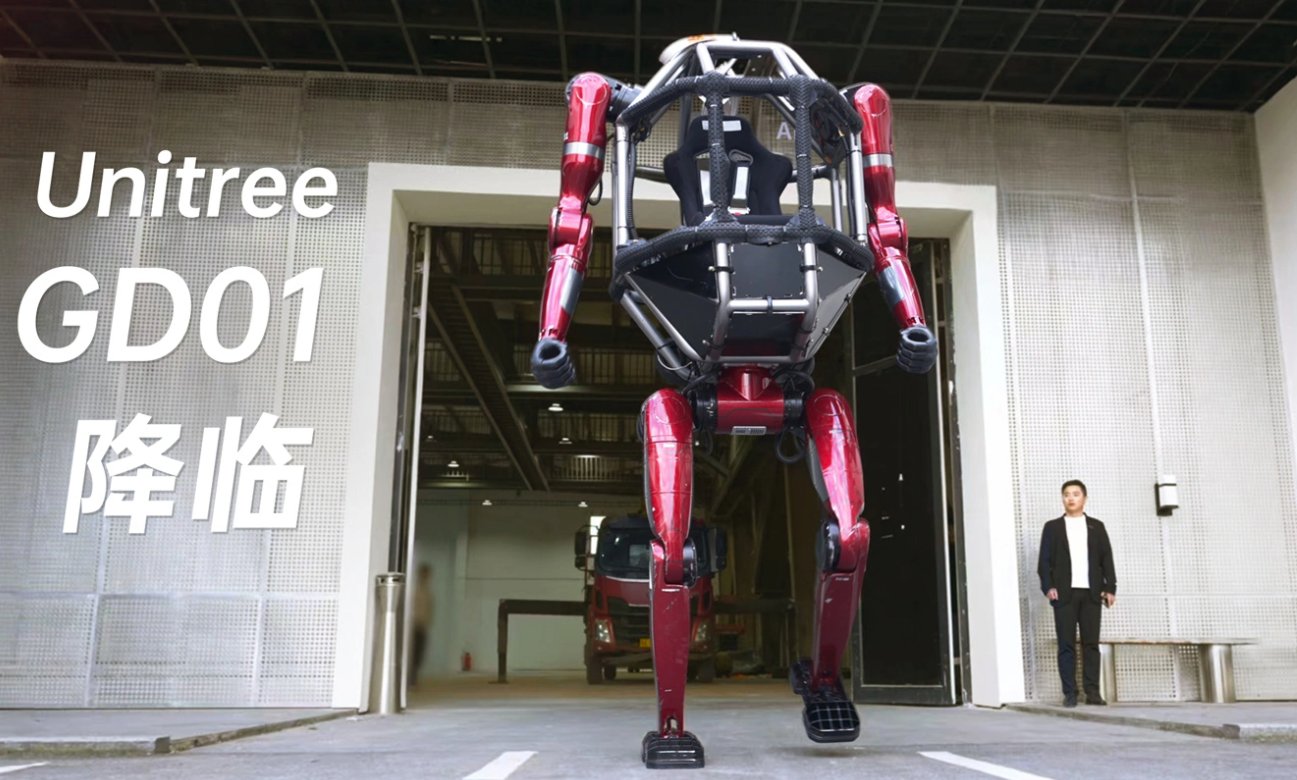
Chinese robotics startup Unitree Robotics announced the GD01 on Tuesday, positioning it as the world’s first mass‑produced rideable transforming mech. The machine stands roughly two adults tall, weighs about 500 kg in its rideable configuration, and can reconfigure from a bipedal walker to a wheeled vehicle in seconds. Unitree lists a starting price of 3.9 million yuan (≈ $540,000).
The company’s demo video shows the GD01 using a robotic arm to smash through a wall, then shifting its legs into a wheeled mode and carrying a passenger. The footage is polished, but the underlying hardware—hydraulic actuators, high‑torque brushless motors, and a custom‑designed exoskeleton—appears to be based on technology that Unitree has been iterating on for its quadruped line‑up (e.g., the A1 and Go1 robots).
Why Musk’s brief comment matters
Elon Musk’s tweet simply called the GD01 “cool,” yet the endorsement carries weight in two ways:
- Visibility – Musk’s follower count runs into the hundreds of millions. A single word can push a niche robotics product into mainstream tech feeds, driving investor curiosity and potential pre‑orders.
- Strategic relevance – Musk’s own ventures (Tesla, SpaceX, Neuralink) have long flirted with autonomous mobility and heavy‑duty robotics. A public nod suggests he sees the GD01 as a plausible step toward broader civilian robotics, even if he is not committing capital.
Market positioning and realistic demand
Unitree frames the GD01 as a civilian transportation vehicle, but the price point places it firmly in a niche market. Potential customers could include:
- Adventure tourism operators looking for novel experiences.
- Film and entertainment studios needing a controllable, on‑screen mech.
- Research institutions that want a platform for human‑in‑the‑loop locomotion studies.
Mass‑market adoption—think personal commuting—seems unlikely without significant cost reductions, safety certifications, and infrastructure adaptations (e.g., dedicated lanes or parking). The current regulatory environment for a 500 kg, passenger‑carrying robot is still undefined in most jurisdictions, meaning early adopters will have to navigate a patchwork of local rules.
Engineering trade‑offs
The GD01’s design highlights a classic robotics dilemma: versatility versus efficiency.
| Aspect | Benefit | Compromise |
|---|---|---|
| Transformability | One platform can operate on rough terrain (legs) and on smooth surfaces (wheels). | Added mechanical complexity increases weight and maintenance. |
| Rideable size | Allows a human to experience the robot directly, opening up experiential markets. | Human‑scale safety systems (e.g., redundant braking, crash protection) add cost. |
| Robotic arm | Demonstrates payload capability and potential for utility tasks. | Arm consumes power that could otherwise extend runtime. |
Unitree’s choice of a hydraulic actuation system for the arm suggests they prioritized raw force over energy efficiency. Hydraulics are powerful but require pumps, fluid reservoirs, and regular maintenance—factors that could deter everyday users.
Funding and traction
While the announcement did not disclose a new financing round, Unitree has previously raised $100 million from investors such as Sequoia Capital China and Tencent to scale its quadruped business. The GD01 may be a product of that capital, aiming to diversify revenue beyond service robots.
Early traction appears modest: the company has posted the demo video on its official channels and opened a pre‑order portal for the GD01. No pre‑order numbers have been released, and the pricing suggests that only a handful of entities will commit initially.
What comes next?
- Regulatory clarity – Expect Unitree to work with Chinese transportation authorities to define a classification for passenger‑carrying mechs.
- Pilot programs – Partnerships with theme parks or adventure tourism firms could provide real‑world usage data and help refine safety systems.
- Cost reduction path – Scaling production, possibly through partnerships with component manufacturers, will be essential if Unitree hopes to move beyond a boutique market.
The GD01 is an intriguing proof‑of‑concept that bridges the gap between industrial robots and personal mobility. Musk’s casual endorsement may amplify interest, but the mech’s long‑term success will hinge on solving practical challenges—regulation, cost, and reliability—before it can become more than a novelty.
For more details, see Unitree’s official announcement and the demo video on their website.
Comments
Please log in or register to join the discussion