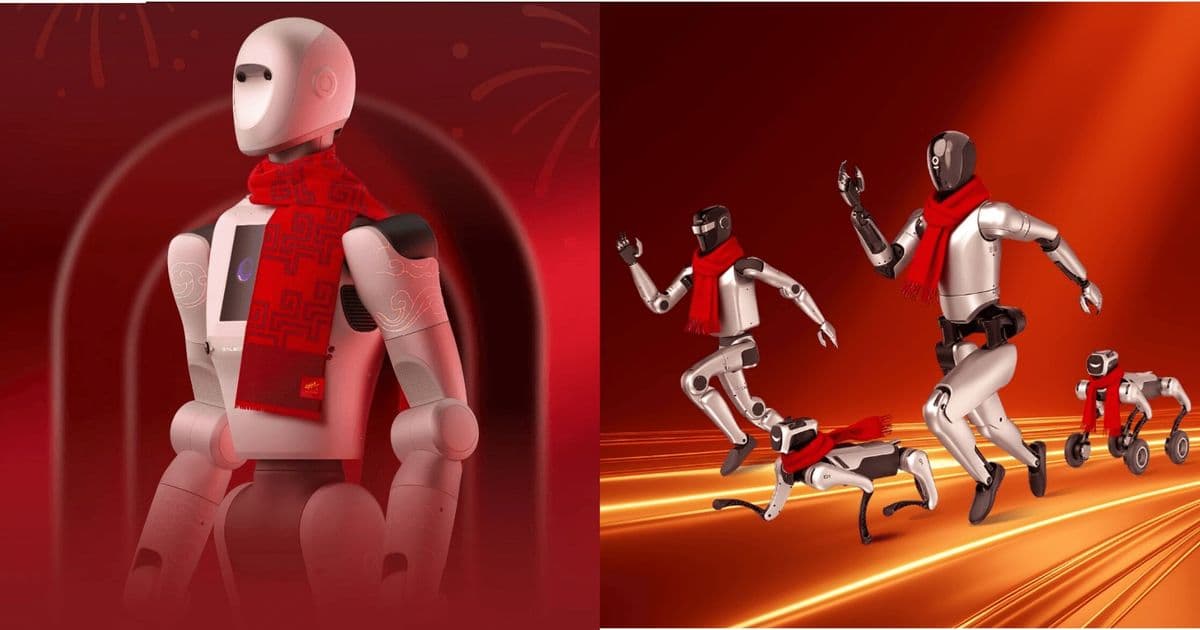
Two Chinese robotics startups – GALBOT and MagicLab – will demonstrate their embodied AI systems during China's nationally televised Spring Festival Gala, highlighting advances in practical humanoid robotics.
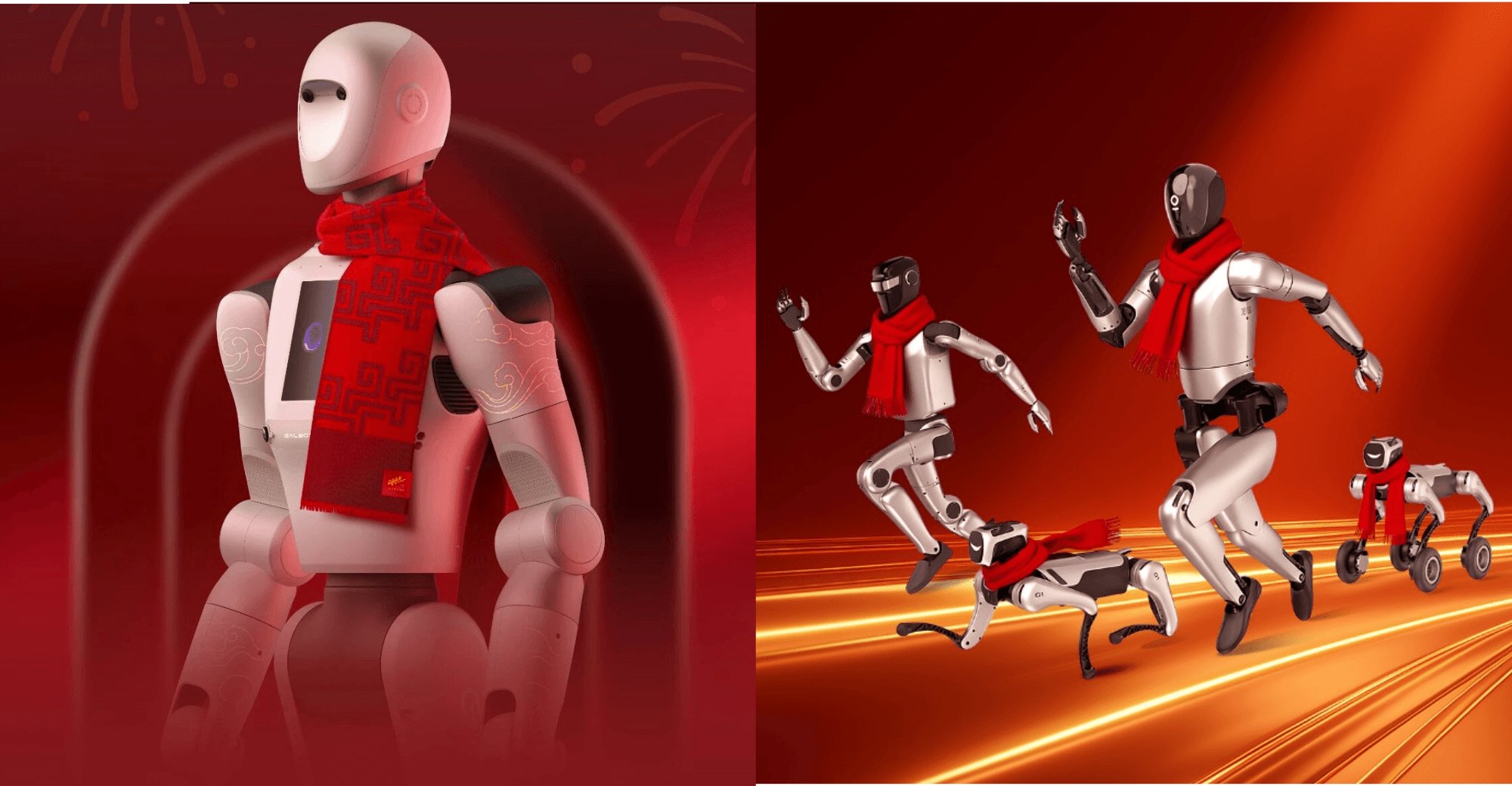
China's Spring Festival Gala, an annual television event drawing nearly 1 billion viewers, will feature demonstrations from robotics companies GALBOT and MagicLab this year. The showcase signals China's accelerating development in embodied AI – systems that combine physical robotics with multimodal foundation models for real-world interaction.
GALBOT's Technical Approach Founded in 2023, Beijing-based GALBOT takes a pragmatic stance on mobility challenges. Their flagship Galbot G1 robot uses a wheel-leg hybrid design, addressing energy inefficiency in bipedal systems. While legs navigate uneven terrain, wheels enable efficient movement on flat surfaces – a compromise acknowledging current battery limitations.
The company developed three core embodied models:
- GraspVLA: For complex object manipulation
- GroceryVLA: Specialized for retail operations
- NavFoM: Navigation in dynamic environments
These end-to-end models allow robots to chain actions like identifying objects, navigating spaces, and manipulating items without scripted sequences. GALBOT claims thousands of industrial deployments with clients including BAIC and CATL, plus hundreds in retail and healthcare settings like Beijing Xuanwu Hospital.
Technical leadership comes from founder Wang He (Stanford PhD under Leonidas Guibas) and co-founder Yao Tengzhou (Beihang University Robotics Institute). The team includes alumni from Huawei's "Genius Youth" program, Baidu, and Microsoft, enabling vertical integration from component manufacturing to model training.
MagicLab's Rapid Ascent Incubated within Dreame Technology and founded by former Xiaomi robotic dog engineers, MagicLab emerged just two years ago. Their product line includes:
- MagicBot Gen1 (full-size humanoid)
- MagicBot Z1 (compact humanoid capable of falls/recovery and emotion recognition)
- MagicDog (quadruped with –20°C to 55°C operating range and dynamic obstacle avoidance)
The company emphasizes environmental robustness – MagicDog's operational temperature range exceeds many competitors. MagicBot Z1's fall recovery suggests prioritized stability algorithms over complex acrobatics.
Commercial Context and Limitations Both companies secured significant funding: GALBOT raised $300 million at a $3 billion valuation in late 2025, while MagicLab received $21 million in angel funding plus strategic investments totaling "several hundred million yuan."
The Gala appearance provides visibility, but practical challenges remain:
- Energy Efficiency: Despite hybrid designs, untethered operation time remains constrained
- Task Generalization: Real-world deployments still focus on narrow industrial/retail workflows
- Scalability: GALBOT's "thousands" of units deployed pale against traditional automation
GALBOT's industrial partnerships and MagicLab's consumer robotics heritage represent divergent paths to commercialization. While GALBOT targets enterprise clients, MagicLab's emotion recognition features suggest future service applications.
The showcase reflects China's strategic push into embodied AI, but viewers should note these are demonstrations – not indications that general-purpose robots are ready for mass adoption. True viability requires solving fundamental problems in energy density, unstructured environment navigation, and cost-effective manufacturing.
Comments
Please log in or register to join the discussion