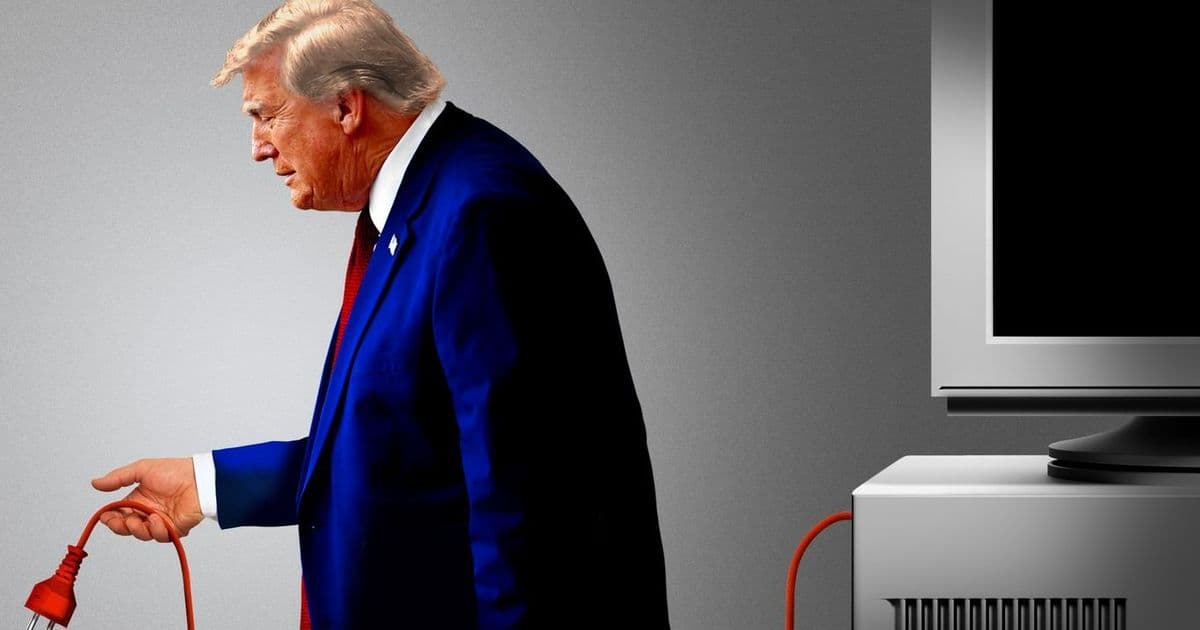
As AI-powered cyber threats escalate, the Trump administration has sidelined the nation's top cybersecurity agency, raising concerns about preparedness for emerging threats.
The Cybersecurity and Infrastructure Security Agency (CISA) has been significantly reduced in its advisory role within the White House's artificial intelligence security framework, according to multiple sources familiar with the administration's recent policy directives. This development comes as AI capabilities for automated hacking and cyberattacks have reached unprecedented levels, creating a precarious disconnect between the evolving threat landscape and the federal government's response structure.
Policy Shifts at Critical Juncture
The administration has reorganized AI security responsibilities, moving primary oversight to the National Security Council (NSC) while diminishing CISA's technical advisory role. This restructuring effectively removes the agency's cybersecurity experts from daily AI security deliberations, despite CISA's established expertise in protecting critical infrastructure from digital threats.
"This is happening precisely when AI systems are demonstrating capabilities to autonomously identify vulnerabilities, develop exploits, and coordinate attacks at speeds impossible for human defenders to counter," stated Dr. Eleanor Vance, a former senior CISA official now with the Center for Strategic and International Studies (CSIS). "The timing couldn't be more concerning."
Market Context: AI Cyber Threats Accelerating
The global cybersecurity market faces unprecedented challenges as AI-powered threats continue to evolve. According to recent data from cybersecurity research firm CyberCube, AI-enhanced cyberattacks have increased by 340% over the past 18 months, with financial institutions bearing 62% of the resulting losses.
The insurance industry has taken notice, with cyber insurance premiums rising by an average of 23% in 2024 alone as carriers adjust their risk models to account for AI-driven threats. Meanwhile, venture capital investment in AI cybersecurity solutions reached $3.2 billion in the first half of 2024, a 78% increase from the same period in 2023.
"We're seeing AI systems that can analyze network traffic patterns to identify security gaps, develop zero-day exploits, and even mimic legitimate users to bypass authentication systems," said Michael Chen, CTO of cybersecurity firm SentinelOne. "The defensive capabilities are improving, but the offensive capabilities are advancing even faster."
Strategic Implications of Reduced CISA Involvement
The diminished role of CISA in AI security matters raises several strategic concerns:
Technical Expertise Gap: CISA possesses deep technical knowledge of critical infrastructure vulnerabilities and mitigation strategies. Removing this expertise from AI security discussions could result in policies that don't adequately address technical realities.
Fragmented Response: The shift to NSC dominance may create a more politicized approach to cybersecurity, potentially prioritizing certain threats over others based on political considerations rather than technical risk assessments.
Industry Coordination Challenges: CISA has established relationships with private sector cybersecurity firms and critical infrastructure operators. These connections facilitate information sharing and coordinated responses to threats that may be difficult to maintain through other channels.
International Standing: The U.S. has traditionally led global cybersecurity initiatives. A reduction in CISA's international engagement could weaken U.S. influence in setting global AI security standards and norms.
What This Means for the Future
The sidelining of CISA in AI security matters could have several significant consequences:
Delayed Detection of Threats: Without CISA's technical expertise, emerging AI-driven threats may not be identified as quickly, allowing more time for potential exploitation.
Inconsistent Policy Implementation: Different agencies may develop conflicting approaches to AI security, creating confusion for private sector entities trying to comply with multiple standards.
Resource Allocation Issues: Budget decisions may be influenced by political considerations rather than technical risk assessments, potentially leaving critical vulnerabilities underfunded.
Innovation Impact: Reduced government focus on AI security could slow the development of defensive technologies needed to keep pace with offensive capabilities.
The cybersecurity community has expressed concern about these developments, with industry leaders calling for a more balanced approach that maintains CISA's technical expertise while allowing for appropriate policy coordination through other channels.
"Effective cybersecurity requires both technical understanding and policy direction," said Dr. Sarah Jenkins, director of the AI Security Institute at Georgetown University. "These aren't mutually exclusive. We need CISA's deep technical knowledge informing policy decisions, not separate from them."
As AI systems continue to evolve and become more sophisticated in their offensive capabilities, the structure of the federal government's response will play a critical role in determining the nation's cybersecurity posture. The current approach raises questions about whether the government is adequately prepared for the challenges ahead.
For more information on CISA's cybersecurity mission, visit their official website. Additional context on AI security developments can be found in Cybersecurity and Infrastructure Security Agency's AI guidelines.
Comments
Please log in or register to join the discussion