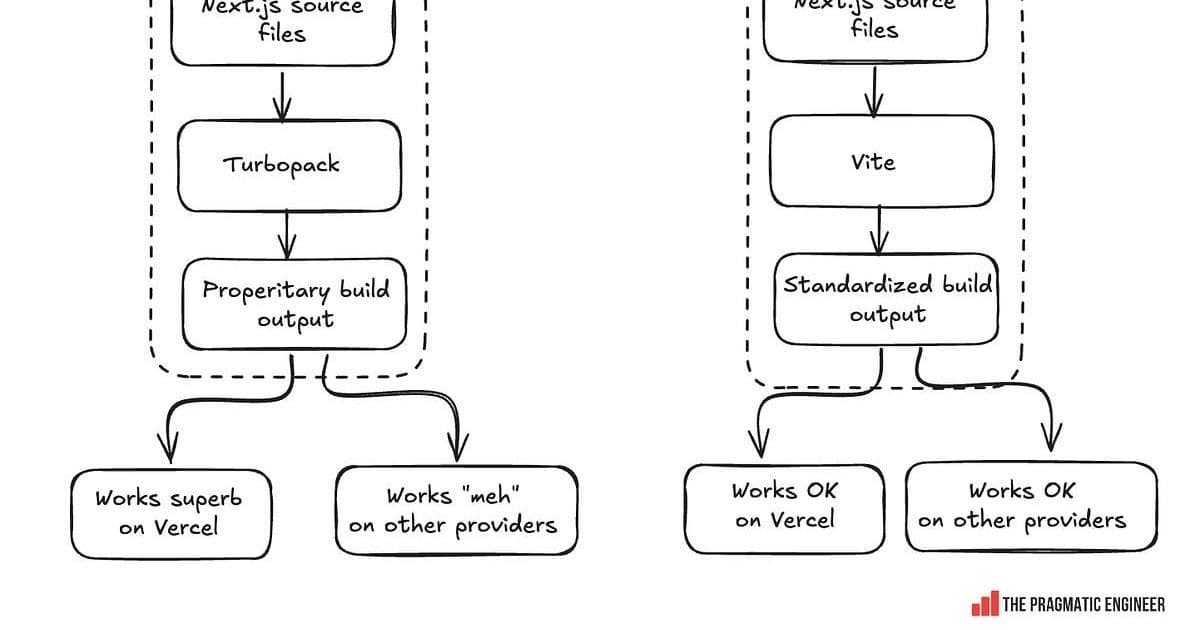
Cloudflare's AI-assisted rewrite of Next.js in one week with $1,100 in tokens demonstrates how AI is disrupting traditional software moats and commercial open source business models.
An engineer at Cloudflare rewrote most of Vercel's Next.js in one week with AI agents. It looks like a sign of how AI will disrupt existing moats and business models.
The Rewrite That Shook the Dev World
On Tuesday, Cloudflare CTO Dane Knecht announced on X that a single developer had rewritten most of Vercel's Next.js framework in just one week, using only $1,100 in AI tokens. This announcement sent shockwaves through the developer community and raised fundamental questions about the future of commercial open source.
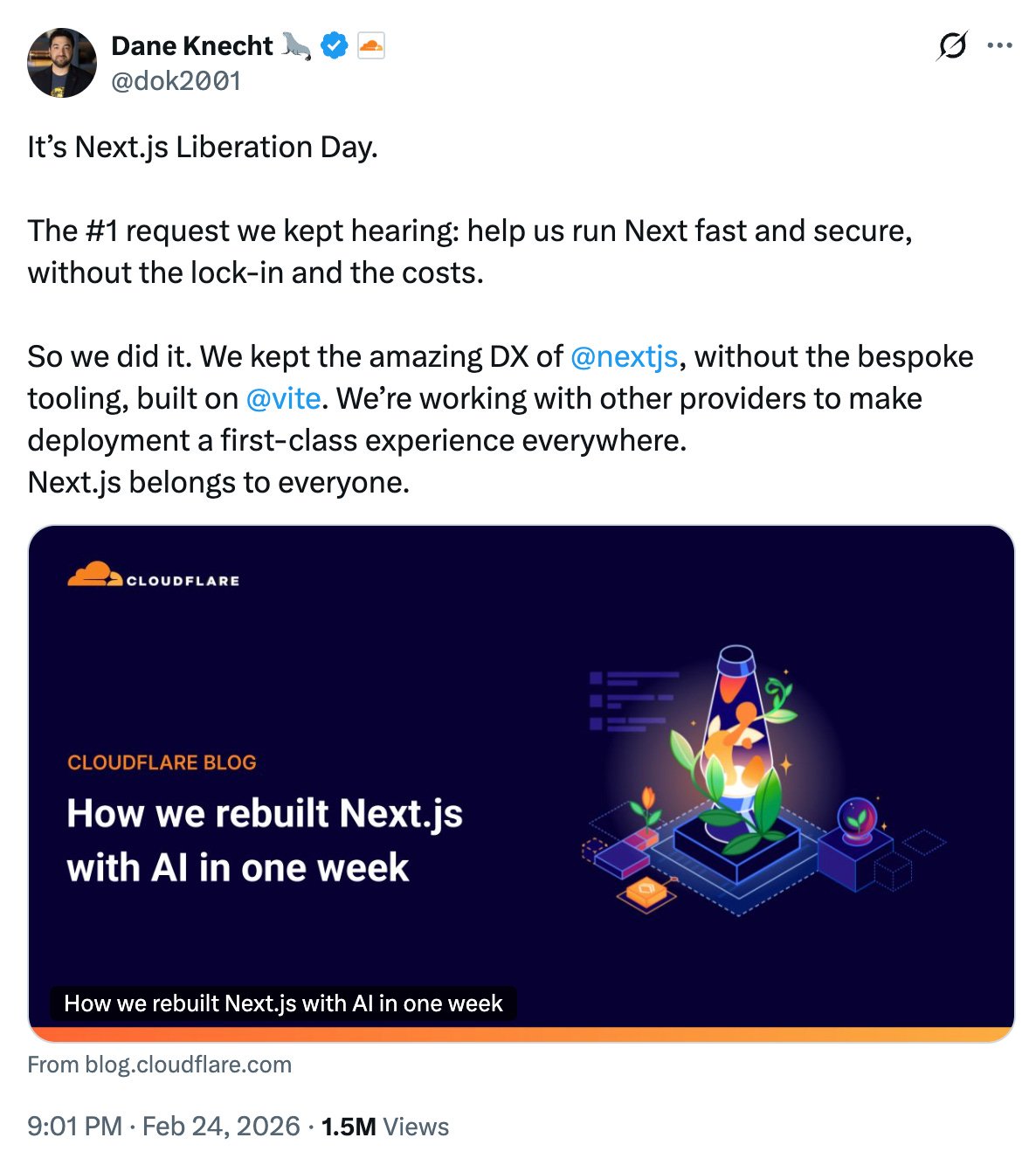
Cloudflare CTO Dane Knecht on X
The implications are profound. A framework that took years to develop and mature was essentially replicated in days using AI assistance. This isn't just about speed—it's about the changing economics of software development and the erosion of traditional competitive advantages.
Why This Matters for the Industry
The Cloudflare rewrite demonstrates several critical shifts happening in our industry:
AI as a Force Multiplier: What previously required teams of engineers working for years can now be accomplished by a single developer with AI assistance. This dramatically changes the cost structure of software development.
Erosion of First-Mover Advantage: Next.js has been the dominant React framework for years, with Vercel building a substantial business around it. The ability to quickly replicate such a framework suggests that first-mover advantages in software may be more fragile than we thought.
Commercial Open Source Under Pressure: Companies like Vercel, which built businesses around open source projects, may face new competitive threats. If AI can replicate complex frameworks quickly, the traditional open core model becomes more vulnerable.
The Technical Achievement
The technical aspects of this rewrite are impressive. According to Cloudflare's announcement, the developer used AI agents to:
- Analyze the Next.js codebase and documentation
- Generate equivalent functionality in Cloudflare's environment
- Handle edge cases and compatibility issues
- Optimize for Cloudflare's infrastructure
The $1,100 in tokens represents the compute cost for this effort—a fraction of what traditional development would cost. This efficiency gain is unprecedented and suggests we're entering a new era of software development economics.
Broader Implications for Software Development
This event is a harbinger of how AI will reshape the software industry. We're likely to see:
Accelerated Innovation Cycles: If frameworks can be rewritten in weeks rather than years, innovation cycles will compress dramatically. New approaches can be tested and deployed much faster.
New Competitive Dynamics: Companies will need to compete on factors beyond just having the best open source project. Service quality, ecosystem integration, and specialized features may become more important differentiators.
Changed Investment Patterns: Venture capital and corporate investment in open source may shift as the barriers to entry lower. The value proposition of funding open source development may need to be rethought.
What This Means for Developers
For individual developers and engineering teams, this development suggests several strategic considerations:
Focus on Unique Value: As basic frameworks become easier to replicate, developers should focus on building unique, differentiated capabilities rather than reinventing standard patterns.
AI Literacy Becomes Essential: Understanding how to effectively use AI coding assistants will become a core competency. The ability to direct and validate AI-generated code will separate productive developers from the rest.
Infrastructure Knowledge Matters: Cloudflare's success here was partly due to their deep understanding of their own infrastructure. Domain expertise and platform knowledge remain valuable differentiators.
The Future of Commercial Open Source
The Cloudflare rewrite raises questions about the sustainability of the commercial open source model that has dominated the past decade. Companies like MongoDB, Elastic, and Vercel built substantial businesses by offering managed services around open source projects.
However, if AI makes it easier to replicate these projects, the competitive moat these companies rely on becomes shallower. We may see a shift toward:
- More emphasis on proprietary extensions and services
- Greater focus on enterprise features and compliance
- Increased investment in community and ecosystem development
- New licensing models that are more resistant to replication
Looking Ahead
The Cloudflare Next.js rewrite is more than just a technical achievement—it's a signal of how AI is rewriting the rules of software development and business. As AI capabilities continue to advance, we'll likely see more examples of this kind of disruption.
Companies that rely on open source projects for their competitive advantage will need to adapt. Those that can build strong ecosystems, provide exceptional service, and continuously innovate will still thrive. But the game has changed, and the barriers to entry are lower than ever.
For developers, this is both exciting and challenging. The tools at our disposal are becoming more powerful, but so is the competition. Success will increasingly depend on how effectively we can harness these new capabilities while building unique value that can't be easily replicated.
The next few years will be fascinating as we navigate this transition. One thing is clear: the software industry will look very different in five years, and AI will be at the center of that transformation.
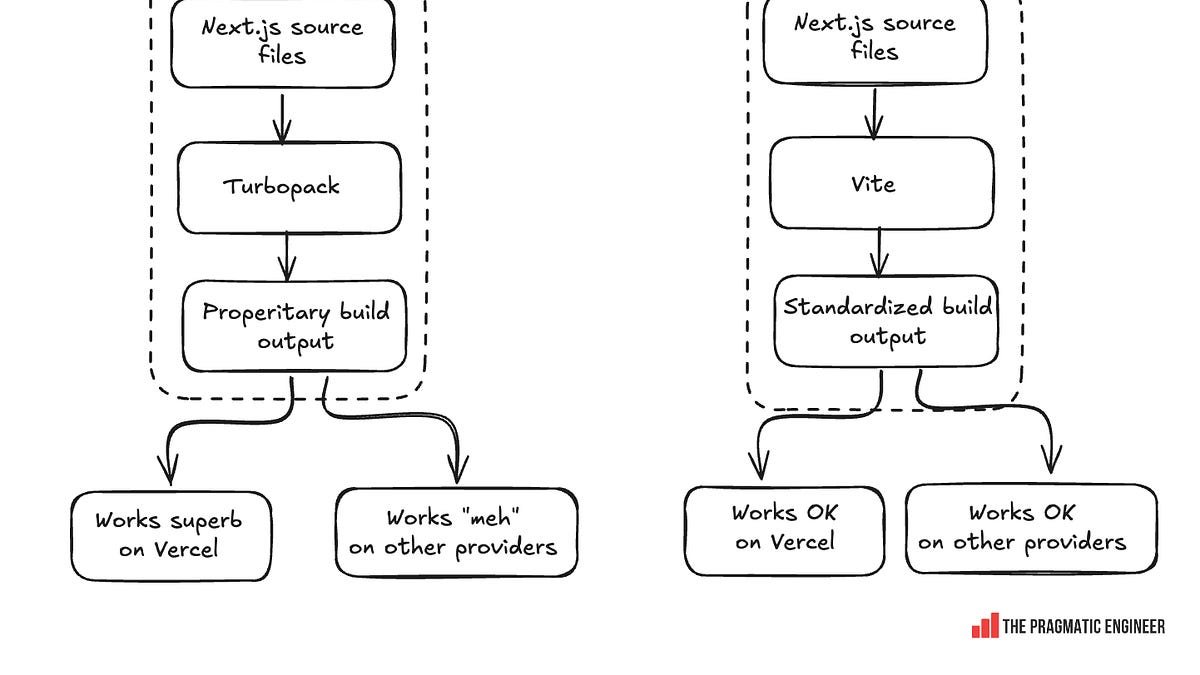
Featured image
Comments
Please log in or register to join the discussion