
A sophisticated cryptojacking campaign demonstrates how threat actors are leveraging AI and legitimate software to compromise high-value systems across cloud environments, requiring new defensive approaches across multi-cloud deployments.
The New Threat Landscape: AI-Assisted Delivery and Targeted Cryptojacking
The Microsoft Security Blog details a cryptojacking campaign that represents a significant evolution in threat actor tactics. Unlike traditional cryptojacking operations that prioritize volume over value, this campaign employs a precision targeting strategy focused on compromising systems with high-performance GPUs. The campaign demonstrates how threat actors are adapting to modern user behavior by extending social engineering techniques beyond traditional search engine poisoning to include AI chatbot interactions.
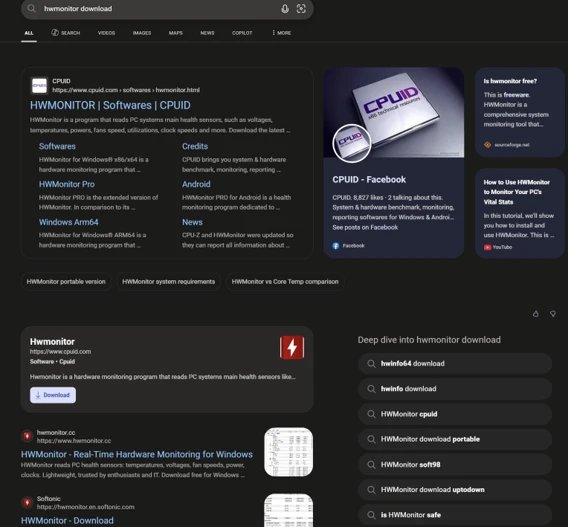
This campaign begins with users searching for legitimate system utilities like CrystalDiskInfo, HWMonitor, and Display Driver Uninstaller. The attackers manipulate search results to direct users to malicious lookalike sites, or increasingly, exploit AI chatbot interactions to recommend these malicious downloads. This represents an emerging delivery technique that extends social engineering beyond conventional search results, increasing the visibility of malicious software recommendations.
The campaign's technical sophistication is notable. After initial compromise through DLL sideloading, the attackers establish persistent remote access via abused ScreenConnect deployments. They then use process hollowing to inject malicious code into legitimate Microsoft-signed .NET binaries, effectively bypassing many security controls. The mining operation itself is carefully orchestrated, with the malware downloading appropriate miners (gminer, lolMiner, SRBMiner-MULTI) based on system capabilities and pausing activity when the system is in use.
{{IMAGE:2}}
Multi-Cloud Provider Response and Protection Strategies
Different cloud providers have varying capabilities to detect and prevent this type of attack, with important considerations for organizations operating across multiple cloud environments.
Amazon Web Services (AWS) offers several defensive mechanisms that could mitigate this threat. AWS Security Hub provides visibility into security findings across AWS accounts, while GuardDuty can detect unusual behavior patterns associated with cryptojacking. The AWS WAF (Web Application Firewall) could potentially block access to known malicious domains, and Amazon Inspector can detect vulnerabilities in EC2 instances that might be exploited by such campaigns. However, AWS lacks native endpoint protection capabilities comparable to Microsoft's solution, requiring organizations to implement third-party EDR solutions.
Microsoft Azure has inherent advantages in detecting this particular campaign due to the integration between Microsoft Defender for Endpoint and Azure Security Center. The unified security stack allows for correlated detection across endpoints and cloud resources. Azure Sentinel's threat intelligence capabilities would identify the malicious domains and IPs associated with the campaign, while Microsoft Defender's attack surface reduction rules could prevent several infection vectors. Azure's integration with Microsoft 365 provides additional email and identity context that could help identify compromised user accounts.
Google Cloud Platform (GCP) offers Chronicle Security Operations for threat detection and response, with capabilities to analyze logs across GCP resources. The BeyondCorp approach to zero-trust security could limit lateral movement if an endpoint is compromised. However, GCP lacks a native endpoint protection solution comparable to Microsoft's, potentially creating detection gaps for this type of attack. Organizations would need to implement third-party solutions or leverage Google's partner ecosystem for comprehensive endpoint protection.
Hybrid and Multi-Cloud Environments face unique challenges with this threat. The campaign's use of encrypted C2 communication and certificate pinning makes detection more difficult across different security stacks. Organizations need to implement consistent security policies across all cloud environments, with particular attention to:
- Endpoint protection with EDR capabilities
- Network segmentation to limit lateral movement
- Identity and access management controls
- Threat intelligence sharing across environments
The campaign's use of legitimate remote access tools like ScreenConnect highlights the importance of monitoring and controlling third-party software access across all cloud deployments.
Business Impact and Strategic Considerations
This cryptojacking campaign represents a significant business risk for organizations, particularly those with high-performance computing workloads in cloud environments. The direct impacts include:
Resource Consumption and Cost Overruns: Cryptojacking operations consume substantial computing resources, leading to unexpected cost increases in cloud deployments. For organizations using GPU-enabled instances for legitimate workloads, the competition for resources can degrade performance and increase operational costs.
Compliance and Regulatory Risks: Compromised systems may handle sensitive data, creating compliance violations under regulations like GDPR, HIPAA, or PCI-DSS. The campaign's persistence mechanisms and remote access capabilities create potential data exfiltration risks that organizations must address.
Competitive Intelligence Theft: The comprehensive host reconnaissance performed by the malware includes collecting information about system configurations, network identity, and security posture. This information could be valuable to competitors or nation-state actors.
Operational Disruption: While the campaign appears focused on mining rather than destruction, the persistence mechanisms and anti-analysis techniques create system instability. Organizations may experience performance degradation and unexpected system behavior.
{{IMAGE:5}}
Strategic Defense Implications: This campaign demonstrates the need for a multi-layered security approach across cloud environments. Organizations should:
- Implement cloud-native security controls with consistent policies across providers
- Deploy endpoint detection and response solutions with behavioral analytics
- Monitor for unusual process execution patterns, particularly Microsoft-signed binaries loading unexpected DLLs
- Control the use of legitimate remote access tools like ScreenConnect
- Implement application control to prevent unauthorized software execution
- Enable attack surface reduction rules to block common infection vectors
The campaign's use of AI-assisted delivery represents a concerning trend that will likely accelerate as threat actors increasingly leverage generative AI for social engineering. Organizations must develop security awareness programs that address these evolving threats, with particular emphasis on verifying software sources through official channels rather than search engine results or AI recommendations.
Conclusion
This cryptojacking campaign highlights the evolving threat landscape where precision targeting and AI-assisted delivery are replacing traditional volume-based approaches. For organizations operating across multi-cloud environments, the defense requires a strategic approach that considers the unique capabilities and limitations of each cloud provider while maintaining consistent security policies. The business impact extends beyond direct resource theft to include compliance risks, operational disruption, and potential data exfiltration. As threat actors continue to adapt their techniques, organizations must develop agile security frameworks that can detect and respond to these sophisticated campaigns across all cloud environments.
Comments
Please log in or register to join the discussion