
When security teams lack the telemetry to answer basic questions, ransomware incidents can stretch from weeks to months, costing millions in downtime and reputational damage. This article dissects why data maturity matters, illustrates the cost of missing logs, and shows how Vega’s federated analytics mesh can collapse investigations from days to hours.
Data Gaps Turn Cyber Breaches into Business Catastrophes
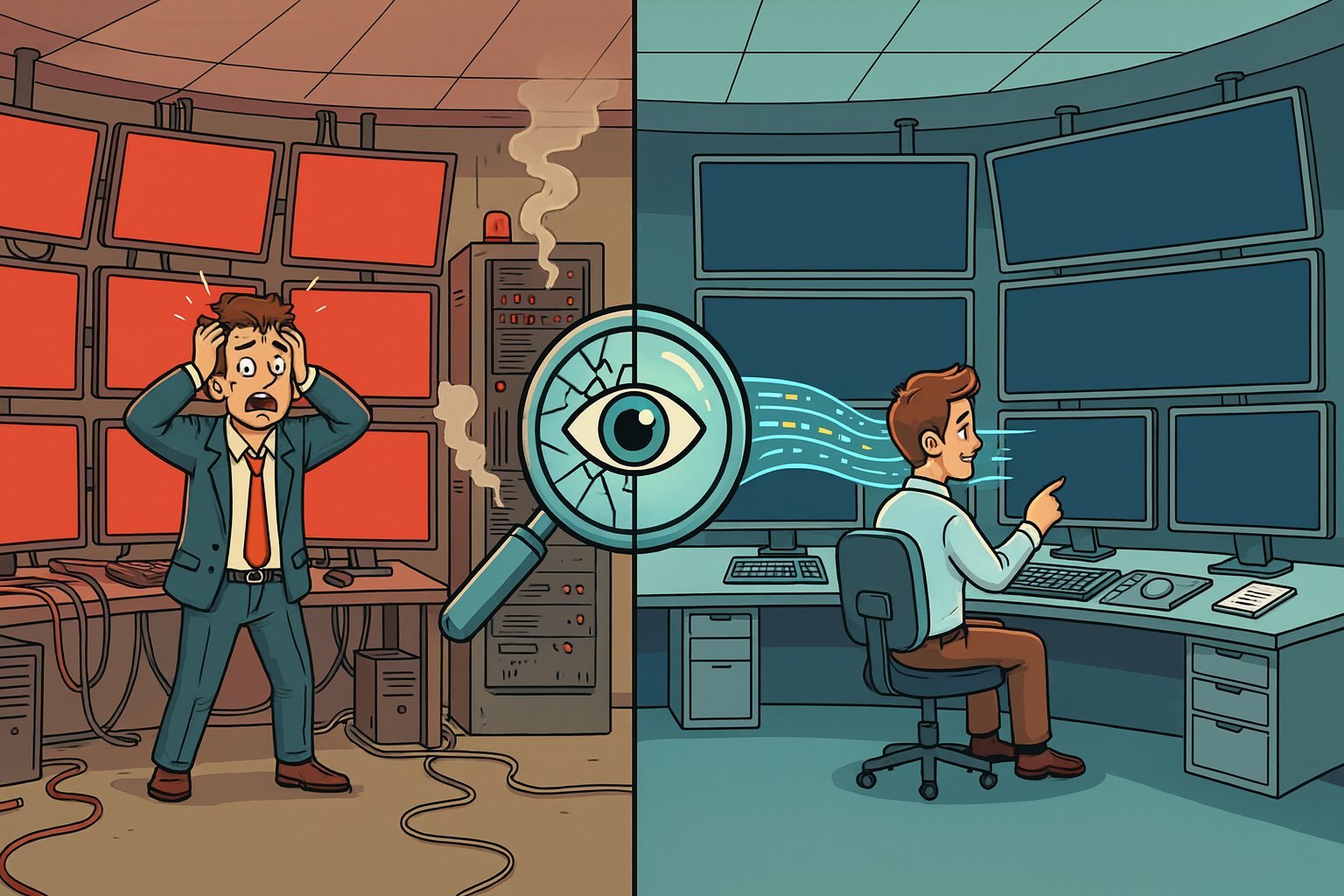
In a recent incident response briefing, a CEO asked the seasoned incident manager, "How long will this take?" The answer was a sobering two‑week estimate, but the real reason behind the delay was not the speed of the team—it was the absence of critical data. This narrative, drawn from a Vega blog post, reveals how data gaps can turn a routine ransomware attack into a multi‑week business crisis.
The Core Truth of Incident Response
Incident response boils down to a simple loop: find the truth, decide, and act. The first step—uncovering facts—requires a complete, accurate picture of what happened. If the security team can’t answer questions like "Which servers were compromised?" or "Where did the threat actor enter?", executives are forced to make decisions based on incomplete or misleading information. A misstep here can cost weeks of downtime and millions in lost revenue.
“In cases like this—a full ransomware shutdown—I would say between one to two weeks before you can restore operations safely.” – A seasoned incident manager
Data Gaps: The Silent Saboteur
The CEO’s frustration was palpable: "We’re losing over two million dollars each day. Why can’t we go faster?" The incident manager’s response highlighted a litany of missing telemetry:
- Windows event logs only on a quarter of servers, with command‑line auditing disabled.
- 7‑day retention in the EDR console, partially deployed.
- No firewall telemetry in the SIEM.
- No visibility into VPN logins or PowerShell logs.
- Incomplete identity‑provider logs.
These gaps meant that every investigative step—mapping C2 communications, identifying persistence mechanisms, validating clean backups—became a manual, time‑consuming exercise. The result? A two‑week shutdown that was not a reflection of the team’s speed but of the data blind spots.
From Data Maturity to Rapid Recovery
The article emphasizes that data maturity—the discipline of collecting, retaining, and understanding the right telemetry—is the linchpin of incident readiness. With comprehensive Windows auditing, extended EDR retention, and accessible firewall logs, the same investigation could be resolved in days, not weeks. The narrative underscores that the core of incident response readiness is not merely playbooks or staffing; it is the ability to answer what happened within hours.
“A security breach is a cyber crisis, but it doesn’t have to become a business crisis.” – Incident Manager
Vega’s Security Analytics Mesh (SAM)
Traditional SIEMs force security teams to choose between coverage, cost, and speed. Vega’s solution, the Federated Security Analytics Mesh (SAM), flips that trade‑off. By allowing analytics to run where data already lives—across on‑prem, cloud, and hybrid environments—SAM eliminates re‑ingestion and duplication. The result is a single, high‑performance query layer that delivers visibility at scale and at a sustainable cost.
“The result: faster investigations, faster decision making, and faster recovery—without the tradeoffs.” – Vega
Closing Visibility Gaps
The takeaway is stark: data gaps are the hidden cost of cyber crises. Investing in a mature telemetry stack—complete logging, extended retention, unified visibility—transforms incident response from a reactive firefight into a proactive, data‑driven operation. Vega’s SAM offers a pathway to that maturity, enabling teams to close gaps, accelerate investigations, and keep business continuity intact.
Source: Vega Blog – "Data Gaps in Cyber Crises"
Comments
Please log in or register to join the discussion