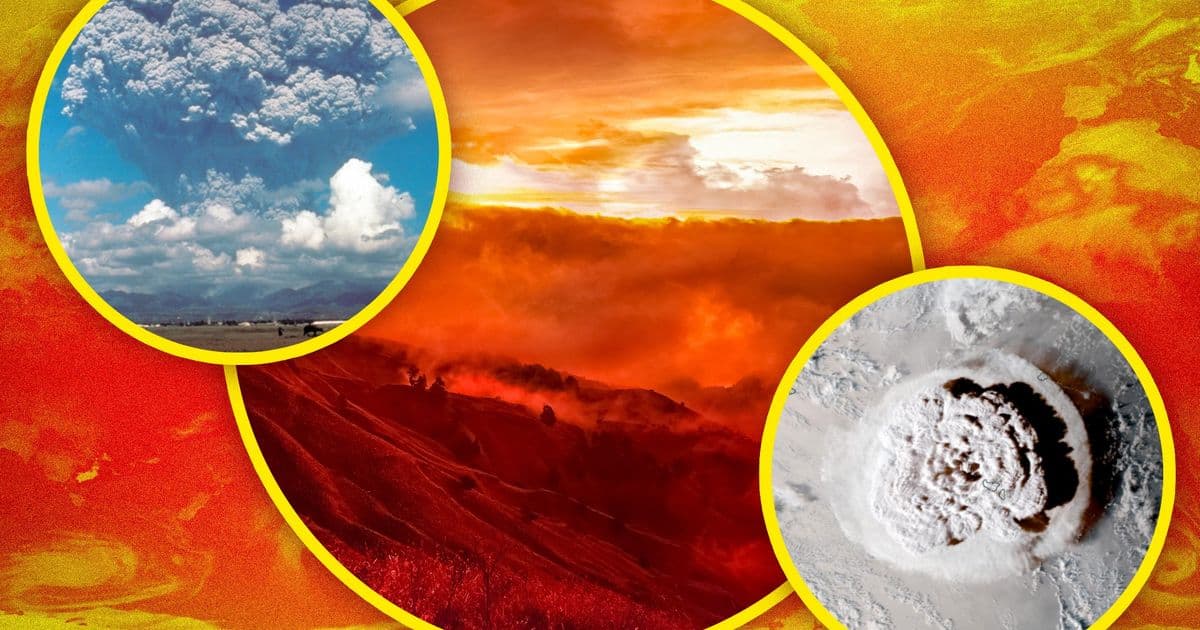
MIT scientists develop method to distinguish temperature effects of major natural events from climate noise, revealing distinct stratospheric impacts of volcanic eruptions and wildfires.
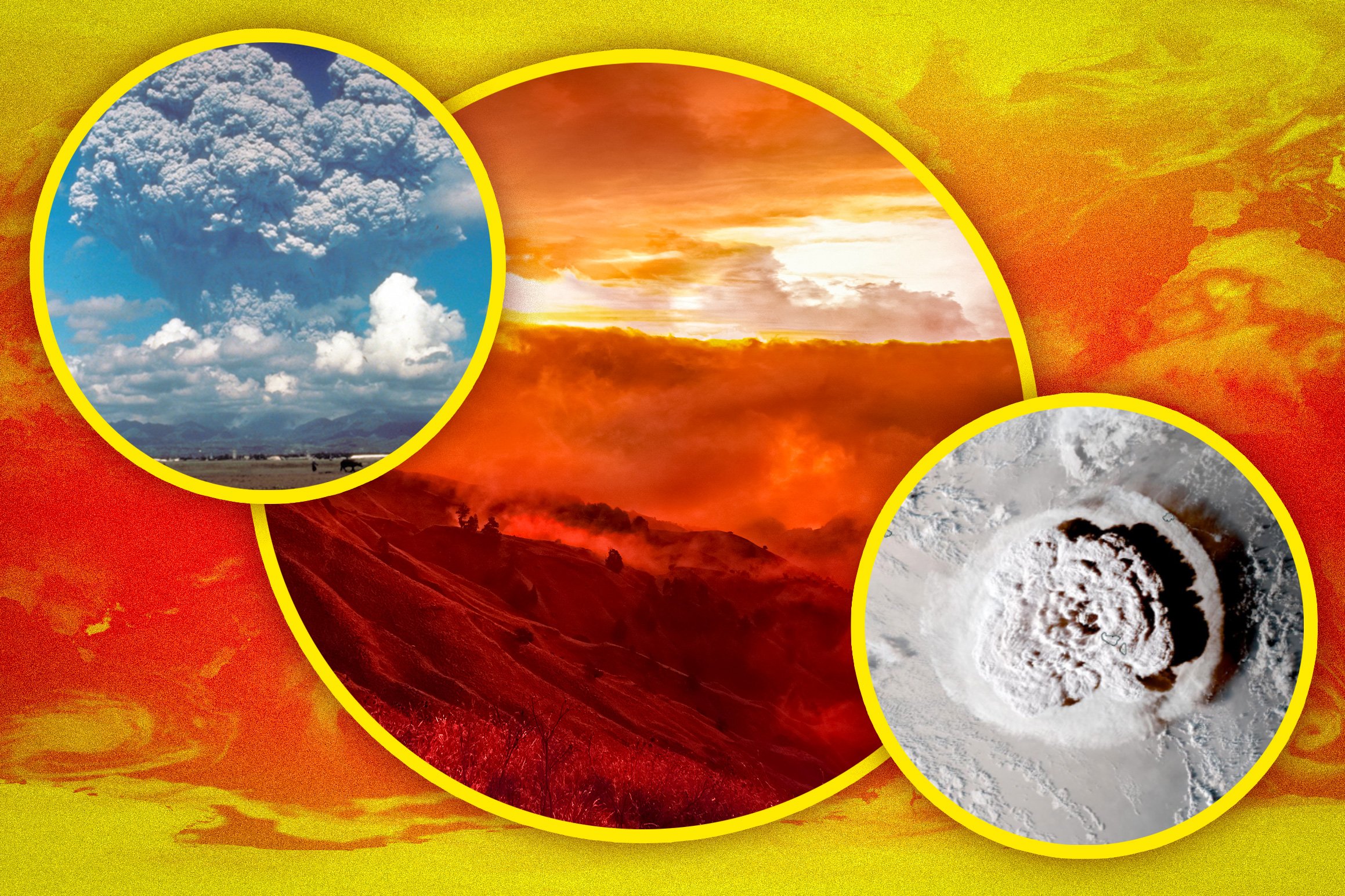
Scientists at MIT have pioneered a method to isolate the atmospheric temperature signatures of major natural events, providing unprecedented clarity on how wildfires and volcanic eruptions influence global climate systems. Published in the Proceedings of the National Academy of Sciences, the research demonstrates statistically significant temperature changes following three cataclysmic events: the 1991 Mount Pinatubo eruption, 2019-2020 Australian wildfires, and 2022 Hunga Tonga-Hunga Ha'apai eruption.
Cutting Through the Noise
Traditional climate analysis struggles to separate event-specific impacts from background variability caused by phenomena like El Niño or solar cycles. The MIT team addressed this by applying a signal-to-noise optimization framework to satellite temperature records from the Stratospheric Sounding Unit (SSU) and Microwave Sounding Units (MSU). They first subtracted long-term anthropogenic warming trends, then removed cyclical natural variations, creating a baseline where event signatures become detectable.
"Understanding climate responses to natural forcings is essential for interpreting anthropogenic climate change," explains lead author Yaowei Li. "Our approach finally allows us to quantify specific event impacts that were previously lost in meteorological noise."
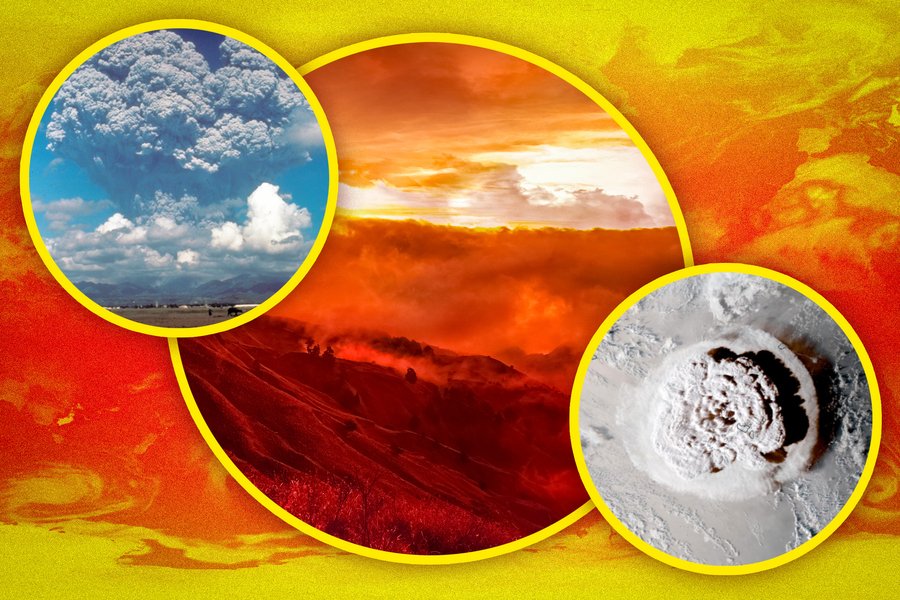 Caption: Satellite imagery of the three studied events: Mount Pinatubo eruption (1991), Australian wildfires (2019-2020), and Hunga Tonga eruption (2022).
Event-Specific Climate Fingerprints
Mount Pinatubo (1991):
- Stratospheric warming: +4°C (peak)
- Tropospheric cooling: -0.7°C globally for >2 years
- Mechanism: 20 million tons of sulfate aerosols reflected sunlight (cooling surface) while absorbing infrared radiation (warming stratosphere)
Australian Wildfires (2019-2020):
- Stratospheric warming: +0.77°C sustained for 5 months
- Tropospheric impact: No statistically significant global signal
- Mechanism: 1 million tons of dark smoke particles efficiently absorbed solar radiation
Hunga Tonga (2022):
- Stratospheric cooling: -0.5°C in mid-upper stratosphere lasting years
- Unique factor: 150 million tons of water vapor created cooling via infrared emission
Resolving the Warming Puzzle
The findings clarify why recent record surface temperatures (2023-2025) can't be attributed to these natural events. As co-author Susan Solomon notes: "The Australian fires and Hunga Tonga packed a stratospheric punch, but their lack of tropospheric influence points even more strongly toward anthropogenic drivers for recent surface warming."
The methodology establishes a framework for evaluating future events and validates climate models through observational evidence. Researchers have made their detection algorithms publicly accessible through MIT's Solomon Group for further community analysis.
 Caption: Professor Susan Solomon, co-author of the study and author of "Solvable: How We Healed the Earth and How We Can Do It Again".
Technical Implications
This research demonstrates:
- Stratospheric sensitivity: Even modest aerosol injections (e.g., wildfires) cause measurable stratospheric shifts
- Material-specific effects: Chemical composition (sulfate vs. smoke) determines warming/cooling direction
- Detection thresholds: Events must inject >1 million tons of material for global stratospheric signature
The team emphasizes that while natural events cause significant atmospheric perturbations, their distinct fingerprinting confirms that recent surface warming acceleration stems predominantly from human activities. This work provides critical tools for attributing climate anomalies and refining predictive models.
Comments
Please log in or register to join the discussion