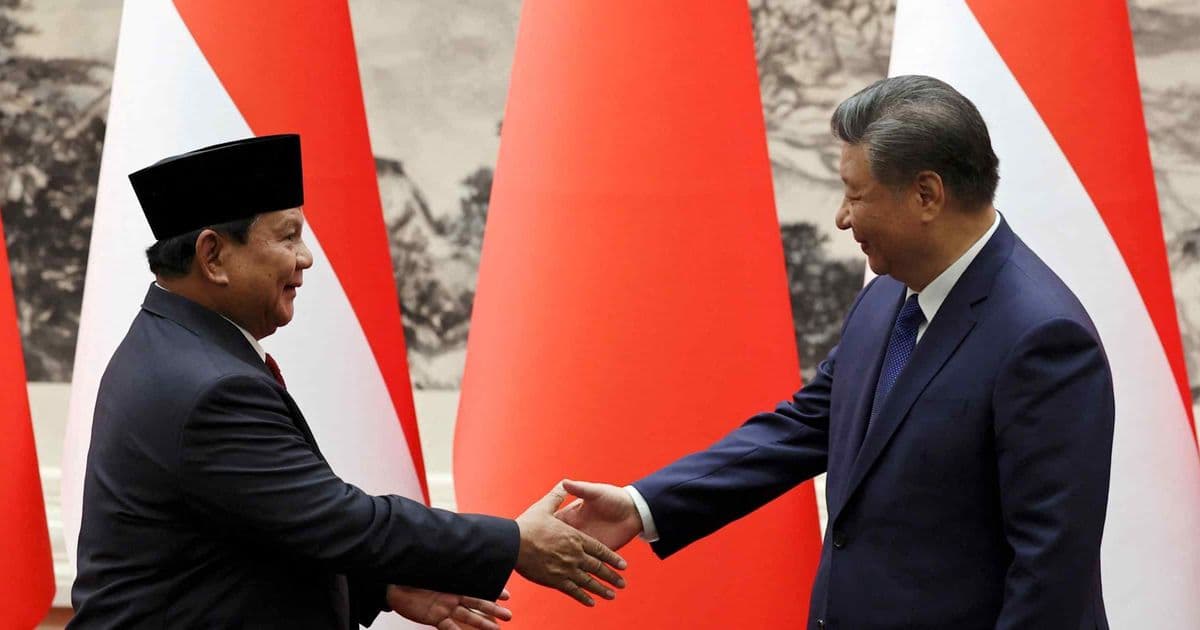
Indonesia’s push for greater control over strategic commodities and tighter banking rules has provoked push‑back from foreign investors and domestic banks. The article examines the economic rationale behind President Prabowo’s policies, the market reaction, and what the fallout means for Indonesia’s growth trajectory and its role in regional supply chains.
Indonesia’s Open‑Door Policy Meets Its Limits
By Irvan Maulana, Jakarta‑based independent policy analyst
May 25, 2026
Business news
Indonesia’s government has accelerated two policy tracks that were only hinted at in 2023. First, a new state‑run agency will oversee exports of “strategic” commodities such as nickel, bauxite and rare earths, imposing quotas and export‑license fees. Second, Bank Indonesia raised the policy rate by 50 basis points to 5.75 %, a move that surprised markets and forced private lenders to tighten credit.
The twin actions have already shown measurable impact. The Jakarta Stock Exchange’s IDX Composite slipped 2.3 % on the day of the rate hike, while the Indonesia Commodity Exchange (ICEX) recorded a 7 % drop in nickel futures after the export‑control announcement. Foreign‑direct investment (FDI) inflows for the first quarter of 2026 fell to $2.1 bn, down 18 % year‑on‑year, according to the Ministry of Investment.
Market context
Strategic commodity controls
Indonesia accounts for roughly 30 % of global nickel output and 45 % of bauxite production. The new agency, the Strategic Commodity Export Board (SCEB), will set annual export ceilings based on domestic processing capacity targets. The policy mirrors similar moves in Brazil’s iron‑ore sector and aims to push more raw material downstream into value‑added smelting and battery‑grade production.
However, the immediate market reaction suggests a pricing penalty for exporters. Nickel spot prices fell from $22,800 per tonne to $20,500 per tonne within a week of the announcement, reflecting concerns about reduced export volumes. International buyers such as Tesla and Volkswagen have issued statements warning of potential supply disruptions, prompting them to diversify sourcing to the Philippines and Canada.
Banking rule changes
The rate hike was accompanied by stricter capital‑adequacy requirements for private banks, raising the Common Equity Tier 1 (CET1) ratio floor from 12 % to 13.5 %. The move is intended to shore up financial stability amid rising non‑performing loans (NPLs) in the construction sector, which have climbed to 4.2 % of total loan books.
Private banks such as Bank Central Asia (BCA) and Bank Mandiri have already announced tighter loan‑to‑value (LTV) limits for commercial real‑estate projects, cutting new loan approvals by an estimated 15 % month‑on‑month. State‑owned banks, meanwhile, have been given a temporary exemption, allowing them to continue financing large‑scale infrastructure projects under the National Development Plan (RIPPN).
What it means
Short‑term pressure on growth
Indonesia’s GDP growth forecast for 2026 has been trimmed from 5.4 % to 4.9 % by the World Bank. The contraction in export revenues—particularly from nickel and bauxite—will shave roughly 0.3 % off the growth tally, while tighter credit conditions could dampen private‑sector investment by another 0.2 %.
Re‑balancing the value chain
The strategic‑commodity policy signals a clear intent to capture more of the downstream value chain. If the government can successfully expand domestic smelting capacity from the current 1.2 Mt to 2.5 Mt of nickel by 2030, the net effect could be a $4‑5 bn annual increase in value‑added exports. This would require substantial foreign‑partner participation, but the current climate of regulatory uncertainty may deter the very investors the policy hopes to attract.
Banking sector consolidation
Higher capital requirements are likely to accelerate consolidation among private banks. Smaller lenders with limited capital buffers may seek mergers or be absorbed by larger institutions, potentially creating a more concentrated banking landscape. For borrowers, the trade‑off will be higher borrowing costs and stricter underwriting standards, which could slow the expansion of the middle‑class consumer market.
Regional implications
Indonesia’s move could reshape Southeast Asia’s commodity supply dynamics. Neighboring countries such as the Philippines and Vietnam are poised to capture market share in nickel and bauxite, while Malaysia may see increased demand for its downstream battery‑cell manufacturing. The shift also aligns with the ASEAN Economic Community’s goal of deeper intra‑regional trade, but it may strain diplomatic ties with major importers like the United States, Japan and the European Union, which have expressed concern over supply‑chain reliability.
Bottom line: President Prabowo’s twin strategy of tightening export controls and strengthening banking prudence reflects a longer‑term vision of industrial upgrading and financial resilience. In the near term, however, the policies are generating market volatility, dampening foreign investment, and imposing tighter credit conditions. The key for policymakers will be to balance short‑run pain with the promised upside of a more self‑sufficient, higher‑value industrial base.
Comments
Please log in or register to join the discussion