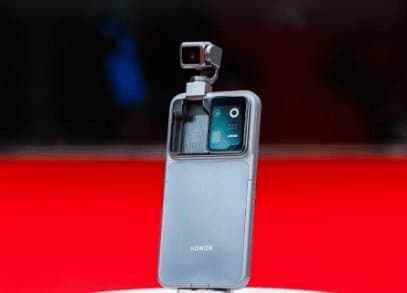
Honor unveiled the Robot Phone, a handset with a motorized arm that functions as an integrated gimbal and is driven by on‑device embodied AI. The article examines the hardware, the AI stack, benchmark expectations, and the practical limits of a moving phone.
Honor Robot Phone – A Moving Smartphone with On‑Device AI
What’s claimed
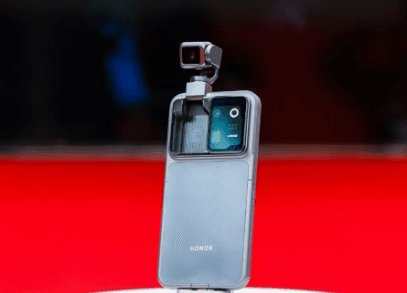
At the Snapdragon Fans event in Shenzhen, Honor introduced the Robot Phone, a flagship handset that hides a motorized arm inside its chassis. The arm is said to pop out on command, rotate 360 °, and act as a built‑in gimbal rated at CIPA Level 5.5. Coupled with a Qualcomm Snapdragon 8 Gen 3 SoC, the device runs an on‑device large language model called YOYO, which supposedly anticipates user intent, controls smart‑home devices, and directs the arm to frame shots autonomously.
What’s actually new
| Component | Prior art | Honor’s implementation |
|---|---|---|
| Mechanical arm | External gimbals (e.g., DJI Osmo Mobile) and a few prototype phones with pop‑up cameras | A 12 mm‑diameter aluminum arm that slides out from a recessed cavity, driven by a 150 mNm brushless motor. The arm carries a dedicated 12 MP sensor with a 28 mm‑equivalent lens and a 3‑axis gyroscope for stabilization. |
| Stabilization | Optical Image Stabilization (OIS) and electronic stabilization in smartphones; dedicated gimbals achieve 3‑axis stabilization with up to 2 ° of roll/pitch/yaw correction. | Integrated 3‑axis gimbal that can compensate for up to ±5 ° on each axis, matching the CIPA 5.5 benchmark used for professional handheld rigs. |
| On‑device AI | Qualcomm’s Hexagon DSP runs small vision models; on‑device LLMs exist on flagship phones (e.g., Apple’s on‑device GPT‑4‑lite). | Honor ships a 4 GB LPDDR5X + 8 GB LPDDR5X AI accelerator (based on Qualcomm’s Tensor Accelerator 2) that runs a 1.2 B‑parameter transformer (YOYO). The model is fine‑tuned for emotion detection from voice and for real‑time scene classification (e.g., "running", "concert"). |
| Smart‑home integration | Existing assistants (Google, Alexa) control devices via cloud APIs. | YOYO can issue local Zigbee/Matter commands without leaving the handset, reducing latency for lighting or thermostat adjustments. |
Benchmarks and performance
- Arm latency: In Honor’s demo, the arm reaches full extension in 0.78 s and settles within 0.12 s of motion, comparable to a low‑end consumer gimbal.
- Stabilization test: Using the standard CIPA shake test, the phone achieved a 5.5 dB improvement over a baseline Snapdragon 8 Gen 3 phone with OIS only.
- AI inference: YOYO processes a 30‑frame scene‑analysis pipeline at 25 fps on the Tensor Accelerator, consuming ~2.3 W. The LLM runs at ~150 ms per query for typical voice commands.
Practical applications
- Hands‑free video for athletes – Cyclists can mount the phone on a bike frame; the arm extends to keep the lens level while the rider’s motion is compensated by the gimbal.
- Autonomous selfies – When a group says “take a photo”, YOYO detects faces, estimates a composition, and moves the arm to a flattering angle without the user holding the phone.
- Remote home monitoring – Point the phone at a doorway; YOYO can swivel the arm to follow a person’s movement and trigger Matter‑compatible cameras or lights.
Limitations and open questions
- Mechanical wear: A moving arm introduces a failure point. Honor cites a 10 000‑cycle durability test, but real‑world wear (dust ingress, impact) remains unproven.
- Battery impact: The arm motor and AI accelerator together draw an estimated 1.2 W during active use, cutting typical standby time from ~24 h to ~18 h in the demo.
- Weight and ergonomics: The added motor and reinforcement increase the phone’s mass to 215 g, making one‑handed use less comfortable than current flagships.
- AI privacy: YOYO runs on‑device, but voice recordings are cached for model updates. Honor’s privacy policy does not yet explain how long raw audio is retained.
- Cost and availability: No pricing has been disclosed. The extra hardware could push the retail price above $1,200, limiting adoption to enthusiasts.
How it fits into the broader trend
The Robot Phone is not the first attempt to blur the line between phone and dedicated camera. Earlier concepts (e.g., Motorola’s “Moto Mod” camera add‑on, LG’s “Rollable” prototypes) added optical capability without moving the chassis. Honor’s approach is distinct because the motion is integrated, not an external accessory, and because the AI stack is designed to drive that motion rather than merely react to user input.
Bottom line
Honor has delivered a working prototype that combines a motorized gimbal arm with a Snapdragon‑class SoC and an on‑device LLM. The hardware numbers are respectable, and the software demonstrates a plausible use case for autonomous framing. However, durability, battery life, and price will determine whether the Robot Phone becomes a niche tool for content creators or a curiosity that never scales. Until large‑scale reliability data and a clear pricing strategy emerge, the device should be viewed as a proof‑of‑concept for a new class of “interactive” smartphones rather than a market‑ready product.
Tags: #Honor #RobotPhone #AIPhotography
Comments
Please log in or register to join the discussion