A contentious vote to fund the Department of Homeland Security and Immigration and Customs Enforcement is creating significant internal divisions within the Democratic Party, as lawmakers grapple with balancing security priorities against progressive immigration policy stances in the wake of a high-profile shooting in Minneapolis.
The Democratic caucus is navigating a complex political minefield as it prepares for a critical vote on funding for the Department of Homeland Security (DHS) and Immigration and Customs Enforcement (ICE). This legislative battle comes at a particularly sensitive moment, following a recent shooting incident in Minneapolis that has intensified national debates around public safety, immigration enforcement, and federal agency resources.
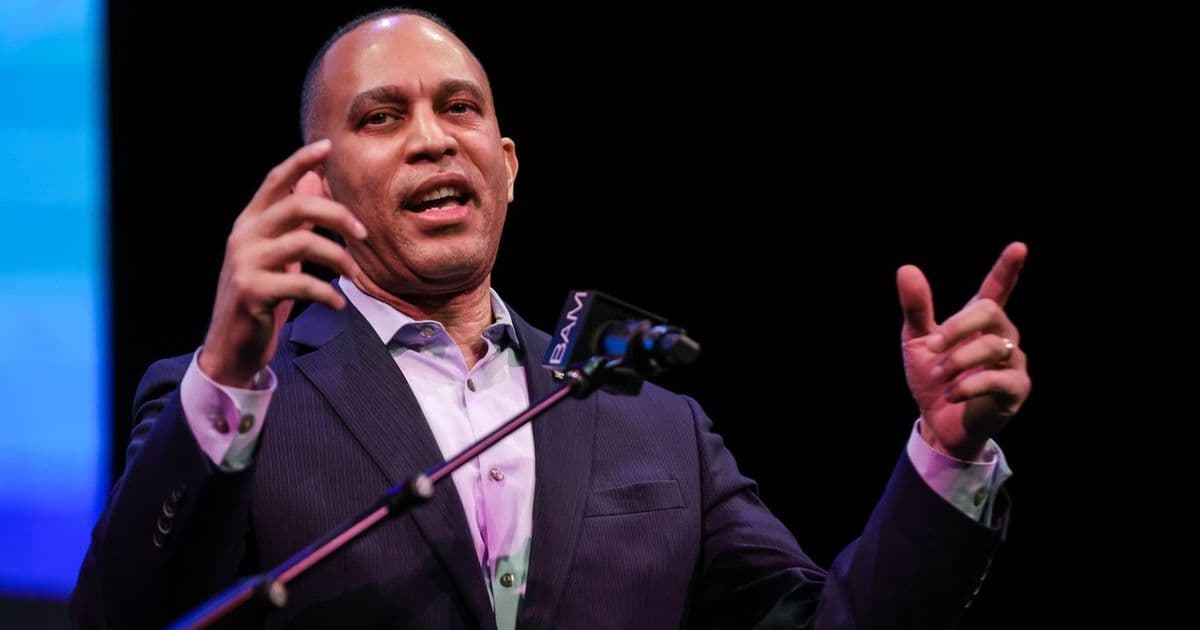
House Minority Leader Hakeem Jeffries has characterized the upcoming vote as "tough," acknowledging the deep ideological rifts within his party. The funding package represents a classic political dilemma for Democrats: supporting essential security operations while simultaneously satisfying progressive constituents who have long advocated for reducing or restructuring ICE's mandate. The Minneapolis shooting has added a layer of urgency to the discussion, with some lawmakers arguing that robust funding for federal law enforcement agencies is necessary for public safety, while others maintain that the incident should not be used to justify expanding controversial immigration enforcement powers.
The financial figures at stake are substantial. The DHS budget request for fiscal year 2024 includes approximately $60 billion in discretionary funding, with ICE operations accounting for roughly $8 billion of that total. These resources support everything from border security operations to interior enforcement activities, including detention facilities, removal proceedings, and investigative units. For context, ICE's budget has grown from approximately $5.9 billion in 2010 to its current levels, reflecting both inflation and expanded operational mandates.
Market implications extend beyond immediate budgetary concerns. The vote's outcome could signal broader shifts in Democratic policy priorities ahead of the 2026 midterm elections. Investors tracking government services and security technology stocks are monitoring the situation closely, as DHS and ICE contracts represent significant revenue streams for companies like Palantir Technologies, which provides data analytics platforms for immigration enforcement, and private prison operators such as CoreCivic and GEO Group, which manage detention facilities under ICE contracts. A reduction in ICE funding could impact these companies' revenue projections, while increased DHS spending might benefit cybersecurity and border technology firms.
Strategic implications for the Democratic Party are profound. The vote forces a public reckoning between the party's establishment wing, which prioritizes electoral viability in swing districts, and its progressive base, which demands accountability for immigration enforcement practices. This tension mirrors broader internal debates about the party's direction on security and immigration policy. Some moderate Democrats from competitive districts may feel compelled to support the funding package to demonstrate toughness on crime and border security, while progressive members from safe blue districts could face primary challenges if they vote in favor of expanding ICE's resources.
The Minneapolis shooting has complicated an already difficult vote. While the incident involved a different set of circumstances than typical immigration enforcement scenarios, it has reignited conversations about the role of federal agencies in addressing violent crime. Some Democratic strategists see an opportunity to frame support for DHS funding as a public safety measure rather than an endorsement of specific immigration policies. Others worry that any vote perceived as strengthening ICE could alienate key constituencies, including immigrant communities and young voters who have pushed for immigration reform.
Looking at the broader legislative landscape, this vote represents one of several funding battles that will shape the remainder of the congressional session. The outcome could set a precedent for how Democrats approach other controversial agency funding requests, including those for the FBI, ATF, and other law enforcement bodies. It may also influence negotiations on comprehensive immigration reform legislation that has been stalled in Congress for years.
For tech industry observers, the vote has implications for government technology procurement. DHS is one of the largest federal agencies for technology spending, with annual IT budgets exceeding $7 billion. Companies providing surveillance technology, data analytics platforms, and border security systems are closely watching how funding levels might shift. The debate also touches on emerging technologies like facial recognition and AI-powered monitoring systems, which have faced criticism from civil liberties groups but continue to receive federal investment.
The political calculus extends to the 2024 presidential election cycle. Democratic candidates will need to navigate questions about their stance on immigration enforcement funding during debates and campaign appearances. A vote against DHS funding could be used by opponents to portray Democrats as weak on border security, while a vote in favor risks depressing turnout among progressive voters who have made immigration reform a priority issue.
As the vote approaches, party leadership is working to manage the internal divisions through whip counts and negotiations. Some members are seeking assurances that funding will come with increased oversight and restrictions on certain ICE activities, while others are pushing for broader immigration policy changes to be attached to the funding package. The final outcome will likely depend on whether leadership can craft a compromise that satisfies enough members to secure passage while minimizing defections from either wing of the party.
The Minneapolis tragedy adds an emotional dimension to what is already a politically charged vote. Lawmakers are balancing their response to a specific incident with the broader policy implications of funding decisions that will affect thousands of federal employees and millions of immigrants living in the United States. How Democrats navigate this intersection of public safety, immigration policy, and political strategy will provide important insights into the party's evolving identity and its approach to one of the most divisive issues in American politics.
Comments
Please log in or register to join the discussion