A thoughtful exploration of fifth normal form (5NF) that challenges traditional teaching methods and proposes a more intuitive approach based on business requirements and logical modeling.
The conventional presentation of fifth normal form (5NF) in database literature has long been a source of confusion for practitioners and students alike. This article deconstructs the traditional approach to understanding 5NF, arguing that the confusion surrounding this concept is largely artificial and stems from unmotivated examples and unnecessary table decomposition exercises.
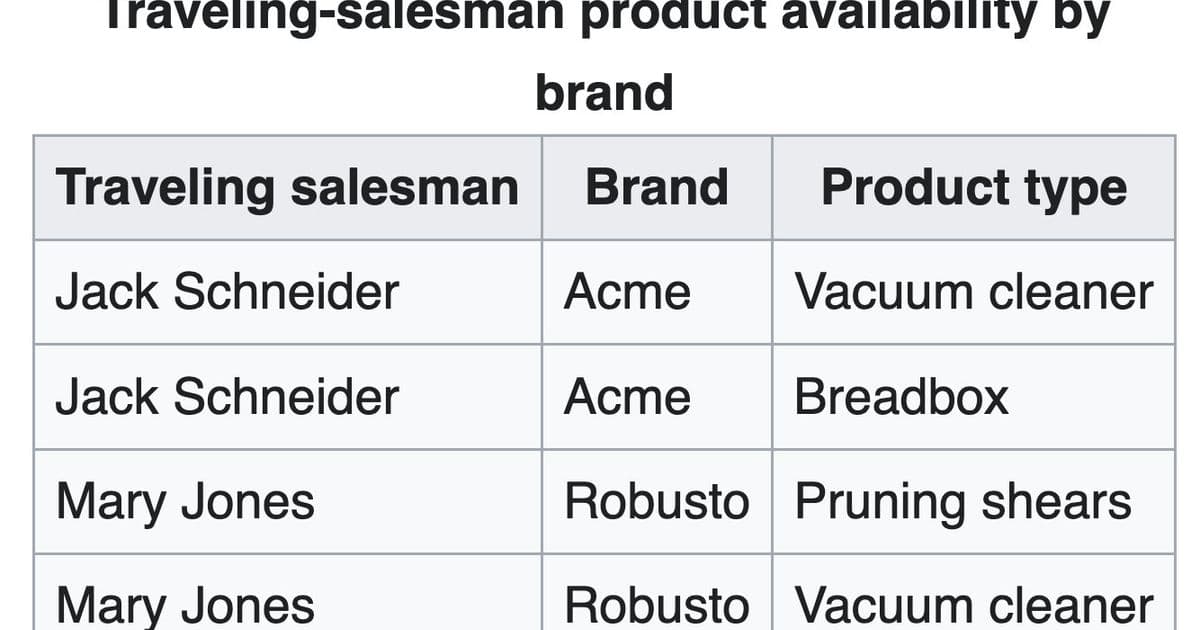
The traditional method of teaching 5NF typically begins with a contrived three-column table example, followed by an artificial splitting operation that doesn't reflect real-world database design practices. As the author astutely observes, this approach creates an unnecessary mystique around higher normal forms. The Wikipedia example of a traveling salesman, brands, and product types serves as a prime example of this problematic pedagogical approach, built upon an unrealistic business premise that "a salesperson must offer product type P from both brands" if they sell anything else from those brands.
A more sensible approach to database design begins not with abstract normal form definitions, but with concrete business requirements. This logical sequence—starting with business needs, creating a logical model, and then designing a physical table schema—aligns much more closely with actual practice and yields a more intuitive understanding of normalization principles.
Through examining practical examples, two fundamental patterns emerge that naturally accommodate 5NF requirements:
The AB-BC-AC Triangle Pattern
Illustrated through the "ice cream" example, this pattern involves three entities connected in a triangular relationship: Brands offer Flavours, Friends like Brands, and Friends like Flavours. Each relationship has many-to-many (M:N) cardinality, implemented through junction tables that connect the anchors. This pattern captures scenarios where preferences or relationships exist between multiple entities in a way that requires all combinations to be represented.
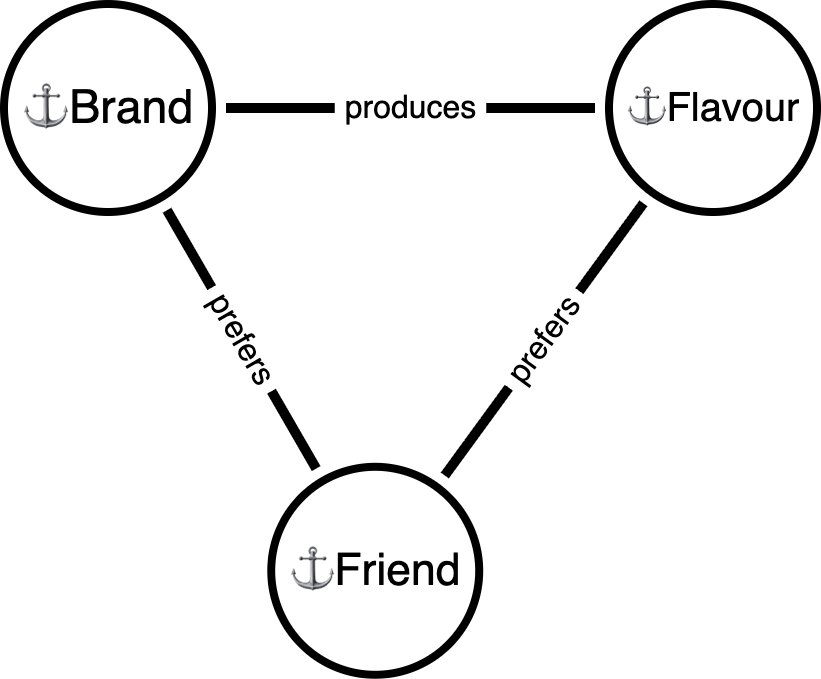
The logical model translates cleanly to physical tables:
- Brand-Flavour relationships stored in
brand_flavours - Friend-Brand relationships stored in
friend_brands - Friend-Flavour relationships stored in
friend_flavours
This structure ensures that if a friend likes multiple brands and multiple flavors, all valid combinations are represented without redundancy or anomalies.
The ABC+D Star Pattern
The "musicians" example demonstrates a different pattern involving four entities: Concert, Instrument, Musician, and an additional anchor called Performance. This creates a distinctive three-pointed star shape where Performance connects to the other three entities through one-to-many (1:N) relationships.
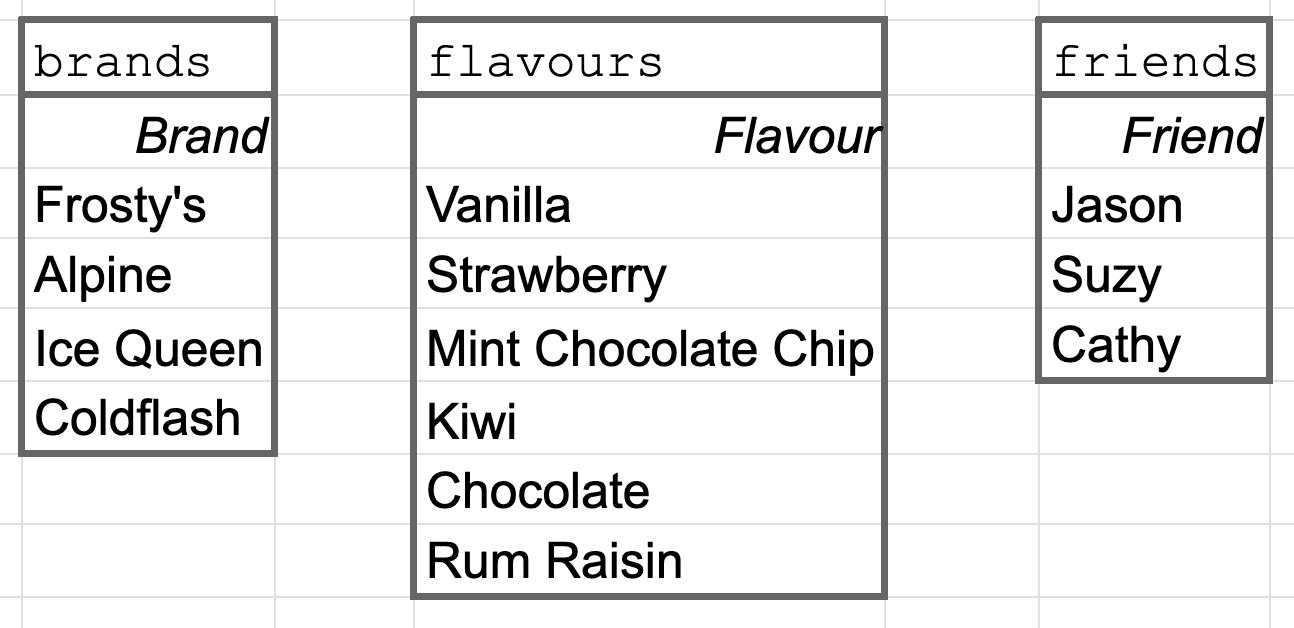
This pattern introduces an important design consideration: the choice between composite and synthetic primary keys. When business requirements dictate that a particular combination of attributes must be unique (as in a musician performing a specific instrument in a specific concert), a composite primary key can be used. However, when no such uniqueness constraint exists or when a synthetic identifier is preferred, an auto-incrementing ID column serves the purpose equally well.
The article's most significant contribution is demonstrating that understanding 5NF doesn't require reasoning about table decompositions. Instead, 5NF-compliant designs emerge naturally from properly constructed logical models that accurately represent business requirements. The two patterns identified—AB-BC-AC triangle and ABC+D star—provide practical frameworks for recognizing and implementing 5NF structures.
The extended examples further enrich this understanding by showing how both patterns can coexist and how they might be extended to handle more complex scenarios. For instance, adding specific ice cream preferences alongside general preferences demonstrates how different relationship types can be modeled simultaneously, while the discussion of "skills" versus "performances" in the musicians example highlights the importance of distinguishing between different business processes.
This approach to understanding 5NF represents a significant pedagogical shift. By focusing on business requirements and logical modeling first, the concept of 5NF becomes accessible without the confusing abstractions that have traditionally surrounded it. The patterns that emerge—whether a triangular relationship between three entities or a star pattern with a central connecting entity—provide practical guidance for database designers while ensuring normalization principles are naturally satisfied.
In conclusion, the article successfully demystifies 5NF by showing it as a natural outcome of good database design practices rather than an abstract theoretical concept. By starting with business requirements and building logical models that accurately represent them, database designers can create normalized schemas without ever needing to explicitly reason about fifth normal form or perform artificial table decompositions.
Comments
Please log in or register to join the discussion