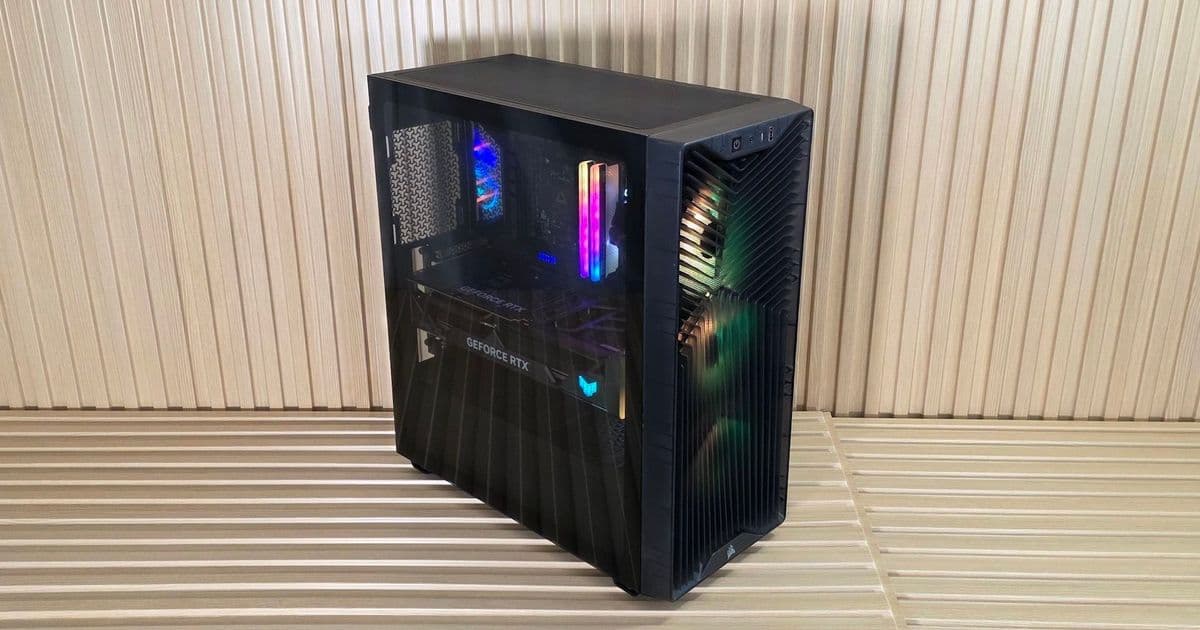
The Corsair 320D RS ARGB is a budget‑focused mid‑tower case that ships with three RS120 ARGB fans, a smoked‑glass side panel and a Y‑pattern front grille. Priced at $79.99 (non‑RGB $69.99), it supports Mini‑ITX to ATX boards, up to 360 mm radiators on the front and top, and includes an anti‑sag GPU strut. While it lacks premium extras such as a fan hub or vertical GPU mount, its airflow, compatibility and price make it a strong contender in the sub‑$80 segment.
Announcement
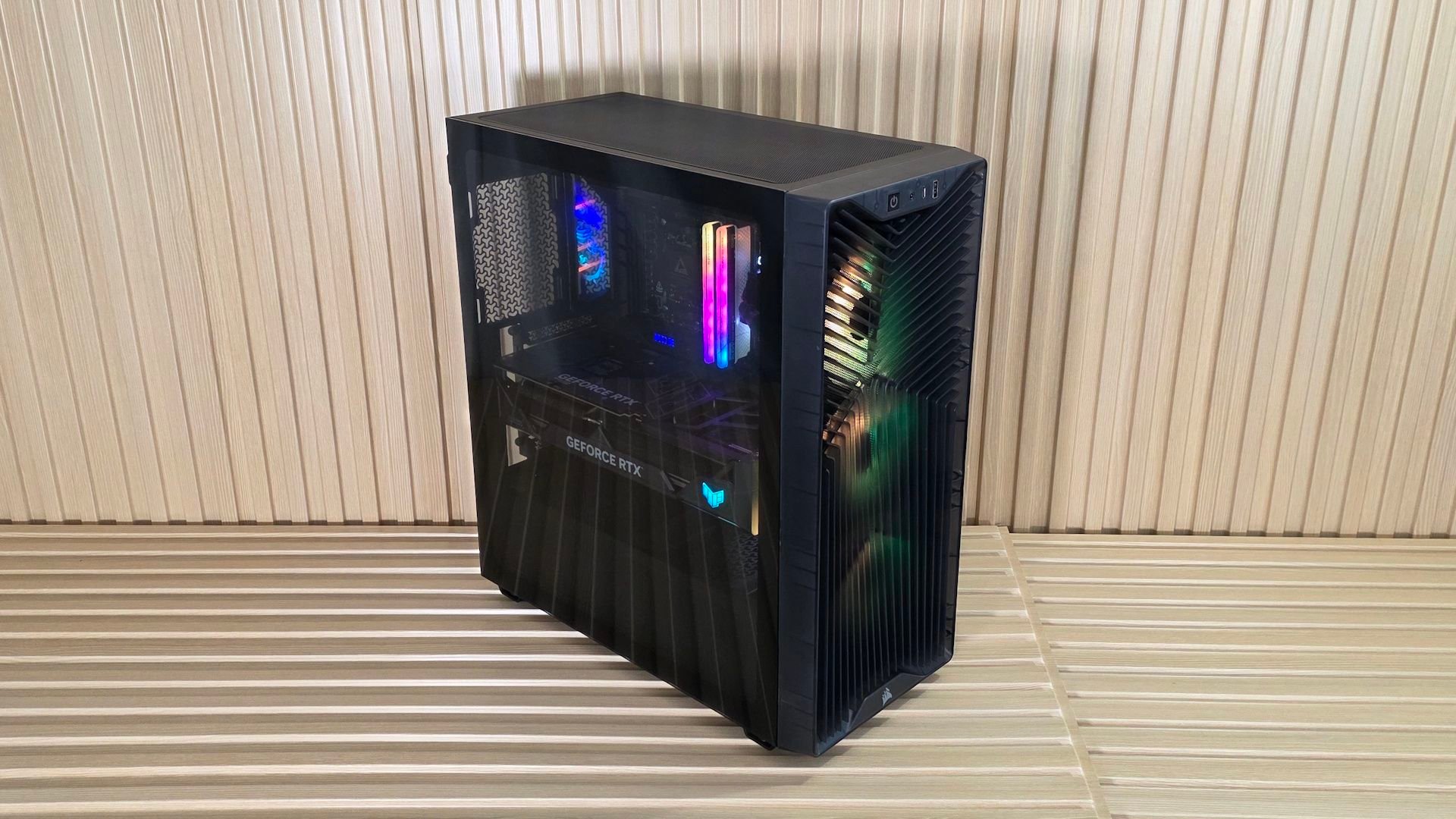
Corsair has added a new entry to its case lineup: the 3200D RS ARGB mid‑tower. At $79.99 for the RGB version and $69.99 for the non‑RGB model, the chassis targets builders who want decent airflow and a clean look without spending a premium. The package includes three Corsair RS120 ARGB fans, a smoked‑glass side panel and a distinctive Y‑pattern front grille.
Technical specifications
| Feature | Detail |
|---|---|
| Form factor | Mid‑tower (495 × 458 × 219 mm) |
| Supported boards | Mini‑ITX, Micro‑ATX, ATX (E‑ATX not officially supported) |
| Front I/O | Power button (white LED), 3.5 mm audio jack, USB 3.2 Gen2×2 Type‑C (20 Gbps), USB 2.0 Type‑A (480 Mbps) |
| Expansion slots | 7 horizontal PCIe slots |
| Drive bays | 1 × 3.5‑inch, 2 × 2.5‑inch |
| Fan support | Front: up to 360 mm (3 × 120 mm) – includes three RS120 ARGB fans (2 100 RPM, 72 CFM each) Top: up to 360 mm Rear: 120 mm Bottom: none |
| Radiator support | Front & top: 240/280/360 mm Rear: 120 mm |
| GPU clearance | 400 mm (no vertical mount) |
| CPU cooler clearance | 165 mm |
| PSU length | 180 mm, tool‑less bottom mounting |
| Additional features | Rear‑connect/BTF motherboard compatibility, integrated anti‑sag GPU strut, optional dust‑filter mesh, captive thumbscrews for side panel |
The front Y‑pattern grille feeds air directly to the three pre‑installed RS120 fans. Each fan can push 72 CFM at full speed, giving the chassis a baseline airflow of roughly 216 CFM without any additional fans or radiators. The top and front mounting points can each accommodate a 360 mm radiator, allowing high‑performance AIO coolers to be installed while maintaining a positive‑pressure airflow design.
Cable management is aided by zip‑ties supplied in the box and a rear‑connect motherboard option that moves I/O cables to the back of the board, freeing up the front panel area. The side panel is secured with captive thumbscrews and features a subtle indented pattern that adds visual interest without compromising structural rigidity.
Market implications
At a sub‑$80 price point, the 3200D RS ARGB competes directly with other entry‑level cases such as the Phanteks XT Pro Ultra and the Lian‑Li LanCool 207. Those rivals typically ship with four 140 mm fans or a mix of fan‑only configurations, but they often limit front radiator size to 240 mm. Corsair’s decision to allow a 360 mm front radiator gives the 3200D an edge for builders planning high‑end water‑cooling loops while staying within a tight budget.
The inclusion of three branded ARGB fans adds perceived value; a three‑pack of RS120 fans retails for about $45, so the case essentially bundles $45 of hardware for free. For cost‑sensitive gamers and workstation builders, this can offset the need to purchase separate fans, which often pushes the total build cost above $1,000.
Supply‑chain considerations also play a role. By using a standard steel and tempered‑glass construction rather than exotic alloys or extensive modular rail systems, Corsor can source components from multiple vendors, reducing exposure to the silicon‑fab shortages that have affected higher‑margin cases. The modest front‑panel USB 2.0 port is a legacy element, but Corsair has signaled an upcoming revision with a USB 3.0 Type‑A port, indicating a quick response to market feedback without a full redesign.
Overall, the 3200D RS ARGB fills a niche where performance‑oriented airflow and water‑cooling compatibility meet aggressive pricing. It is unlikely to dominate the premium segment, but its blend of features and cost efficiency makes it a compelling option for the growing segment of builders who prioritize value over boutique aesthetics.
Comments
Please log in or register to join the discussion