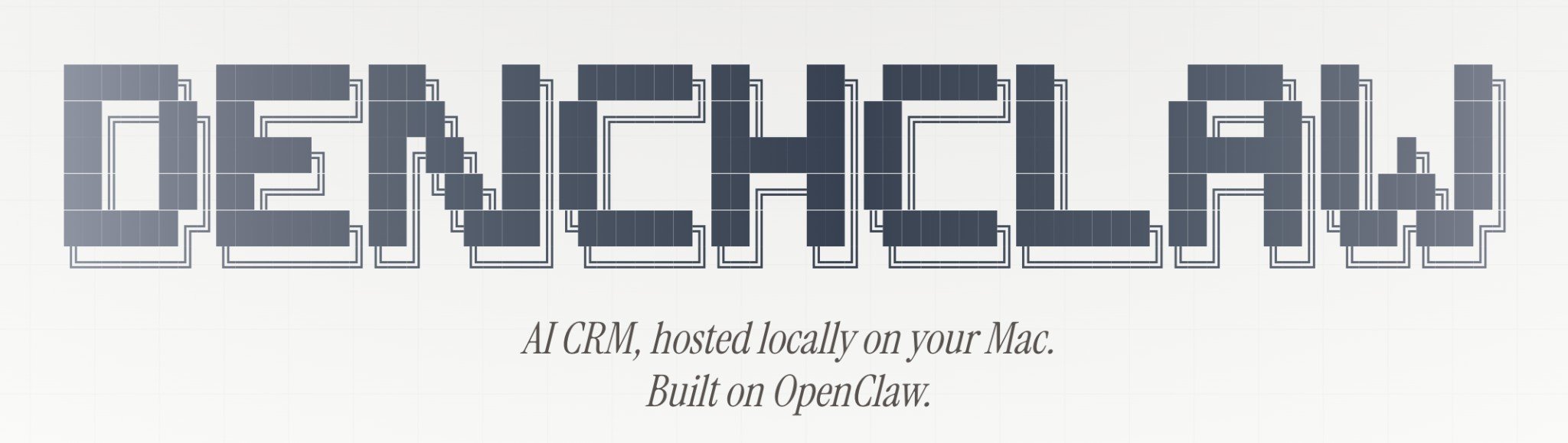
DenchClaw is a locally-hosted AI CRM and productivity platform built on the OpenClaw framework, offering automation agents and knowledge management without cloud dependencies.
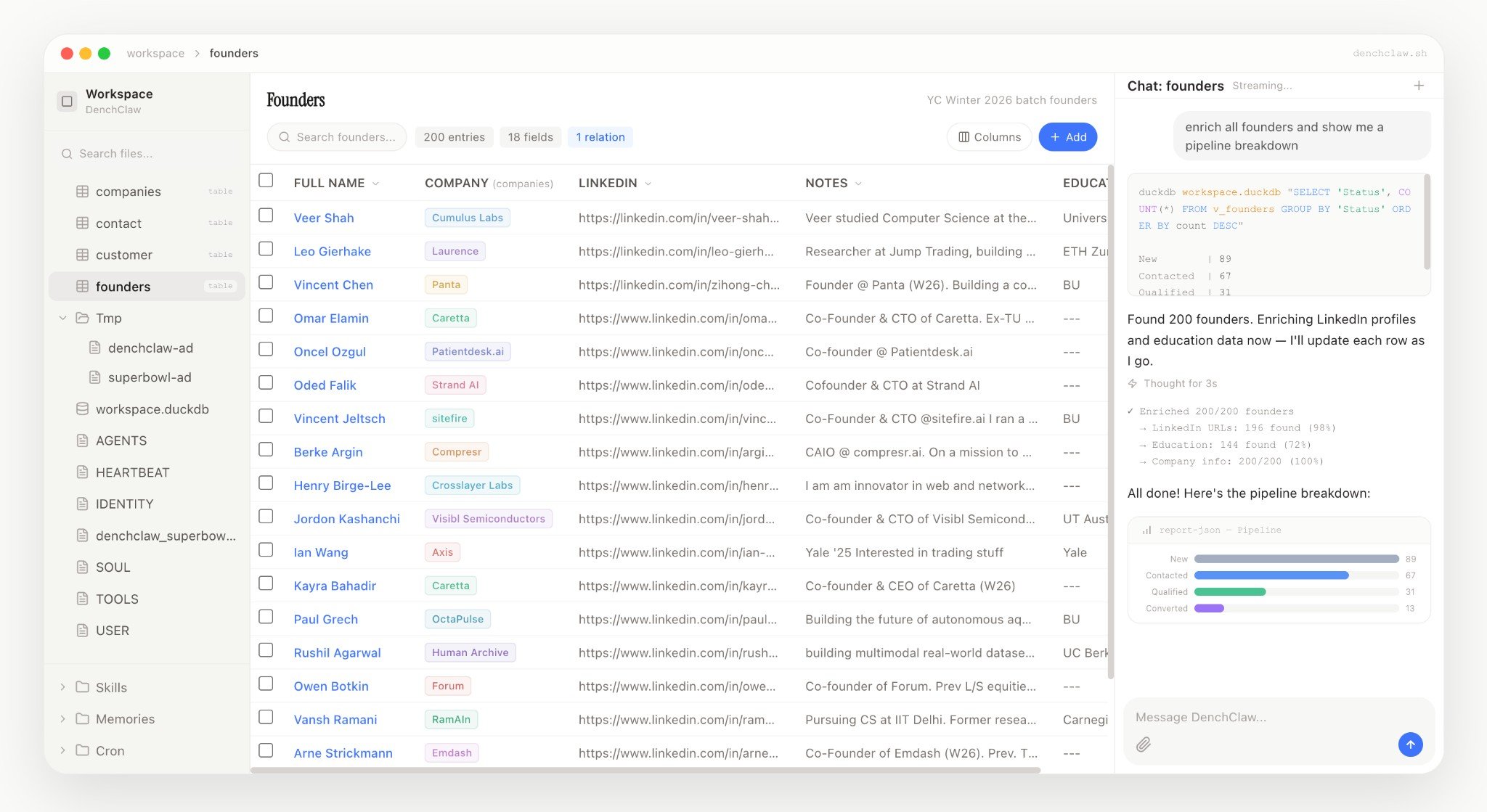
A new open-source productivity platform called DenchClaw has emerged that promises to handle all knowledge work through a locally-hosted AI CRM system. Built on the OpenClaw framework, DenchClaw positions itself as a comprehensive solution for CRM automation, outreach, and general productivity tasks—all running entirely on your Mac without requiring cloud services.
Local-First AI Productivity
The platform's core value proposition centers on privacy and control. Unlike cloud-based AI tools that send your data to external servers, DenchClaw operates entirely locally. After installing Node 22+ and running npx denchclaw, the system opens at localhost:3100 and guides users through an onboarding wizard. This local-first approach means sensitive business data, customer information, and personal knowledge remain on your machine.
OpenClaw Framework Foundation
DenchClaw leverages the OpenClaw framework as its foundation, which appears to be a modular system for building AI-powered productivity tools. The framework structure allows for extensibility through a Skills Store, suggesting users can add specialized capabilities as needed. This architecture separates the core functionality from domain-specific features, making it easier to customize for different workflows.
Command-Line Interface and Web UI
The platform offers both command-line and web interface options. The CLI provides direct control with commands like npx denchclaw update, npx denchclaw restart, and npx denchclaw stop for managing the server. More interestingly, it supports OpenClaw commands through the openclaw --profile dench syntax, allowing users to interact with the gateway, configure settings, and manage installations.
For development, the project uses pnpm for package management with standard commands like pnpm install, pnpm build, and pnpm dev. The web UI development follows a similar pattern with pnpm web:dev, suggesting a modern JavaScript stack.
MIT License and Extensibility
DenchClaw is MIT licensed, encouraging users to fork, extend, and modify the software. This open approach aligns with the growing trend of transparent AI tools that users can inspect and adapt to their specific needs. The project's GitHub repository provides the full source code for those who want to dive deeper into the implementation.
Practical Applications
While the project claims to handle "all knowledge work ever," the practical applications seem focused on CRM automation and outreach. This suggests DenchClaw could serve as an alternative to cloud-based CRM systems like HubSpot or Salesforce, but with the added benefit of local data storage and potentially lower costs.
Getting Started
Installation requires Node 22+, which is a reasonable requirement for modern JavaScript applications. The npx-based installation makes it accessible without requiring global npm package installation. The onboarding wizard presumably helps users configure the system for their specific use case, whether that's sales outreach, customer management, or general knowledge organization.
Community and Support
The project maintains a Discord server for community support and discussion, which is becoming standard for open-source projects. The Skills Store suggests an ecosystem approach where third-party developers can contribute specialized capabilities to extend the platform's functionality.
Technical Considerations
Running AI workloads locally requires significant computational resources, particularly for larger language models. While the project doesn't specify which models it uses or their size, users should be prepared for potentially high memory and CPU usage, especially when processing large datasets or running complex automation tasks.
The Local AI Trend
DenchClaw fits into a broader movement toward local AI processing, driven by privacy concerns and the desire for offline functionality. As AI models become more efficient and capable of running on consumer hardware, we're likely to see more tools like this that offer the benefits of AI without the privacy trade-offs of cloud services.
For teams and individuals who prioritize data sovereignty and want to avoid subscription-based cloud services, DenchClaw presents an interesting open-source alternative. However, the "all knowledge work ever" claim may be optimistic—the platform's success will depend on how well it handles real-world use cases and whether the community builds out the Skills Store with useful extensions.

Comments
Please log in or register to join the discussion