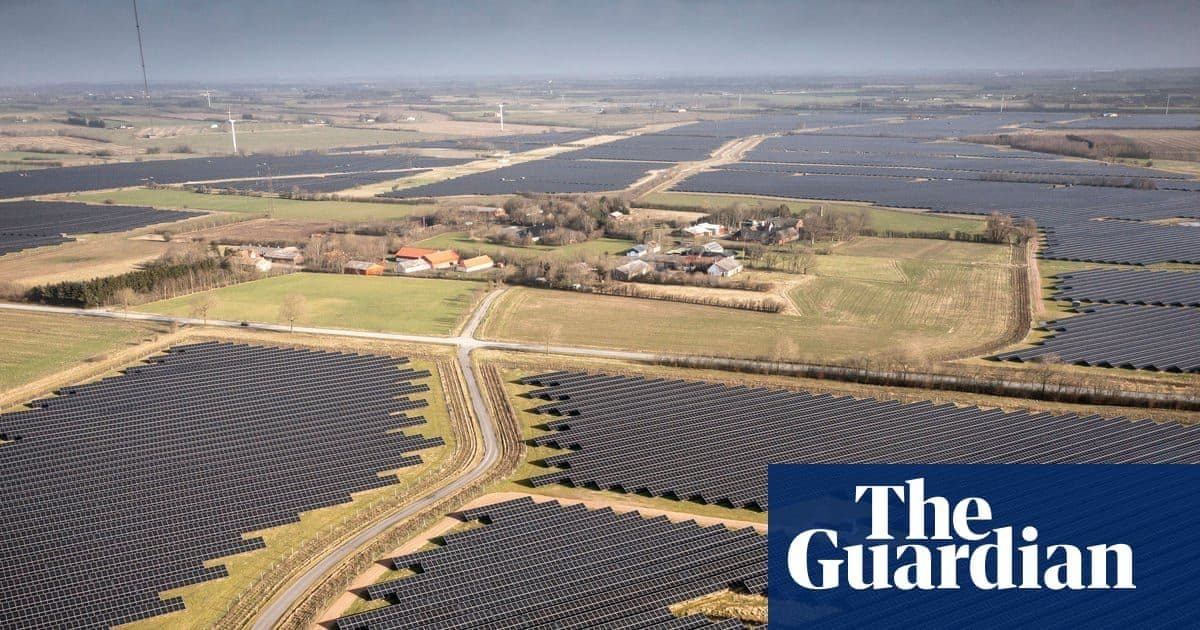
Denmark, once a renewable energy pioneer, faces growing opposition to large-scale solar projects as rural communities push back against transforming farmland into solar fields.
Denmark has long been celebrated as a global leader in renewable energy, with ambitious climate goals and a reputation for environmental innovation. But beneath this green veneer, a growing tension is emerging between the country's renewable energy ambitions and the concerns of rural communities who feel left behind by the solar revolution.
In the village of Hjolderup, located in northern Jutland, the landscape tells a story of this conflict. What was once traditional farmland now stretches out in vast fields of solar panels, transforming the rural character of the area. The image of Hjolderup, surrounded by these gleaming installations, has become emblematic of a broader debate playing out across Denmark.
[IMAGE:3]
The phrase "Yes to fields of wheat, no to fields of iron" has emerged as a rallying cry for opponents of large-scale solar developments. This sentiment captures the frustration of many rural residents who see their agricultural heritage being replaced by industrial-scale energy infrastructure. For these communities, the spread of solar panels represents more than just a change in land use—it's a fundamental shift in their way of life.
Denmark's solar expansion accelerated rapidly in recent years, driven by both national climate targets and attractive subsidies for renewable energy projects. The country aims to achieve 100% renewable electricity by 2030, and solar power has been a key component of this strategy. However, the speed and scale of deployment has caught many rural areas off guard.
Local politicians in affected regions report that solar projects have become a divisive issue, particularly in smaller communities where residents feel their voices aren't being heard in national energy planning. The tension is especially acute in areas where prime agricultural land is being converted to solar farms, raising concerns about food security and rural economic sustainability.
Critics argue that the current approach to solar development prioritizes efficiency and cost-effectiveness over community impact and local character. Large, centralized solar installations on farmland are often cheaper to build and maintain than distributed systems or installations on already-developed land, but they come with significant social costs.
Supporters of rural solar development counter that these projects bring economic benefits to struggling agricultural communities, including lease payments to landowners and tax revenue for local governments. They also point out that solar panels can coexist with certain types of agriculture, such as sheep grazing or beekeeping, creating what's known as "agrivoltaic" systems.
[IMAGE:1]
The Danish experience reflects a broader challenge facing renewable energy transitions worldwide: how to balance the urgent need for clean energy infrastructure with the legitimate concerns of communities that bear the direct impacts of that infrastructure. Similar debates are playing out in countries from the United States to Germany, where rural opposition to wind and solar projects has slowed the energy transition.
Some Danish policymakers are now acknowledging that the current approach may need recalibration. Proposals include giving local communities more say in project siting, requiring developers to contribute to community funds, and prioritizing solar installations on rooftops, parking lots, and other already-developed spaces before converting farmland.
The situation in Denmark also highlights the importance of just transition principles in renewable energy planning. While the country has been successful in setting ambitious climate targets, the implementation has revealed gaps in ensuring that the benefits and burdens of the energy transition are equitably distributed.
As Denmark grapples with this challenge, the outcome could have implications far beyond its borders. The country's experience offers valuable lessons for other nations pursuing aggressive renewable energy targets while trying to maintain social cohesion and democratic legitimacy in the face of rapid change.
The tension between Hjolderup's solar panels and the surrounding wheat fields isn't just a local dispute—it's a microcosm of the complex trade-offs that come with building a sustainable energy future. Denmark's struggle to reconcile its green ambitions with rural realities may ultimately determine whether its renewable energy revolution succeeds or stalls at the hands of those it was meant to benefit.
[IMAGE:2]
Comments
Please log in or register to join the discussion