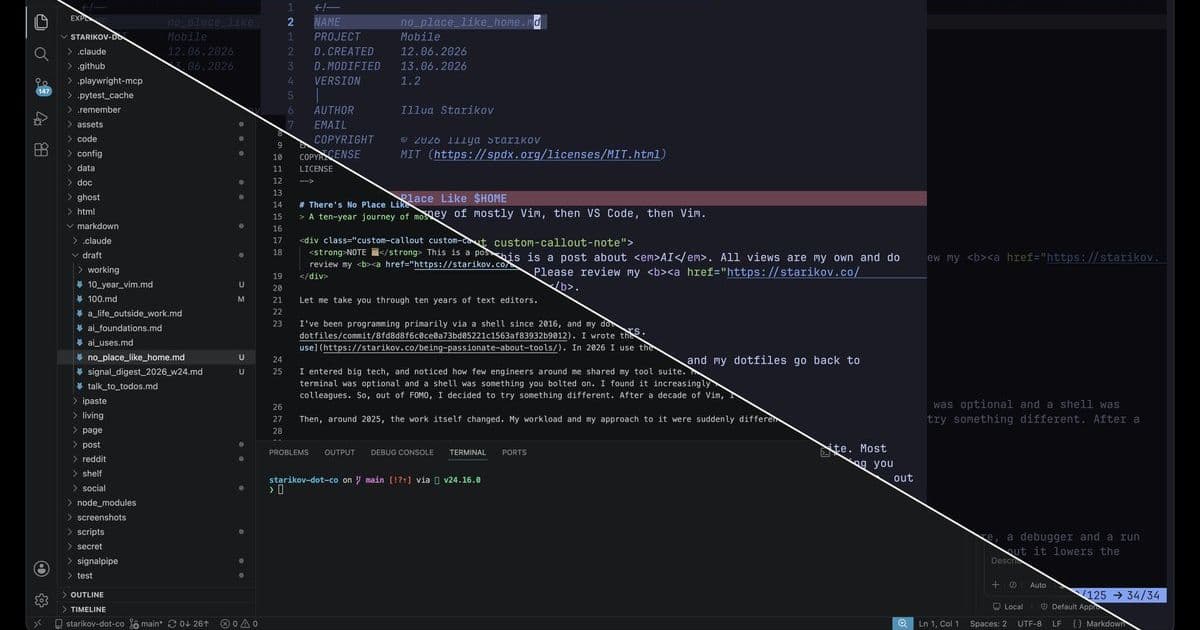
Illya Starikov argues that AI makes reading code the main job, and his return from VS Code to Vim shows how editor choice shapes trust in generated work.
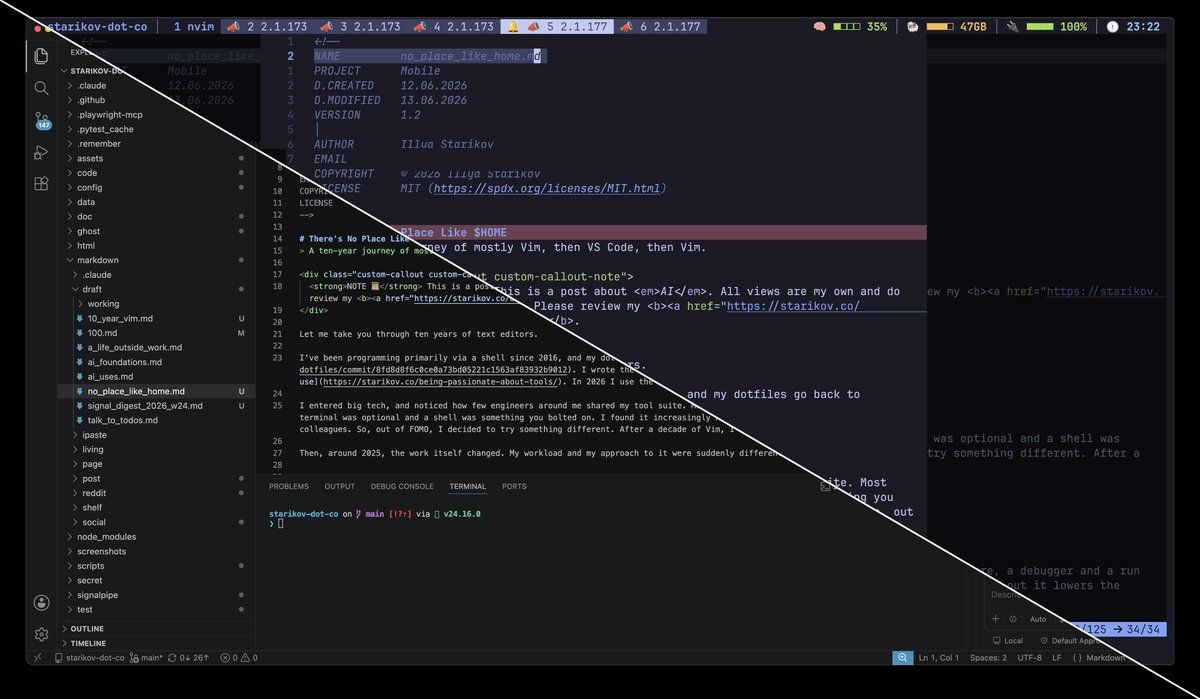
Illya Starikov spent a decade in Vim, moved to Visual Studio Code to match colleagues and modern AI workflows, then returned to Vim after agent-driven coding made code review feel more important than code entry.
Starikov's June 16, 2026, essay, "There's No Place Like $HOME," frames the editor switch as a test of how developers should work when AI can draft code faster than humans can read it. He names Claude Code as the tool that changed his calculus in 2025.
His argument centers on control. VS Code gave him integrated version control, clickable compiler paths, panels, menus and language-server features with little setup. Vim gave him a keyboard grammar for reading code: gd for definitions, gr for references, Ctrl-o for jump history, % for matching braces and ci( for changing arguments without mouse selection.
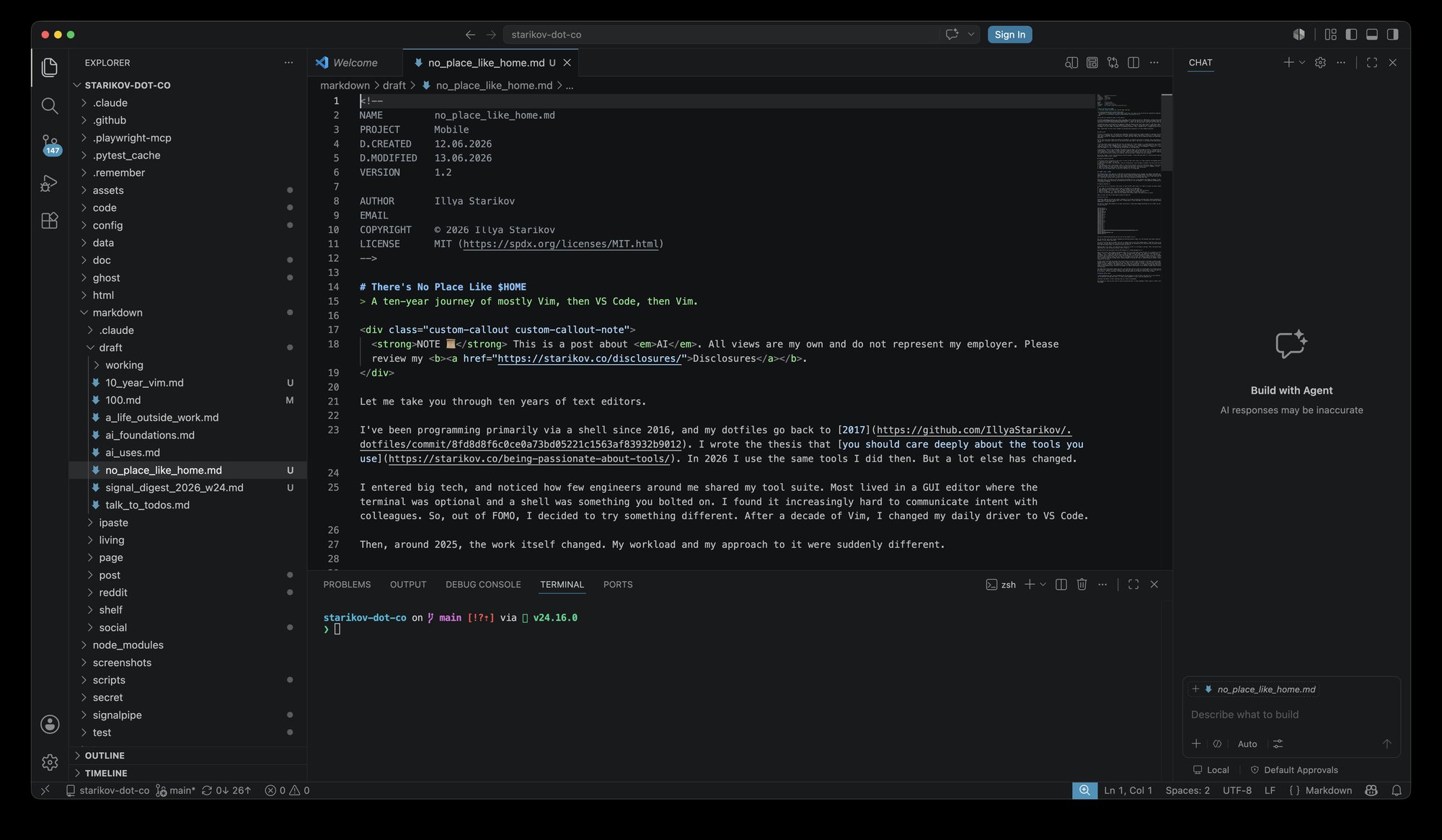
Starikov does not treat VS Code as a weak tool. He credits it with lowering the floor for new programmers and showing him editor features he later rebuilt in Vim. He also points to the trade-off: panels returned after restarts, terminal space shrank, and small delays broke his sense of flow.
The AI shift gives the post its stronger claim. When an agent writes a patch, the developer still has to inspect it, trace calls and decide whether the change belongs in production. Starikov says that work happens inside the editor, because review panes show changed lines while the surrounding code explains risk.
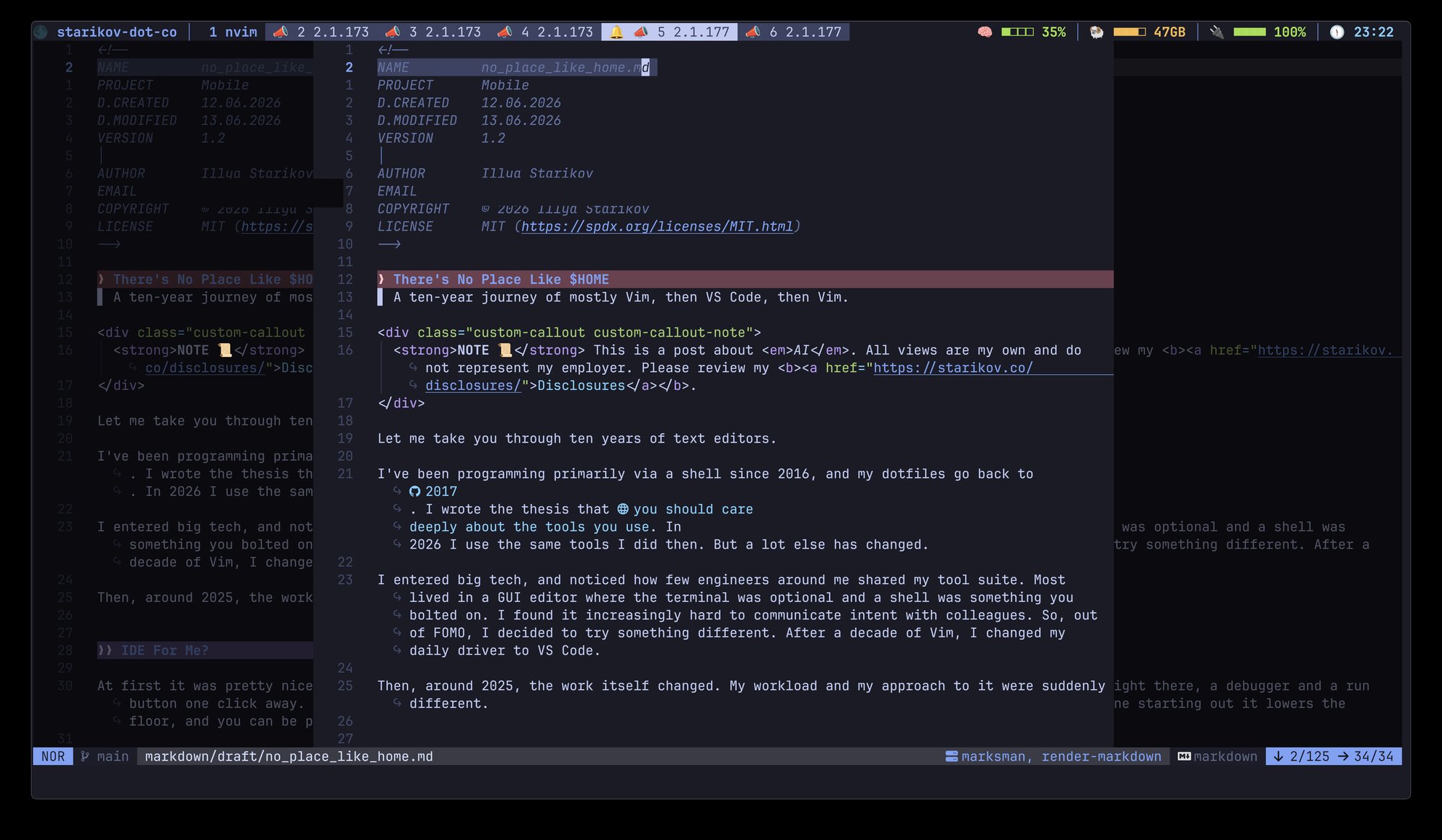
The post also shows why terminal-native workflows may gain weight as AI tools mature. Developers who can automate their environment can ask agents to maintain dotfiles, language-server setup and editor glue code that once consumed weekends. Starikov says AI reduced his dotfile maintenance cost to token cost, which made a return to Vim practical.
The counterargument remains strong. VS Code, Visual Studio and other IDEs give teams shared defaults, extension ecosystems and discoverable workflows. Large teams benefit when new engineers can open a repo and find tests, debuggers, source control and errors in familiar places.
Starikov's piece lands best as a prompt for tool audit. If AI changes your work from typing code to judging code, your editor should help you move through definitions, references, tests and diffs with little friction. For some developers, VS Code will still win that test. For Starikov, Vim brought the work back home.
Comments
Please log in or register to join the discussion