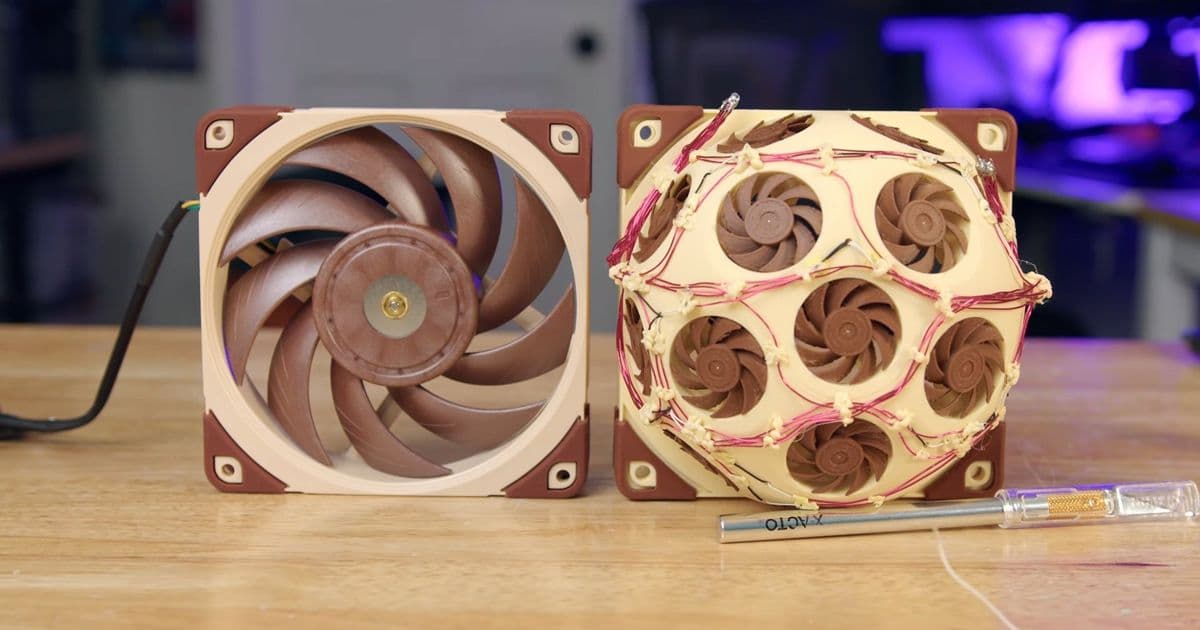
Enthusiast creates unconventional cooling solution using 15 3D-printed 30mm fans that matches thermal performance of standard 120mm Noctua fan while producing 73 dB noise.
DIY Cooling Innovation: 15 Micro-Fans Match Commercial Performance
The PC cooling market has seen an unconventional breakthrough with a recent DIY project that defies traditional fan design principles. YouTuber Major Hardware has developed a unique cooling solution by combining fifteen 30mm fans into a single unit that matches the thermal performance of a standard Noctua NF-A12x25 120mm fan, albeit with significantly higher noise levels.
Technical Specifications and Construction Process
The project originated from an observation of self-balancing toy drones that utilize multiple small propellers to generate substantial airflow. Applying this principle to PC cooling, the creator selected 7500 RPM 4.5V DC motors purchased from Amazon as the power source for the micro-fans.
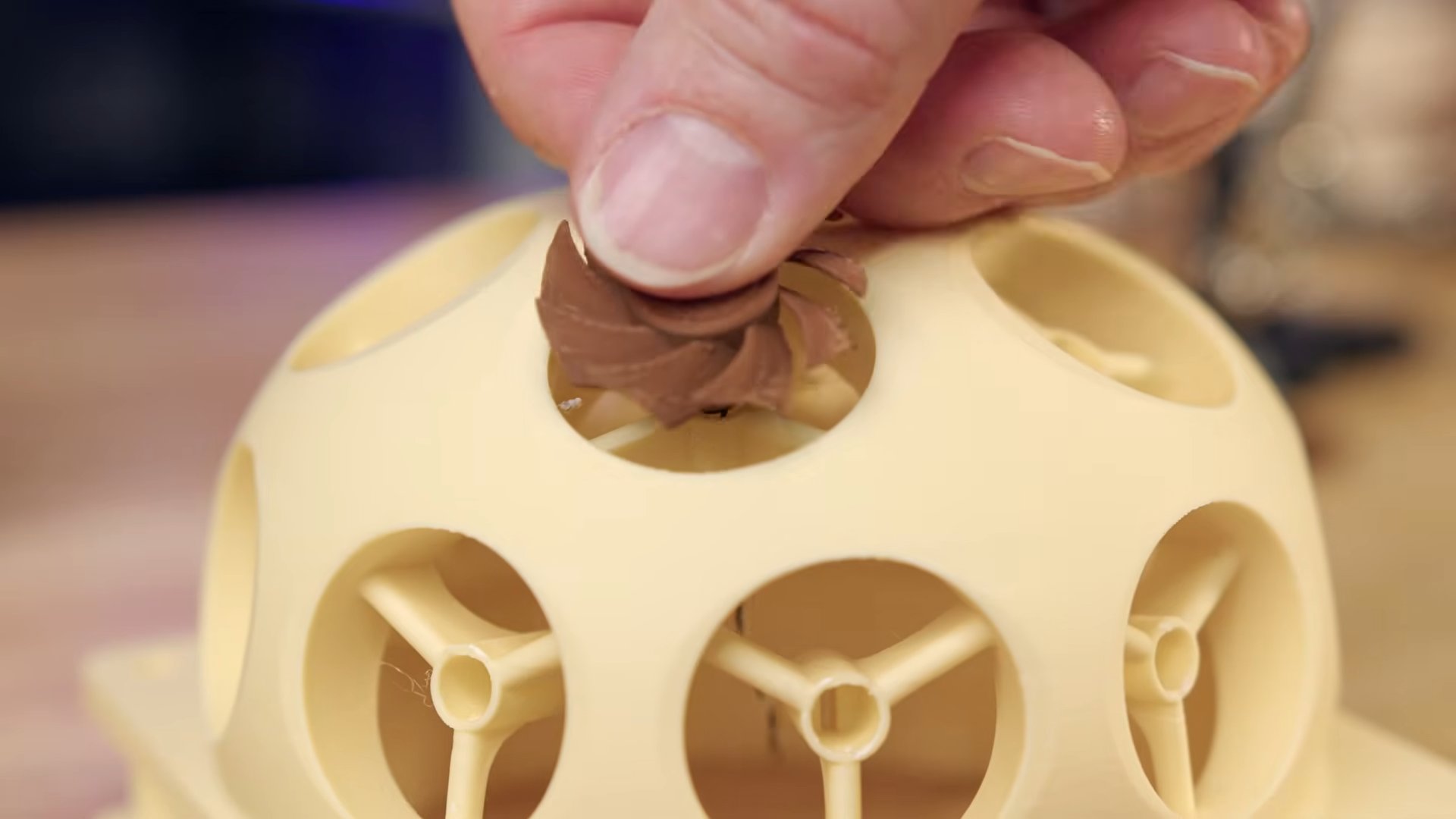
Each 30mm fan was meticulously 3D-printed to replicate the aesthetic design of the Noctua NF-A12x25, but at one-quarter the scale. Engineering calculations determined that fifteen such micro-fans would collectively match the surface area of a standard 120mm fan, creating a 1:1 equivalent in terms of coverage.
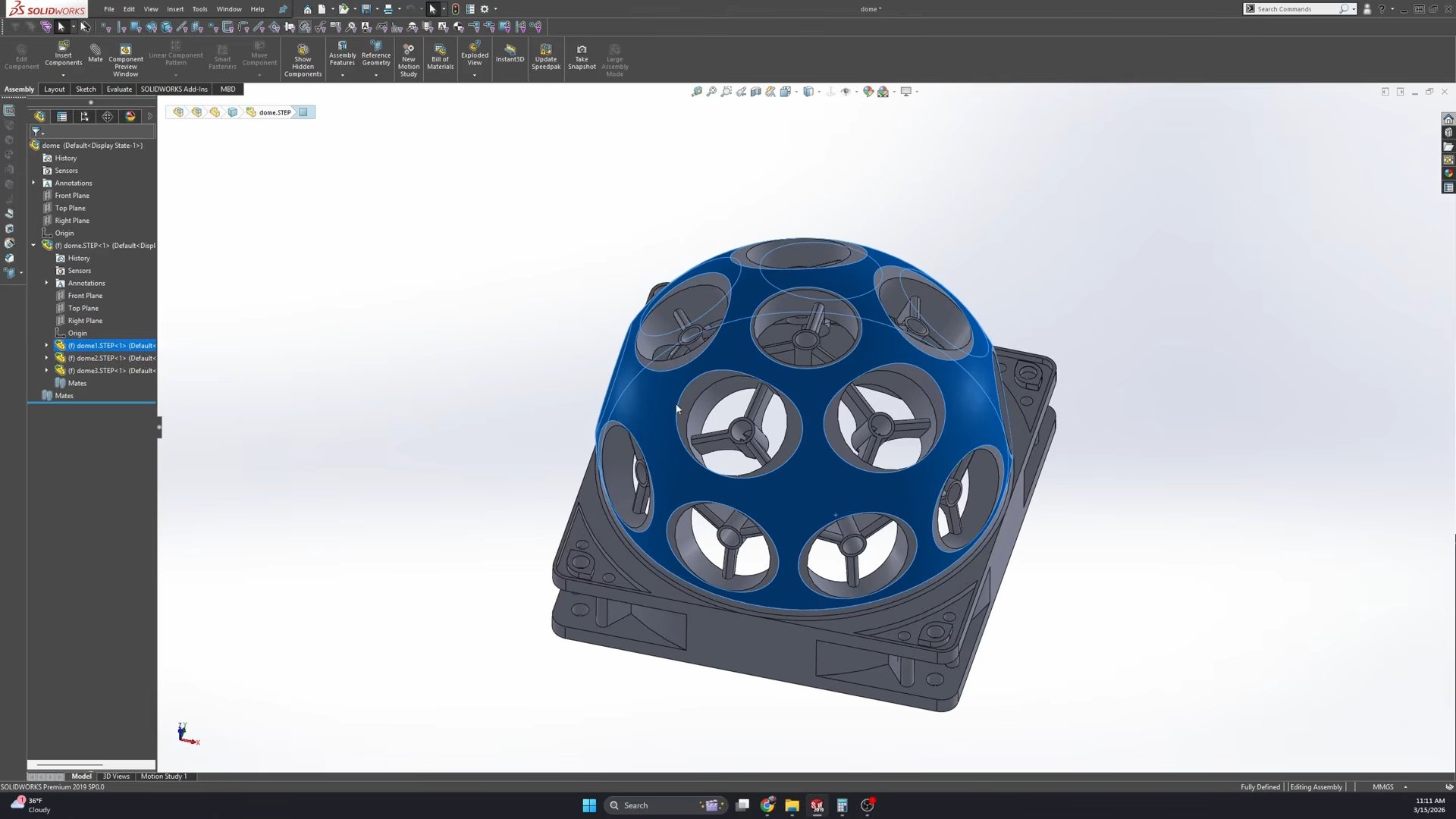
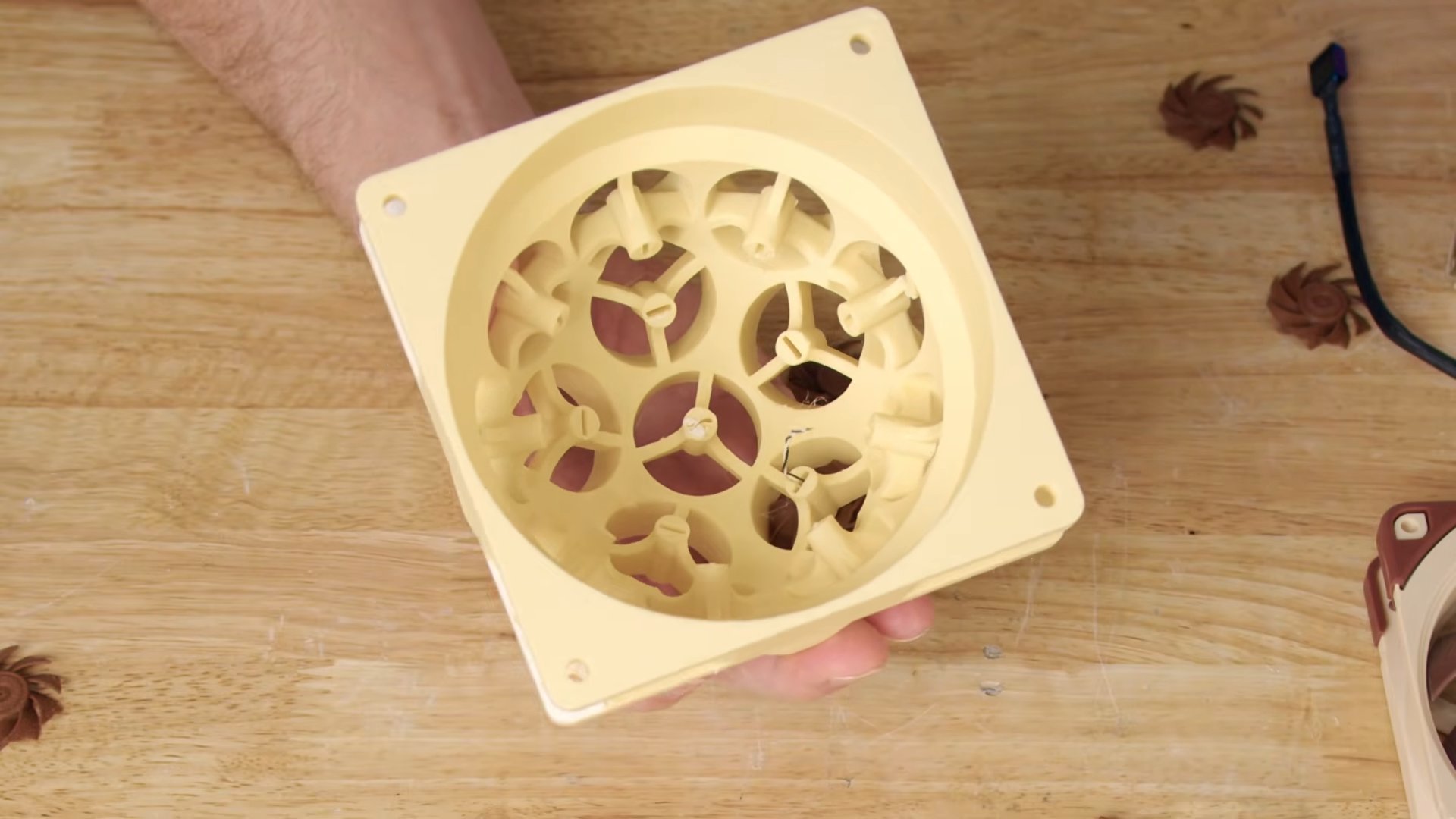
The most innovative aspect of the project lies in the custom housing design. Using SolidWorks, the creator developed a dome-like structure that efficiently accommodates all fifteen fans within a 120mm frame. The fans are mounted in crater-like cutouts, with their motors friction-fitted into specially designed slots.
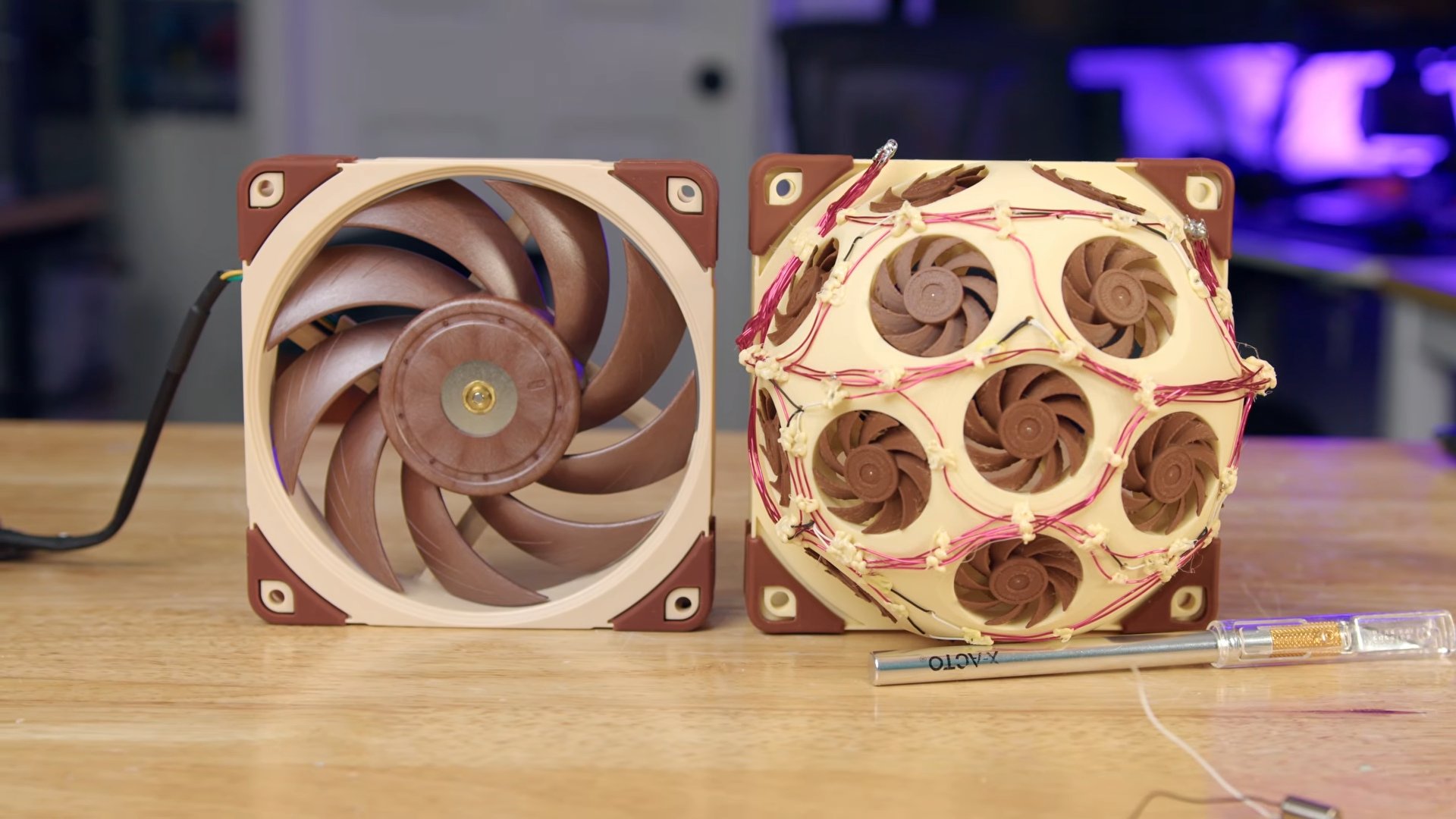
The wiring system presented a significant challenge, as fifteen individual fans would typically create a cable management nightmare. To address this, each fan's wires were routed through tiny holes in the structure's intrados, then bundled and connected to a central winding wire on the surface. This approach not only maintained the visual integrity of the design but also eliminated potential airflow obstructions.
Performance Analysis and Comparative Testing
When connected to a power supply, the completed "Fanhattan Project" demonstrated impressive airflow capabilities, though specific cubic feet per minute (CFM) measurements were not documented during testing. The unit consistently produced 73 dB of noise during operation—a significant figure considering the absence of PWM control, which forces the fans to run at maximum speed continuously.
To evaluate thermal performance, the creator conducted a standardized test using a Noctua NH-U12A cooler mounted on a Core i7-7700K processor overclocked to 4.9 GHz. The test ran for 20 minutes under load, comparing temperatures between the standard Noctua NF-A12x25 and the custom fifteen-fan configuration.
The results revealed that the standard fan maintained the CPU at 69.5°C, while the Fanhattan Project kept temperatures at 69°C—a mere 0.6% difference that falls within typical testing margin of error. This demonstrates that despite unconventional design principles, the micro-fan array can effectively match the thermal performance of a commercial product.
Market Implications and Cooling Industry Analysis
While not commercially viable, this project highlights several interesting aspects of PC cooling technology and enthusiast culture. The experiment demonstrates that airflow optimization can be achieved through multiple approaches beyond traditional blade design and motor specifications.
From a supply chain perspective, the project utilizes readily available components—Amazon-purchased motors and 3D-printed parts—suggesting that cooling innovation doesn't necessarily require advanced manufacturing capabilities or exclusive semiconductor technology. This accessibility lowers barriers to entry for cooling experimentation in the enthusiast community.
The noise-to-performance ratio, however, reveals why commercial manufacturers focus on acoustic efficiency. The 73 dB output represents approximately 10 times the noise level of premium quiet fans, which typically operate in the 20-30 dB range. This trade-off between cooling capacity and acoustic comfort remains a central challenge in the cooling industry.
For the modding community, projects like this showcase the potential of additive manufacturing to enable previously impossible designs. The ability to create custom fan housings and complex geometries through 3D printing opens new avenues for cooling experimentation that could eventually influence commercial product development.
The project also highlights the relationship between form factor and cooling efficiency. By maintaining the same overall dimensions as a standard fan while redistributing the fan surface area across multiple units, the creator demonstrated that alternative configurations can achieve comparable results—potentially informing future research into optimized fan array designs.
Conclusion
The Fanhattan Project serves as both a technical demonstration and a cultural statement in the PC cooling space. While not practical for mainstream use due to its noise characteristics, the experiment successfully proves that unconventional approaches to cooling can achieve performance parity with established products.
For enthusiasts and modders, this project exemplifies the boundary-pushing creativity that continues to drive innovation in PC hardware. As 3D printing technology advances and becomes more accessible, we can expect to see more experimental cooling solutions that challenge traditional design paradigms and potentially influence future commercial products.
The project's success within the margin of error also reinforces the importance of testing methodology in cooling evaluation. Small performance differences between cooling solutions often fall within statistical noise, emphasizing the need for rigorous, repeatable testing protocols in comparative analysis.
Comments
Please log in or register to join the discussion