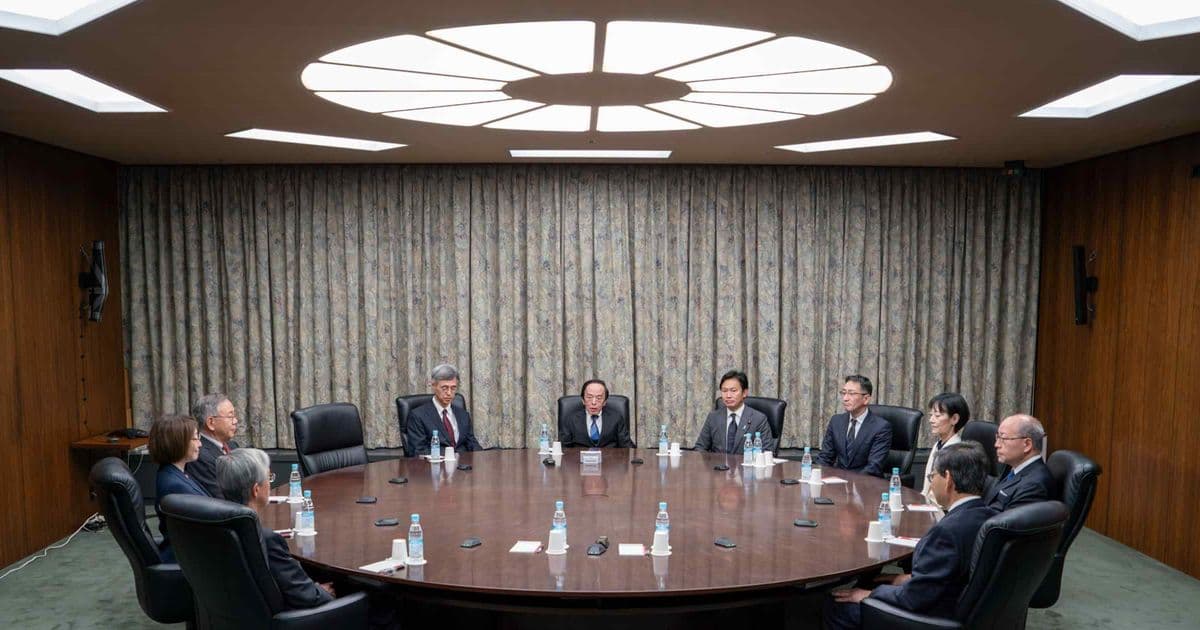
The Bank of Japan’s upcoming June policy meeting pits a modest rate hike against the risk of a repeat surge in long‑term yields, a dilemma that could reshape Japan’s fiscal outlook and the broader bond market.
BOJ’s Immediate Dilemma
Tokyo – The Bank of Japan (BOJ) is set to vote on a 25‑basis‑point increase to its short‑term policy rate at the June 20‑21 meeting. The move would end a decade‑long era of negative rates, but it also threatens to trigger a sharp rise in long‑term Japanese Government Bond (JGB) yields – a pattern that emerged after the December 2025 hike, when the 10‑year JGB yield jumped from 0.12% to 0.62% within weeks.
The policy board must balance two competing imperatives:
- Contain inflation – Core CPI has risen to 3.1% YoY in May, above the BOJ’s 2% target, driven by higher energy prices and a weakening yen.
- Preserve market stability – A repeat of the December spike would raise borrowing costs for the government, which is already running a fiscal deficit of 9.5% of GDP and a public debt exceeding 250% of GDP.
Market Context
Since the December 2025 hike, the JGB market has shown heightened sensitivity to policy signals. The 10‑year yield, which had been hovering near zero for years, peaked at 0.68% on January 5 before settling at 0.55% in early March. By contrast, the 30‑year yield, a proxy for long‑term financing conditions, rose from 0.20% to 0.48% in the same period.
Foreign investors, who own roughly 30% of JGBs, have begun demanding higher spreads to compensate for the perceived rise in risk. The JGB‑US Treasury spread widened to 115 basis points in early April, the widest gap since 2016.
At the same time, the BOJ’s balance sheet – the largest sovereign‑wealth‑style asset holder in the world – remains at ¥750 trillion (about $5.3 trillion). The central bank has been buying JGBs at a rate of ¥30 trillion per month to keep yields low, a policy known as “quantitative easing” (QE). However, the June meeting will also review the pace of these purchases, with some board members advocating a taper to prevent market distortion.
What It Means for the Economy
Short‑Term Rate vs. Long‑Term Yield
Economic theory suggests that a modest hike in the policy rate should not automatically lift long‑term yields if the market believes the central bank will keep its balance sheet supportive. In practice, the BOJ’s credibility is under scrutiny. If investors interpret the June hike as a prelude to a broader tightening cycle, they will price in higher future rates, pushing up the term premium.
Fiscal Implications
Higher long‑term yields would increase the cost of servicing Japan’s debt. At a 0.55% 10‑year yield, the annual interest bill on the ¥1,200‑trillion debt is roughly ¥6.6 trillion ($46 billion). A 0.10% rise would add ¥1.2 trillion in interest expenses, tightening an already constrained fiscal stance and potentially forcing the government to raise taxes or cut spending.
Corporate and Household Impact
Japanese corporations, which have benefited from ultra‑low borrowing costs, could see loan rates climb from the current 0.3%–0.5% range to 0.6%–0.8% for floating‑rate facilities. For households, higher yields may improve returns on savings accounts and retail bonds, but the accompanying yen depreciation – currently at ¥158 per dollar – could erode purchasing power, especially for imported goods.
Policy Options
- Gradual Rate Hike with Continued QE: A 25‑bp increase paired with unchanged JGB purchases could signal a measured approach, limiting market panic.
- Rate Hike + QE Taper: Reducing monthly JGB purchases by ¥10‑15 trillion while raising rates would test market resilience but risks a sharper yield spike.
- Hold Rates, Accelerate QE: Maintaining the current rate while expanding purchases could keep yields low, but would clash with inflation‑targeting objectives.
Strategic Outlook
Analysts at Nomura and Daiwa project that a 25‑bp hike without a QE taper would keep the 10‑year yield under 0.60%, preserving fiscal space while nudging inflation toward the 2% goal. Conversely, a combined hike and taper could push the 10‑year yield to 0.75% by year‑end, raising the debt‑service cost by an estimated ¥2.5 trillion.
Investors should monitor two leading indicators ahead of the June decision:
- Core CPI trend – A sustained rise above 3% would strengthen the case for a hike.
- JGB market depth – Order‑book data from the Tokyo Stock Exchange will reveal whether liquidity can absorb higher yields without a price shock.

In sum, the BOJ’s June policy move will test whether a modest rate increase can be decoupled from long‑term yield spikes. The outcome will shape Japan’s fiscal trajectory, corporate financing conditions, and the broader Asian bond market for the remainder of 2026.
Comments
Please log in or register to join the discussion