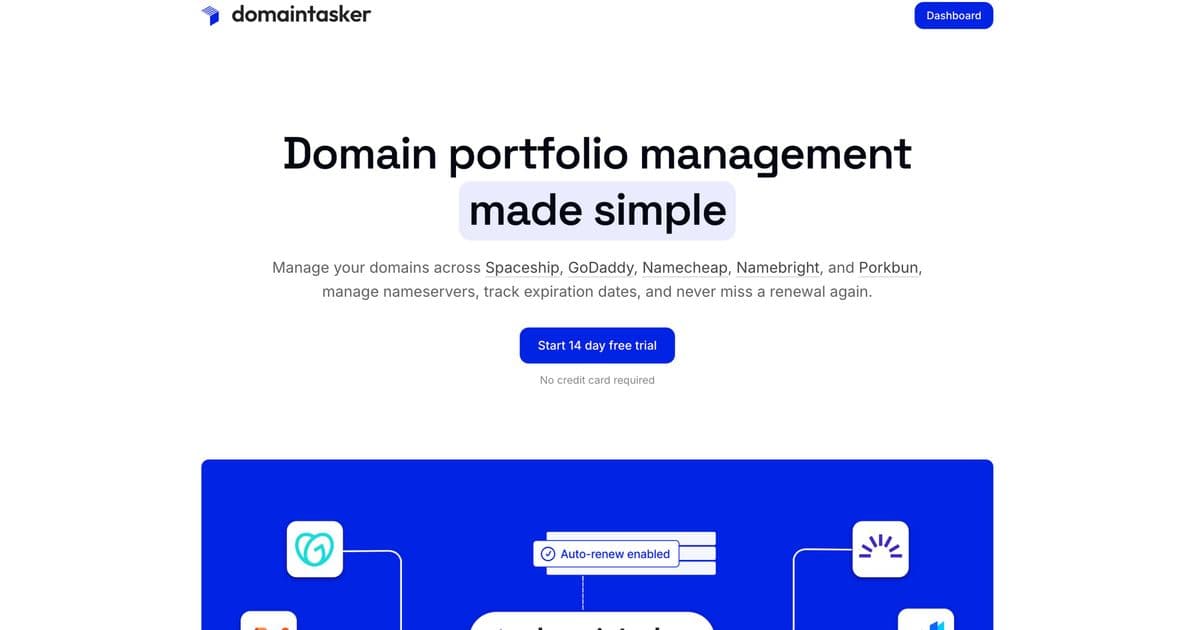
Domain Tasker emerges as a centralized dashboard for managing domain portfolios across multiple registrars, addressing the growing complexity of digital asset management for developers and businesses.
The digital landscape continues to fragment as services proliferate, and nowhere is this more evident than in the domain registration space. With dozens of registrars offering competitive pricing, unique features, and specialized services, many developers and businesses find their domain portfolios scattered across multiple platforms. This fragmentation creates management challenges that a new generation of consolidation tools aims to solve.
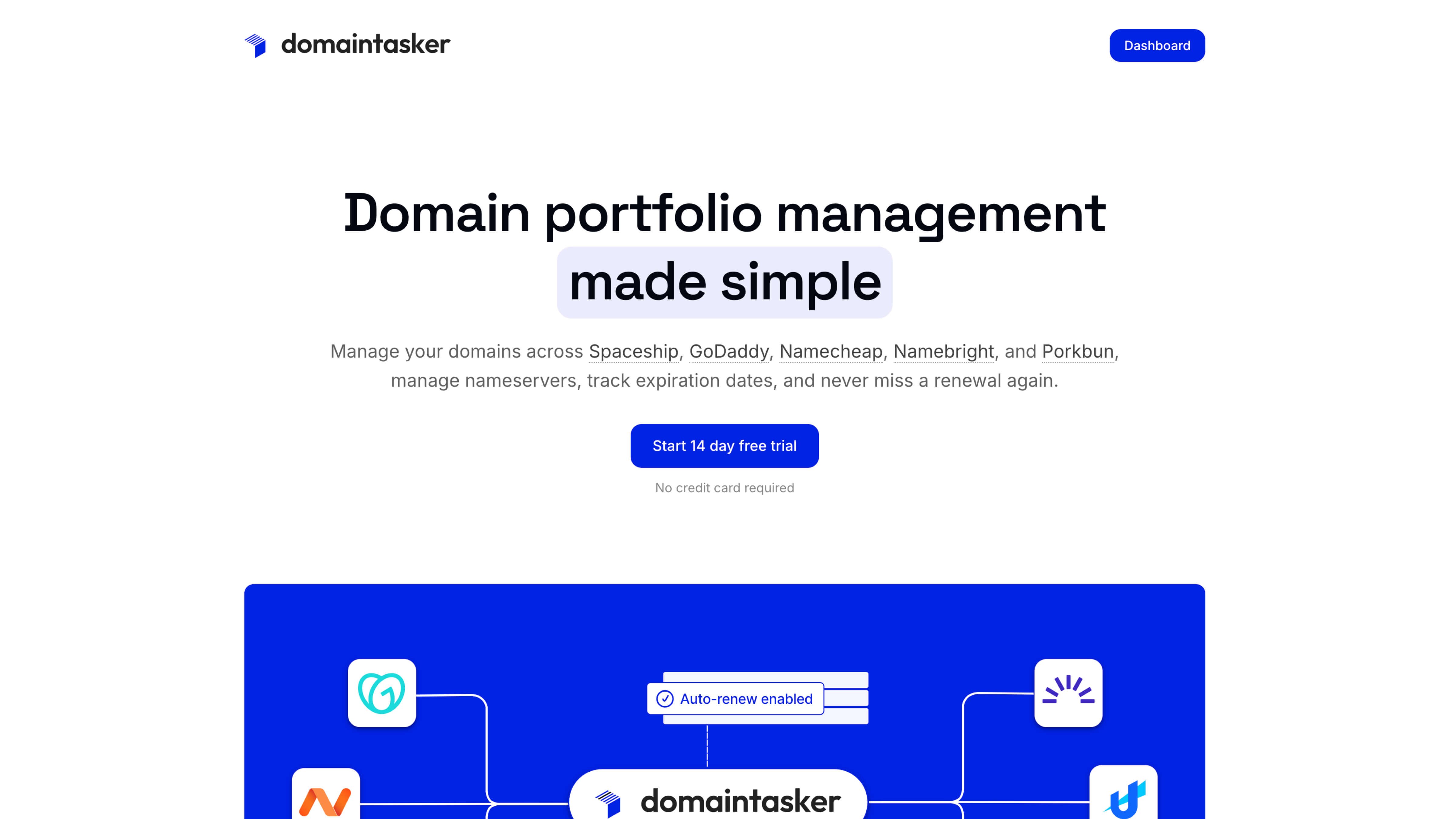
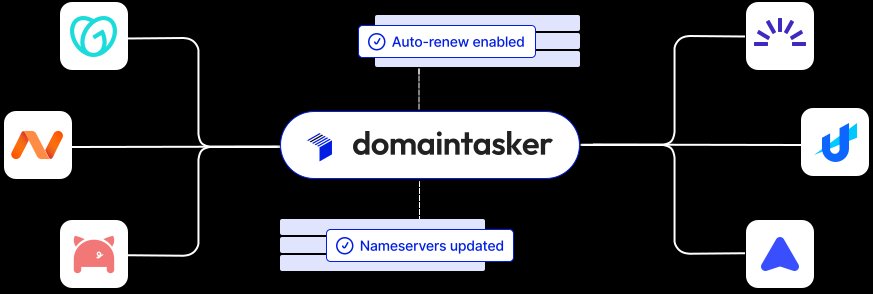
Domain Tasker enters this space as a specialized dashboard designed to bring order to the chaos of multi-registrar domain management. The platform connects with popular registrars including Spaceship, GoDaddy, Namecheap, Namebright, Porkbun, and Unstoppable Domains, offering a unified interface for what has traditionally been a fragmented experience.
The core appeal of Domain Tasker lies in its ability to centralize essential domain management functions. Users can track expiration dates across all connected accounts, set up renewal reminders, and manage nameservers without logging into multiple separate platforms. For developers and operations teams managing dozens or hundreds of domains, these capabilities translate directly to reduced administrative overhead and minimized risk of expired domains.
The platform's two-tier pricing structure reflects its target market segments. The Starter tier at $5 per month supports up to 1,000 domains, while the Growth tier at $20 per month accommodates up to 10,000 domains. This scaling suggests the tool is designed to serve both individual developers and larger organizations, with the 20x price increase for 10x the domains indicating a focus on small to medium-sized portfolios rather than enterprise-level deployments.
Community sentiment around domain management tools has evolved significantly over the past few years. While early solutions focused primarily on expiration tracking, modern users expect deeper integration with development workflows, API access, and automation capabilities. The absence of explicit API documentation in Domain Tasker's initial presentation may leave some power users questioning whether the platform meets their integration needs.
Adoption signals appear promising for Domain Tasker's approach. The 14-day free trial without requiring a credit card lowers the barrier to entry, allowing potential users to evaluate the tool's fit before commitment. The focus on popular registrars suggests the platform prioritizes user needs over exhaustive coverage of niche services, a pragmatic approach that likely delivers better initial user experience.
Counter-perspectives emerge when considering the domain management landscape. Some developers argue that consolidation tools introduce unnecessary complexity when registrar interfaces already provide adequate management capabilities. Others question whether the convenience justifies the ongoing cost, particularly for those with smaller portfolios or simple management needs. Additionally, concerns about data security and permissions arise when granting third-party access to domain registrar accounts—a consideration the platform would need to address transparently.
The broader trend Domain Tasker participates in reflects a larger pattern in developer tools: the unbundling and rebundling of services. As specialized tools emerge to address specific pain points, consolidation platforms follow to simplify management across these services. This cycle has played out in hosting, cloud infrastructure, and now domain management, suggesting Domain Tasker has entered a maturing market with established expectations.
For individual developers and small businesses, Domain Tasker represents a potential solution to a tangible problem. The psychological comfort of knowing all domains are managed in one place, combined with practical features like expiration tracking, may justify the cost for those who have experienced the consequences of missed renewals. However, the platform will need to demonstrate clear value beyond basic management features to compete with existing manual processes or built-in registrar tools.
As digital assets continue to grow in importance, tools like Domain Tasker highlight an important truth: convenience comes at a price, both financial and in terms of added dependencies. The success of such platforms will ultimately depend on balancing this equation—providing sufficient value to justify their existence while maintaining simplicity and reliability in an ecosystem where domains remain critical infrastructure.
Comments
Please log in or register to join the discussion