The author argues that the crypto maxim “don’t trust, verify” loses its bite when applied to real‑world asset (RWA) tokenization, especially in real‑estate and other physical‑asset markets. He outlines the technical and governance gaps that let bad actors slip through, and shows how new oracle designs, proof‑of‑reserves frameworks, and hybrid legal structures are trying to restore confidence.
The promise and the paradox
Tokenizing real‑world assets—property, commodities, invoices—has been billed as the next step for crypto, a way to bring liquidity and fractional ownership to markets that have traditionally been illiquid. The familiar crypto mantra don’t trust, verify suggests that anyone can audit the ledger and be sure the underlying asset exists. In practice, that assumption breaks down the moment a token claims to represent a piece of brick, a cargo of copper, or a loan receivable.
Where verification stalls
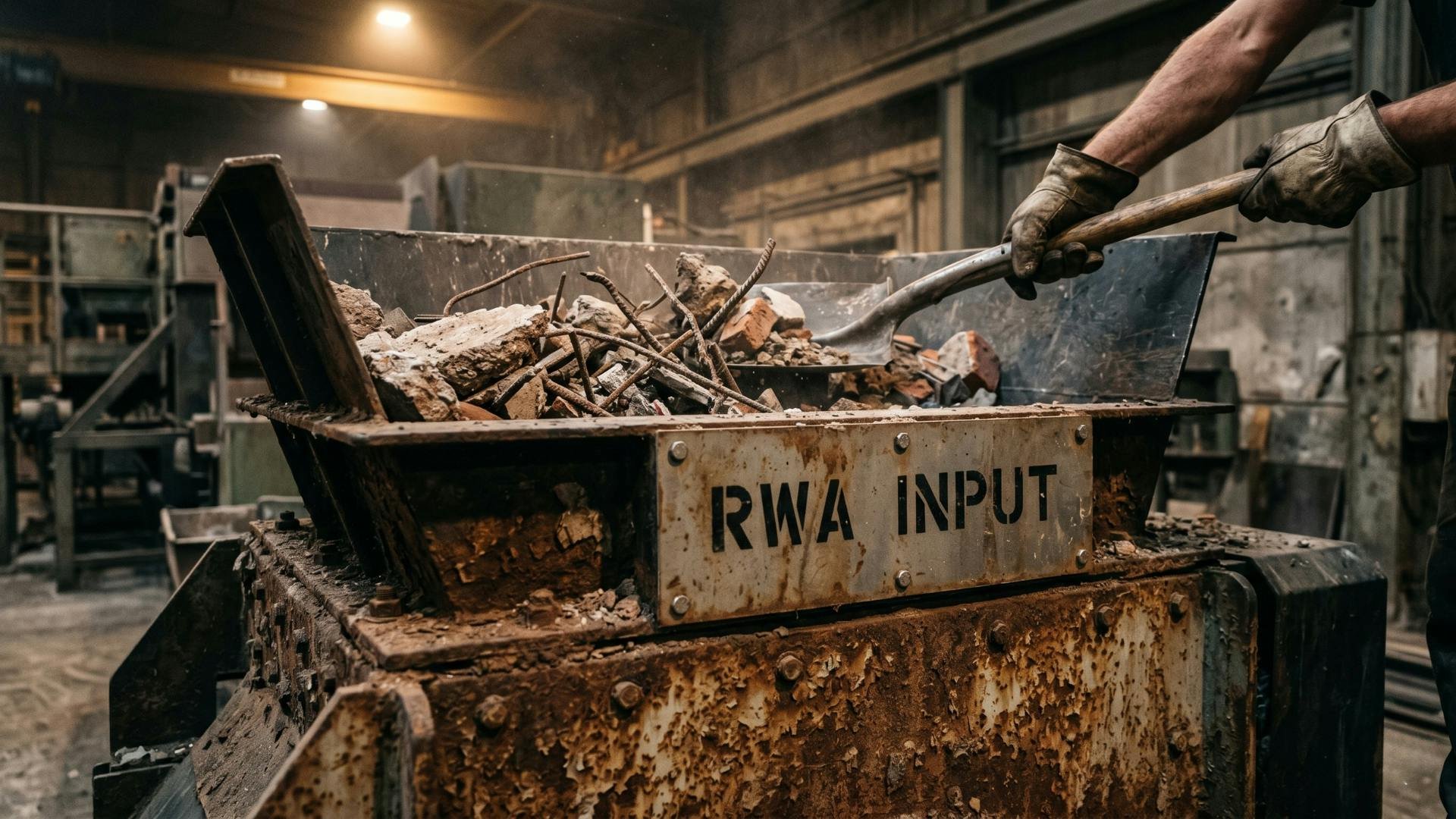
Physical custody is off‑chain – A token can point to a deed or a warehouse receipt, but the actual storage, insurance, and maintenance of the asset happen in the real world. Auditors need to inspect a building, verify a title, or confirm a cargo’s condition. Those steps are costly, jurisdiction‑dependent, and often opaque.
Oracle reliability – Most RWA projects rely on data feeds (oracles) to bridge the on‑chain/off‑chain gap. If an oracle is compromised, the token’s value can be inflated or deflated arbitrarily. Recent incidents, such as the BridgeVault hack where a price oracle fed stale data for a $200 M real‑estate fund, illustrate the risk.
Legal enforceability – Even if a token is technically sound, the underlying contract may be unenforceable in a court of law. A token holder in Singapore may have little recourse if a US‑based property manager defaults, unless the token structure is backed by a well‑drafted legal entity.
Funding the verification stack
Recognizing these gaps, a wave of startups is raising capital to build more trustworthy infrastructure:
Oraculum Labs announced a $22 M Series A round led by Paradigm and DCG to develop multi‑source, cryptographically signed attestations for real‑estate titles. Their system aggregates notarized PDFs, satellite imagery, and government registries, then hashes the bundle onto the blockchain. The goal is to make a single on‑chain proof that can be audited without physically visiting the property.
ProofReserve.io, backed by Coinbase Ventures ($12 M) and Polychain Capital, is creating a standardized proof‑of‑reserves protocol for asset‑backed tokens. The protocol uses Merkle trees to let token holders verify that the custodian holds the claimed assets, while preserving privacy for the underlying owners.
HybridLegal, a joint venture between a law‑tech firm and Sequoia, raised $15 M to embed jurisdiction‑specific legal wrappers into token contracts. Their “Legal‑Layer SDK” automatically generates the necessary entity structures (LLCs, trusts, SPVs) and links them to the token metadata, aiming to make enforcement a matter of contract law rather than a trust exercise.
How the new stack changes the risk profile
When these pieces click together, the verification process becomes a layered defense rather than a single point of failure:
- Data redundancy – Multiple oracles cross‑check each other, and any discrepancy triggers a dispute window where human auditors can intervene.
- Cryptographic receipts – Proof‑of‑reserves generates a hash of the custodial ledger that can be independently verified, similar to how Bitcoin nodes verify block hashes.
- Legal anchoring – By coupling token contracts with enforceable legal entities, token holders gain a recourse path that does not rely solely on code execution.
The net effect is a reduction in the "trust" component of the old mantra. Investors can now verify a token’s backing with a combination of on‑chain proofs and off‑chain legal guarantees.
Remaining challenges
- Standardization – The ecosystem still lacks a universal schema for asset metadata. Without a common language, integrations remain bespoke and expensive.
- Regulatory friction – Different jurisdictions treat tokenized assets as securities, commodities, or something in‑between. Navigating these classifications adds compliance overhead that can erode the liquidity advantage.
- Cost of verification – Audits, satellite imaging, and legal entity formation are not cheap. Projects must balance the added security against the fee structure they present to users.
A pragmatic outlook
The original “don’t trust, verify” rule was born in a context where the entire state transition was visible on a public ledger. Real‑world asset tokenization expands the attack surface beyond the chain, and the community is responding with a suite of tools that re‑introduce verification at the physical and legal layers.
If you’re evaluating an RWA token, ask for the following:
- Multi‑source oracle attestations – Look for cryptographic signatures from at least two independent data providers.
- Proof‑of‑reserves audit reports – Reputable firms such as AuditChain or KPMG’s blockchain division should publish Merkle‑tree proofs on a regular cadence.
- Legal entity documentation – Verify that the token is backed by a legally recognized structure in the relevant jurisdiction.
By demanding these pieces, investors can shift from a trust‑based model to a verification‑centric one, even when the asset lives in the physical world.
Igor Samotesov is the founder and technical risk partner at SPEC INTELLIGENCE, where he focuses on bridging the gap between tokenized assets and real‑world enforcement mechanisms.

Comments
Please log in or register to join the discussion