
The smart appliance maker will serve as the 'Intelligent Technology Ecosystem Strategic Partner' for China's most-watched television event, a role that typically involves product placement and staged demonstrations during the broadcast.
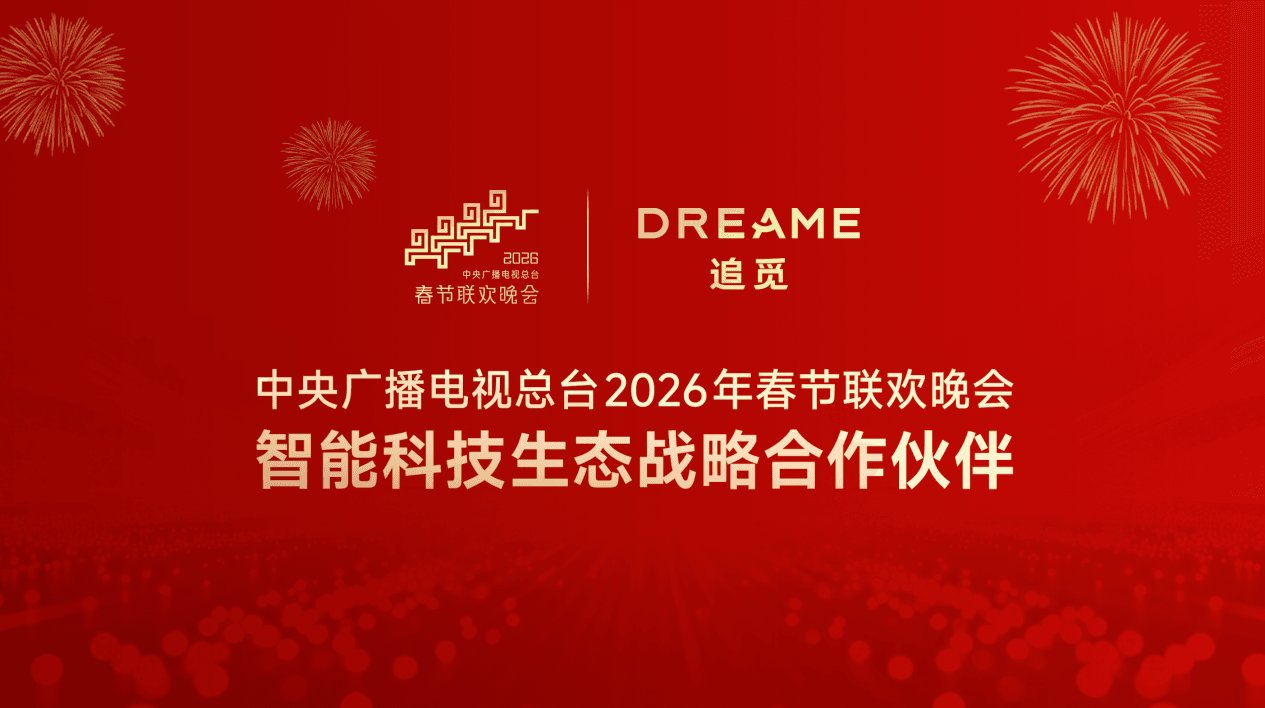
Dreame Technology announced on January 21, 2026, that it will serve as the Intelligent Technology Ecosystem Strategic Partner for the 2026 CCTV Spring Festival Gala. The company joins a roster of technology brands that have paid for integrated product placement during China's most-watched annual television event, which regularly draws viewership exceeding 1 billion across multiple platforms.
What's Claimed vs. What This Actually Means
The partnership announcement frames Dreame's role as showcasing "technological capabilities and brand philosophy" to demonstrate "Innovative China" momentum. In practice, this means Dreame products will appear in staged segments during the live broadcast—likely robotic vacuums cleaning stage areas, smart kitchen appliances preparing gala food, or mobility devices transporting performers. These segments blur the line between entertainment and advertising, though they're presented as demonstrations of technological progress.
Dreame's product portfolio spans intelligent cleaning robots, cordless vacuums, hair care devices, and kitchen appliances. The company reports serving 42 million households globally, with multiple product lines ranking in the top three worldwide. However, these figures come from the company's own announcements and should be verified against independent market research.
The Real Value: Brand Legitimacy and Government Alignment
For Dreame, the partnership provides more than just screen time. Being selected as a "strategic partner" for a state-managed event signals government recognition and legitimacy—valuable currency for Chinese tech companies navigating regulatory scrutiny. The CCTV Gala has historically served as a platform for the government to promote national priorities, from poverty alleviation to technological self-sufficiency. Companies featured in the gala often receive preferential treatment in procurement, investment, and regulatory matters.
The partnership also supports Dreame's global expansion ambitions. The gala's international broadcast reach—distributed through CCTV-4 and streaming platforms serving overseas Chinese communities—provides exposure that would cost significantly more through traditional advertising channels. However, the actual conversion rate from gala viewership to product sales remains difficult to quantify.
Technical Reality Check
Dreame's technology stack includes:
- Robotics and AI: SLAM (Simultaneous Localization and Mapping) algorithms for navigation, computer vision for obstacle detection, and machine learning for cleaning pattern optimization
- Smart Home Integration: IoT connectivity through mobile apps and voice assistants, though specific protocol support (Matter, Zigbee, Wi-Fi 6) isn't detailed in public materials
- Motor Technology: High-speed brushless motors for vacuums and hair dryers, with claims of noise reduction and energy efficiency improvements
The company's "Intelligent Technology Ecosystem" branding suggests integration across product categories, but the practical implementation—whether devices share a unified app, support cross-device automation, or use standardized protocols—requires examination of actual user experiences rather than marketing materials.
Limitations and Context
This partnership follows a pattern established years earlier: Chinese tech brands (including previously Huawei, Xiaomi, and DJI) using the Spring Festival Gala for mass-market brand building. The 2026 iteration continues this tradition, though the specific products and integration methods will only be visible during the actual broadcast on January 28, 2026.
Dreame's claim of "over 42 million households" globally merits scrutiny. The company doesn't break down this figure by region, product category, or active vs. cumulative users. Independent market share data for Dreame's specific product categories—particularly against established players like iRobot, Dyson, and Midea—would provide better context for their actual market position.
The partnership announcement doesn't specify the financial terms or what Dreame must deliver beyond product placement. Previous gala partnerships have involved companies providing equipment for stage effects, performer transportation, or food preparation segments that double as product demonstrations.
What to Watch
The actual gala broadcast will reveal how Dreame's technology is integrated into performances. Key questions:
- Will robotic vacuums perform synchronized cleaning routines as entertainment?
- Are smart kitchen appliances shown preparing traditional festival foods?
- Do mobility devices transport performers or props?
These staged demonstrations often showcase idealized capabilities that may not reflect typical home usage scenarios. Consumers should separate the spectacle from practical product evaluation.
Dreame's broader challenge remains translating brand visibility from events like the gala into sustained market share growth, particularly in international markets where Chinese brands face trust barriers and competition from established players. The partnership may boost short-term recognition, but long-term success depends on product reliability, customer support, and competitive pricing—factors that a single televised event cannot address.
Comments
Please log in or register to join the discussion