
Dutch national police launch 'Game Over?!' campaign, giving 100 alleged scammers two weeks to turn themselves in or face public exposure across billboards, TV, and online ads.
Dutch national police are taking an unconventional approach to combat fraud, launching a public shaming campaign that gives 100 alleged scammers less than two weeks to surrender or face nationwide exposure.
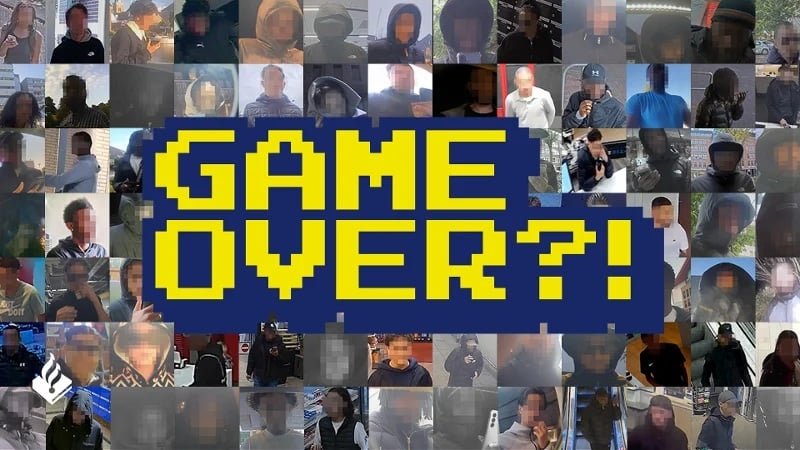
The Politie's "Game Over?!" initiative, which began today, displays blurred images of 100 suspects across roadside advertising boards, television broadcasts, and online advertisements throughout the Netherlands. The suspects have until March 19 to turn themselves in to authorities. If they fail to comply, their faces will be unblurred and publicly revealed starting March 23.
This two-pronged strategy serves dual purposes: identifying individuals suspected of involvement in sophisticated fraud schemes while simultaneously deterring potential future offenders, particularly young people who might be tempted by small payments to participate in these criminal operations.
"We hope that ultimately, no one will be tempted to act as errand boys for these organizations, thus putting an end to the phenomenon of fake police officers and fake bank employees," said Anne Jan Oosterheert, portfolio holder for digital crime at the Politie. "These nasty forms of fraud have now become a social problem that can also be solved in collaboration with society."
Dutch authorities characterize the campaign as a public attack on scammers, launched jointly by law enforcement and the judiciary. The approach exemplifies Dutch directness in addressing criminal behavior.
The urgency behind this initiative stems from alarming statistics. Police report that fake police officer scams escalated dramatically, rising from just 520 reported cases in 2023 to 8,363 in 2024. By 2025, these incidents exceeded 13,000, representing a more than twenty-fold increase in two years.
These scams typically target vulnerable elderly individuals through a disturbing pattern: fraudsters impersonate police officers, visit victims' homes, and offer to safeguard their valuables. The situation turned deadly in August 2025 when an 80-year-old woman was killed during what authorities believe was the first violent incident involving a fake police officer robbery and home invasion.
Banking helpdesk fraud presents another major concern, with case volumes far exceeding those of fake police officer thefts. In these schemes, criminals call victims while posing as banking representatives, using social engineering techniques to extract sensitive information that enables account takeovers or unauthorized payments.
Within criminal circles, authorities note frequent references to an "F-Game," short for fraud game. The "Game Over?!" campaign aims to counter this trivialization by emphasizing the severe consequences of these crimes, including devastating impacts on victims and erosion of public trust in institutions like law enforcement.
Many victims never report their experiences due to shame, creating a cycle where criminals operate with relative impunity. By publicly confronting suspects and their potential accomplices, Dutch police hope to reverse this dynamic and demonstrate that fraud carries serious consequences.
The campaign represents a bold experiment in crime prevention, leveraging public exposure as both punishment and deterrent. Whether this approach proves effective in reducing sophisticated fraud schemes targeting vulnerable populations remains to be seen, but Dutch authorities have clearly signaled their determination to combat these crimes through innovative means.

Comments
Please log in or register to join the discussion