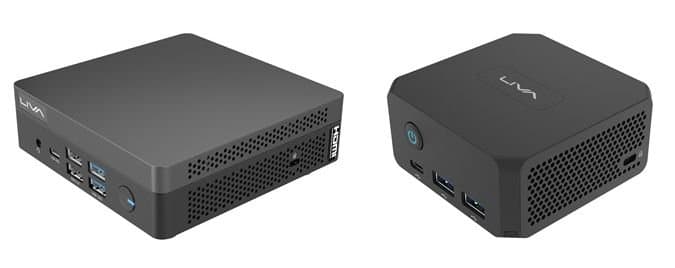
ECS introduces two compact desktop models at Compute 2024: the LIVA Z15 Plus, powered by Intel’s budget‑grade Wildcat Lake CPU, and the ultra‑small, fanless LIVA Q4 that runs on a low‑power Twin Lake processor. Both devices target space‑constrained workstations and edge deployments, offering a mix of USB‑C connectivity, LPDDR5 memory, and optional Ethernet for networking.
ECS Unveils LIVA Z15 Plus Mini PC with Wildcat Lake and Fanless LIVA Q4 with Twin Lake
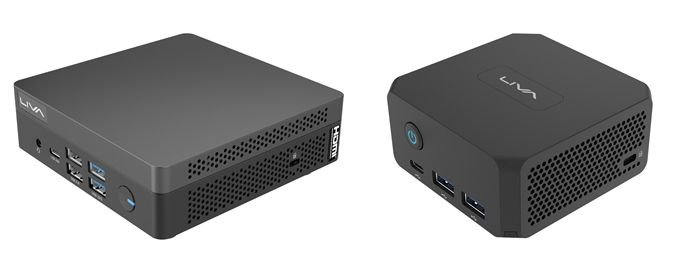
New hardware on display at Compute 2024
Taiwanese system‑integrator ECS used its booth at Compute 2024 to showcase a handful of recent mini‑PC designs and to announce two brand‑new models. The LIVA Z15 Plus is positioned as a compact desktop that fits on a desk or a small shelf, while the LIVA Q4 is an ultra‑compact, fanless box aimed at edge‑computing scenarios where silence and low power draw are critical.
LIVA Z15 Plus – a Wildcat Lake‑based desktop
| Specification | Detail |
|---|---|
| Processor | Intel Core Series 3 “Wildcat Lake” (budget variant of Panther Lake) |
| Front I/O | 1 × USB‑C (data), 2 × USB 3.x Type‑A, 2 × USB 2.0, headphone jack, power button |
| Memory | Not disclosed yet (expected DDR4/LPDDR4 up to 16 GB) |
| Storage | Not disclosed (likely M.2 NVMe slot) |
| Graphics | Integrated GPU from Wildcat Lake – lower‑end than Panther Lake but sufficient for basic office work |
| Power | 45 W USB‑C power adapter |
The Wildcat Lake silicon shares the same 10 nm architecture as the higher‑end Panther Lake CPUs. The main differences are a reduced core count, lower boost frequencies, and a cut‑down NPU. In single‑threaded workloads the performance can approach that of a modest Panther Lake part, but multi‑core and graphics‑intensive tasks will fall behind the premium chips.
Why the Z15 Plus matters for developers
- Small footprint with decent expandability – five front‑panel ports give quick access to peripherals without reaching behind the case.
- USB‑C data and power – developers can attach a USB‑C dock or external SSD and still power the unit from the same connector, simplifying cable management.
- Potential for Linux or Windows IoT – the Wildcat Lake platform is supported by both mainstream Linux kernels (5.19+) and Windows 11 IoT, allowing the same hardware to be used for prototyping and production.
If you are building a kiosk, a point‑of‑sale terminal, or a compact workstation, the Z15 Plus offers a balance between cost and capability that is hard to find in the current mini‑PC market.
LIVA Q4 – fanless, 75 mm square, Twin Lake power
| Specification | Detail |
|---|---|
| Dimensions | 75 × 75 × 35 mm (2.95 × 2.95 × 1.38 in) |
| Processor options | Intel N150 (Twin Lake) or N250 (Twin Lake) – 6 W, 4‑core/4‑thread |
| Memory | 8 GB or 16 GB LPDDR5‑4800 (soldered) |
| Storage | 128 GB eMMC (upgrade via external USB) |
| Connectivity | Wi‑Fi 4 (802.11n) – up to 2.4 Gbps, 1 × 2.5 GbE LAN |
| Ports | • 1 × USB 3.2 Gen 2 Type‑C (10 Gbps, DP Alt Mode)\n• 2 × USB 3.2 Gen 2 Type‑A (10 Gbps)\n• 1 × USB‑C charging only\n• 2 × HDMI (4K@60 Hz)\n• 1 × 2.5 GbE LAN |
| Power | 45 W USB‑C adapter |
The Q4’s chassis is entirely passive; heat is dissipated through the metal enclosure. The Twin Lake CPUs are designed for low‑power scenarios, delivering a modest CPU frequency (up to ~2.2 GHz) and an integrated GPU that can handle 4K video playback but not heavy 3D rendering.
Use cases for the Q4
- Edge AI inference – the N250’s slightly stronger GPU can accelerate lightweight neural‑network models when paired with OpenVINO or TensorFlow Lite.
- Digital signage – fanless operation ensures silent deployment in public spaces, while dual HDMI outputs allow a single unit to drive two displays.
- Embedded Linux gateways – the built‑in 2.5 GbE port provides more bandwidth than typical mini‑PCs, useful for data‑aggregation nodes.
Because the Q4 ships with LPDDR5‑4800 memory, memory bandwidth is higher than many older fanless boxes that still rely on DDR3L. This can make a noticeable difference in workloads that are memory‑intensive, such as video transcoding with hardware‑assisted codecs.
Migration and development considerations
SDK and driver support
Both Wildcat Lake and Twin Lake are part of Intel’s 12th‑generation family, meaning the same Intel® OneAPI toolkits that target Tiger Lake and Alder Lake can be used, albeit with reduced feature sets. For developers targeting AI inference, the OpenVINO™ Toolkit (v2023.2+) includes pre‑built kernels for Twin Lake GPUs. On the Linux side, the kernels from Ubuntu 24.04 and Debian 12 already contain the necessary i915 driver updates for these chips.
OS images
ECS provides a Windows 11 IoT image that includes the required Intel graphics and power‑management drivers. For open‑source stacks, the Yocto Project can be used to generate a minimal Linux image with the intel-gpu-tools and i915 drivers enabled. The Q4’s fanless design also means you can safely run a headless build of Ubuntu Server 24.04 LTS and use the HDMI ports for occasional GUI debugging via X11 forwarding.
Network upgrades
While the Q4 ships with Wi‑Fi 4, the 2.5 GbE port offers a fast wired alternative. If higher‑speed wireless is required, a USB 3.2 Gen 2 Type‑A dongle supporting Wi‑Fi 6E (up to 2.4 Gbps) can be added without exceeding the power budget.
Power budgeting
Both models use a 45 W USB‑C power brick. The Z15 Plus may draw up to ~30 W under load, while the Q4 stays under 10 W in typical idle scenarios. This makes them suitable for POE‑enabled enclosures, provided the POE injector can supply at least 60 W (IEEE 802.3bt).
Bottom line
ECS’s LIVA Z15 Plus and LIVA Q4 fill two distinct niches in the compact‑PC market. The Z15 Plus gives developers a small yet expandable desktop with a Wildcat Lake CPU that can handle everyday productivity and light media tasks. The fanless Q4, built around Twin Lake, targets edge deployments where silence, low power, and a solid Ethernet link are paramount. Both devices benefit from the same Intel driver ecosystem, making it straightforward to bring existing Windows or Linux codebases onto these new form factors.
For anyone maintaining cross‑platform applications—whether on iOS, Android, or desktop—these mini PCs provide a reliable hardware baseline for testing UI scaling, network performance, and low‑power operation without the overhead of a full‑size workstation.
Comments
Please log in or register to join the discussion