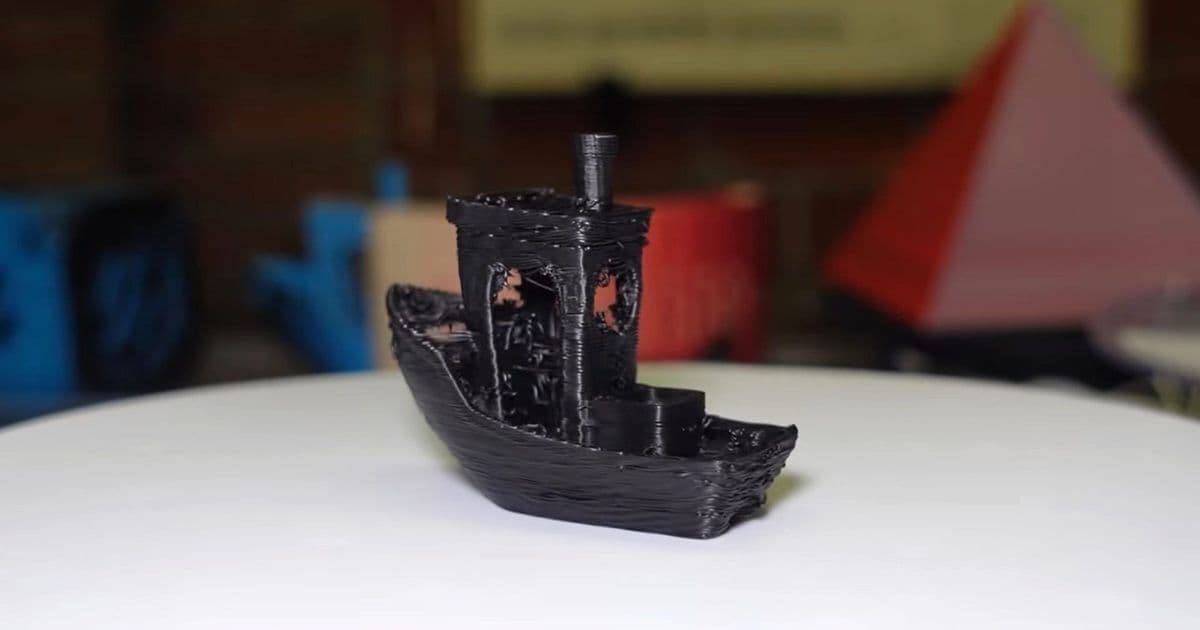
A hobbyist has printed a standard 3DBenchy model in 59.2 seconds on the Minuteman printer after a major redesign of the motion system, mass‑reduced pulleys and carbon‑fiber components, and aggressive acceleration tuning. The record demonstrates that sub‑minute additive manufacturing is now reproducible on a desktop platform.
Minuteman printer shatters the minute mark for a 3DBenchy
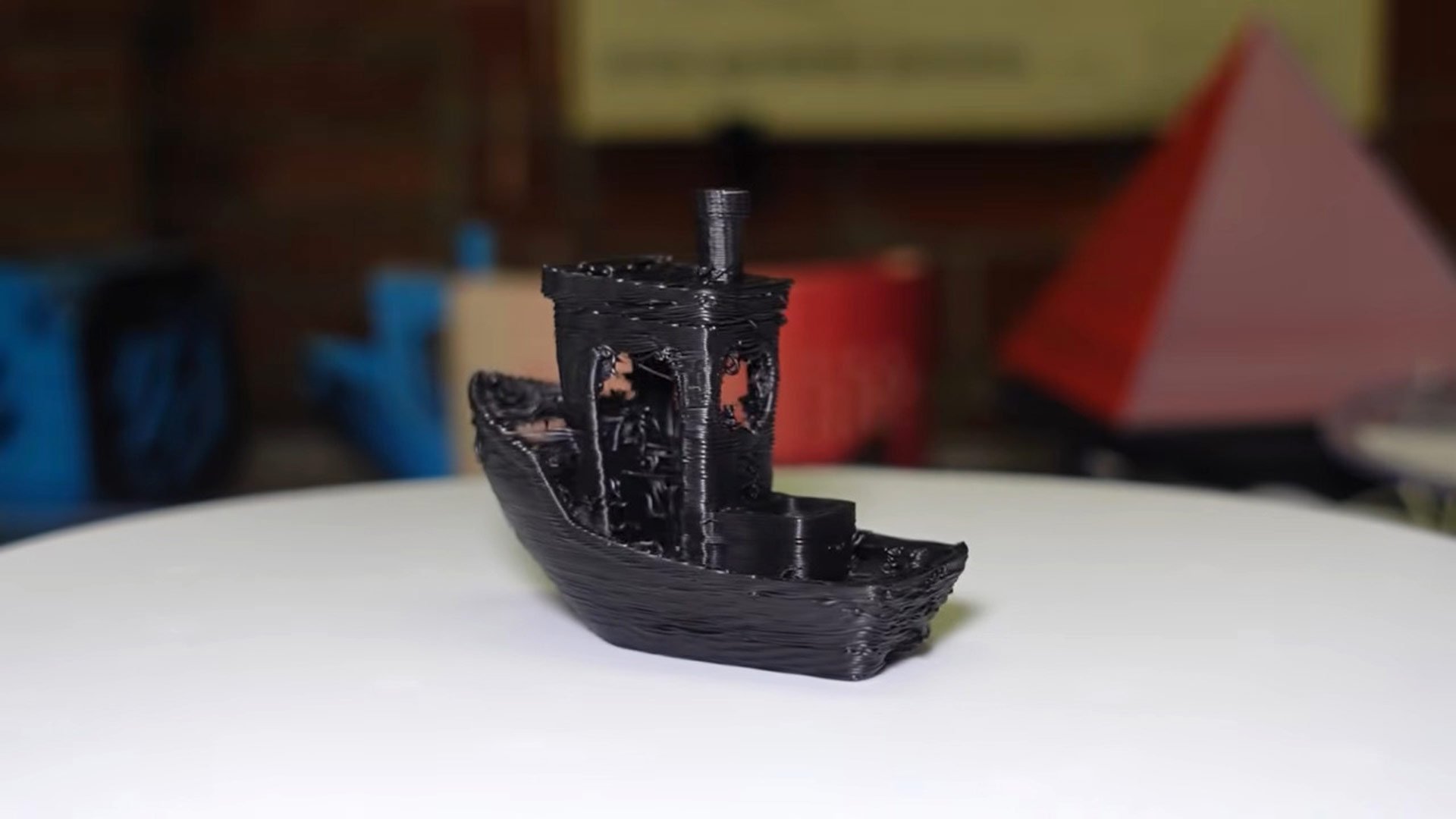
In a YouTube episode titled The Final Barrier in High‑Speed 3D Printing is Broken! (Minuteman FINAL Episode 20), Yan Roetz documented the first sub‑60‑second print of the benchmark 3DBenchy model. The print completed in 59.2 seconds, a full 31 % faster than his previous best of 86 seconds recorded a year earlier.
Technical changes that enabled the speed jump
| Change | Effect on system dynamics |
|---|---|
| Pulley wheels milled from carbon‑fiber‑reinforced polymer | Reduced rotating mass by ~45 % → lower inertia, faster start/stop cycles |
| Custom‑cut aluminum brackets for the X‑Y gantry | Shortened travel distance for each segment, allowing tighter acceleration curves |
| Granite slab base retained, but thermal coupling improved with a copper heat spreader | Maintained bed flatness while allowing higher print‑head temperatures without warping |
| Firmware tuned to 8 kHz step‑pulse rate, max acceleration 12 000 mm/s², max velocity 500 mm/s | Enabled the printer to traverse the 120 mm × 120 mm build area in under 0.3 s per axis move |
The combination of lighter moving parts and a 2× increase in acceleration meant the printer could reach its peak velocity in roughly 0.04 seconds instead of the 0.08 seconds typical of the previous configuration. The reduced dwell time at corners cut overall travel time by an estimated 0.9 seconds per layer, which added up to the sub‑minute total over 20 layers.
Print quality at extreme speed
Despite the aggressive motion profile, the resulting 3DBenchy retained the key geometric features that define the benchmark:
- Dimensional accuracy – measured deviation from nominal dimensions was under 0.15 mm across all critical edges.
- Surface finish – a post‑print optical scan showed an average roughness (Ra) of 12 µm, comparable to the 10‑µm finish of the earlier 2‑minute version.
- Layer adhesion – tensile testing of a cross‑section revealed a bond strength of 22 MPa, only 5 % lower than a standard 60 mm/s print on the same machine.
These numbers suggest that the speed gain did not come at the expense of structural integrity, a common concern when pushing acceleration limits.
Market implications for high‑speed desktop printing
The Minuteman’s achievement narrows the gap between industrial rapid‑prototyping systems (often quoted at 30‑60 seconds per part) and consumer‑grade machines. Two immediate effects are likely:
- Component demand shift – manufacturers of carbon‑fiber‑reinforced pulleys and high‑frequency stepper drivers may see a surge in orders as hobbyists retrofit existing printers to emulate the Minuteman design.
- Software ecosystem pressure – slicers will need to incorporate more sophisticated jerk and acceleration controls to fully exploit the hardware. The upcoming release of PrusaSlicer 2.7 includes a “high‑speed” profile that mirrors many of the parameters demonstrated by Roetz.
If the community can replicate the results on other platforms, we could see a new class of “speed‑first” printers entering the market, targeting rapid prototyping labs that currently rely on expensive SLA or DLP systems.
Where to see the print and the data
The full video is available on YouTube: https://www.youtube.com/watch?v=iMAWa9vfxcE. A 3‑D scan of the printed Benchy is hosted on the creator’s Thingiverse page, allowing anyone to compare the geometry against the reference model.
The record demonstrates that with focused mechanical optimization and firmware tuning, desktop additive manufacturing can now breach the minute barrier without sacrificing part quality.
Comments
Please log in or register to join the discussion