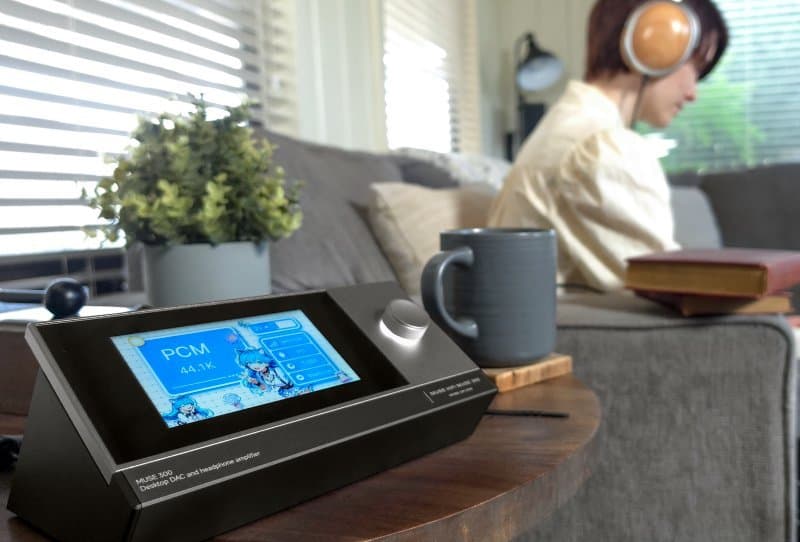
The Muse 300, unveiled at CanJam Singapore, combines a high‑end ESS ES9039 DAC, dual TP6120A amps and a 5‑inch IPS screen running its own operating system, positioning it as the first desktop DAC/headphone amplifier with a built‑in UI and secondary‑monitor capability.
What’s new
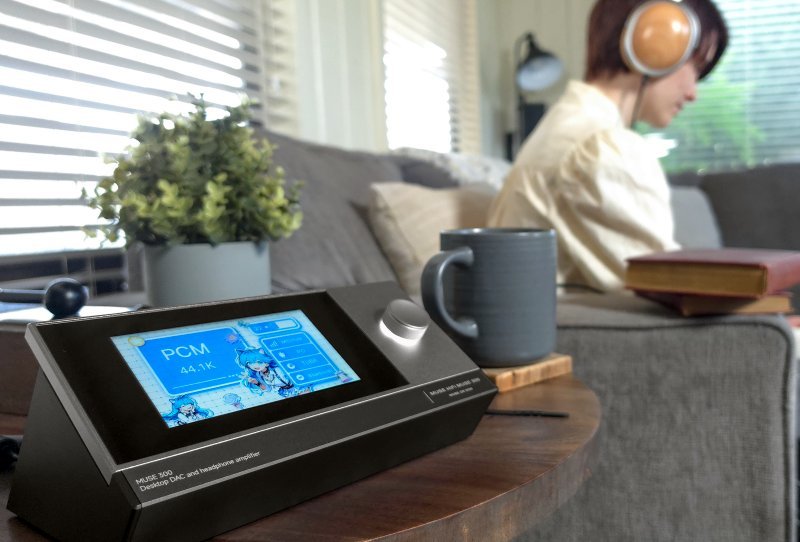
The Muse 300 arrives as a bold hybrid of audiophile hardware and consumer‑grade user interface. Unlike traditional desktop DAC/amps that rely on a bare‑bones control knob or a companion app, the Muse 300 houses a 5‑inch IPS panel (480 × 854 px) that runs a purpose‑built Muse OS. The OS provides on‑screen navigation for input selection, filter tuning, gain staging and even lets the screen double as a secondary monitor for a connected PC.
Key hardware blocks include:
- Main controller – 32‑bit MCU (exact model not disclosed) handling UI rendering and Bluetooth stack.
- DAC – ESS ES9039 Ultra‑I, the same chip found in high‑end network players, promising up to 32‑bit/384 kHz conversion with low jitter.
- Digital‑to‑Analog Conversion (I/V) – Dual ES9603X2 chips for precise current‑to‑voltage conversion.
- Low‑Pass Filter – Dual OPA1612 op‑amps, offering configurable filter slopes that can be switched via the UI.
- Headphone Amplifier – Two TP6120A Class‑AB amps, each capable of delivering 2 W into 32 Ω loads, with separate 6.35 mm and 4.4 mm jacks.
- Line‑Out Stage – Balanced RCA + XLR outputs driven by OPA1612, supporting up to 2 Vrms.
- USB Controller – SA9137L, handling high‑speed USB‑Audio Class 2.0 streams.
- Bluetooth – Qualcomm QCC3095, supporting aptX‑HD and LDAC for wireless playback.
- Coaxial Interface – AK4118 decoder for S/PDIF input.
- Analog Front‑End – NE5532A for input buffering, providing low‑noise gain control.
The device also supports four digital inputs (USB, coaxial, optical, Bluetooth) and can act as a USB‑audio class device for a PC, making it a true all‑in‑one hub.
How it compares
| Feature | Muse 300 | FiiO K11 (reference) | Typical high‑end desktop amp |
|---|---|---|---|
| DAC chip | ESS ES9039 | ES9018K2M (K11) | ES9038PRO or AKM AK4499 |
| Max headphone power | 2 W @ 32 Ω (TP6120A) | 250 mW @ 300 Ω | 1–3 W @ 32 Ω (depending on model) |
| Output stage | Balanced RCA + XLR, 2 Vrms line‑out | RCA only, 2 Vrms | Often balanced, up to 2 Vrms |
| UI | 5‑in‑inch IPS with OS, secondary‑monitor mode | No screen, button‑only | Usually no screen, occasional OLED display |
| Bluetooth | aptX‑HD, LDAC via QCC3095 | No BT (K11) | Optional BT modules, often lower codec support |
| Price (expected) | Kickstarter tier ~US$699 | US$143 (retail) | $400‑$1200 depending on brand |
The Muse 300’s biggest differentiator is the integrated OS. While the K11 and most desktop amps require a separate software suite for firmware updates or filter tweaks, Muse OS places those controls on‑device, eliminating the need for a laptop or phone during everyday use. The secondary‑monitor mode is also rare; a 5‑inch IPS panel can display waveforms, spectrograms, or even act as a static clock while the amp runs.
In terms of raw audio performance, the ES9039 sits a generation ahead of the K11’s ES9018, delivering lower total harmonic distortion (THD+N < -100 dB) and better dynamic range (> 130 dB). The dual TP6120A amps provide more headroom than the K11’s single‑ended design, which is limited to 250 mW into 300 Ω. For users who already own a high‑quality DAC or a computer‑based audio chain, the Muse 300 may feel over‑engineered, but for a desktop‑first setup it offers a compelling all‑in‑one package.
Who it’s for
- Audiophiles who want a single‑device solution – If you prefer a clean desk with one box handling DAC, amplification, and Bluetooth, the Muse 300 removes the need for a separate DAC, amp, and streamer.
- Users who value on‑device control – The built‑in UI makes it easy to switch inputs, adjust filter slopes, or toggle the secondary‑monitor mode without reaching for a phone.
- Desktop‑oriented listeners – The 5‑inch screen is large enough to read menus but small enough to sit comfortably on a desk beside a monitor.
- People who still want wireless flexibility – With aptX‑HD and LDAC support, the Muse 300 can serve as a high‑quality Bluetooth receiver for phones or tablets.
- Budget‑conscious buyers may look elsewhere – At an expected Kickstarter price near US$699, the Muse 300 sits above entry‑level amps like the FiiO K11. If you already own a DAC or are comfortable with a two‑box setup, a more modular approach could be cheaper.
What to watch for
The device is still in the pre‑launch Kickstarter phase, so final pricing, firmware stability, and the breadth of UI themes remain unconfirmed. Early backers should keep an eye on:
- Firmware updates – Since the OS is a core part of the experience, a robust update pipeline will be essential.
- Secondary‑monitor latency – Using the screen as a PC monitor could introduce input lag; real‑world testing will reveal if it’s suitable for video work.
- Heat management – Dual TP6120A amps and two ES9603 converters generate noticeable warmth; the final enclosure should include adequate ventilation.
If the campaign launches as expected, we’ll follow up with a hands‑on review, including measurements of THD+N, jitter, and the practical usability of Muse OS.
Sources
Comments
Please log in or register to join the discussion