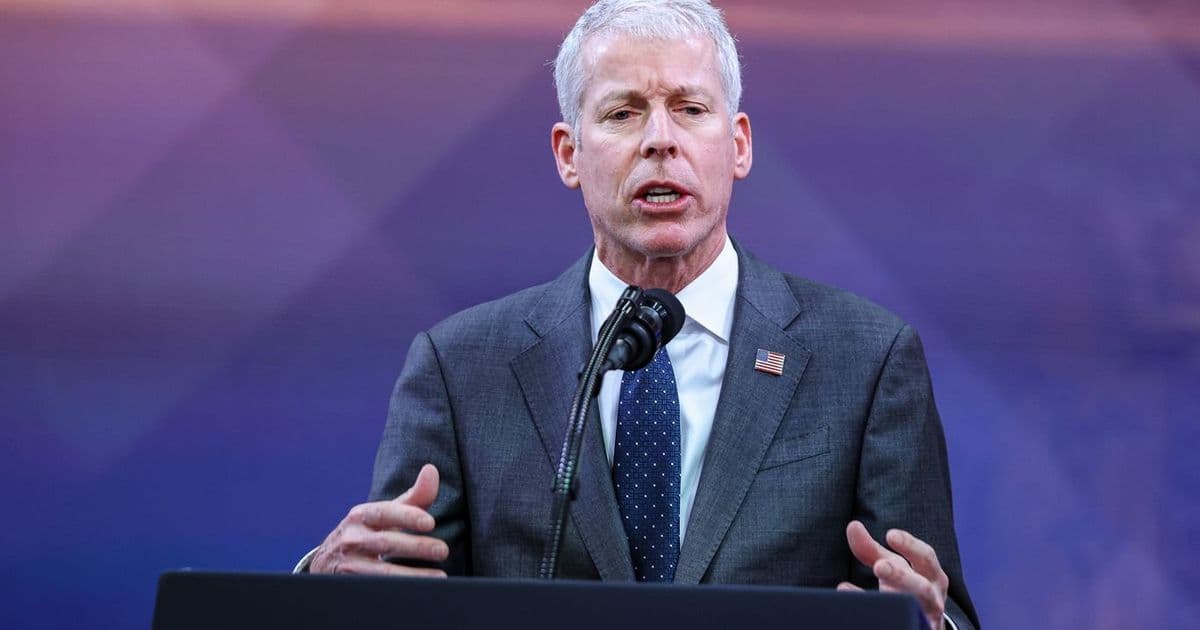
In an exclusive interview, Energy Secretary Chris Wright detailed the Trump administration's approach to unlocking Venezuela's vast energy and mineral reserves, positioning it as a critical component of U.S. energy independence and global supply chain security.
Energy Secretary Chris Wright signaled a fundamental shift in U.S. energy strategy during a January 16th interview, identifying Venezuela's untapped oil and mineral wealth as central to American energy security objectives. The announcement marks the first detailed policy outline from the new administration regarding one of the world's most resource-rich yet politically complex nations.

Venezuela holds the world's largest proven oil reserves at approximately 304 billion barrels, surpassing Saudi Arabia and Canada. Despite this potential, production has plummeted from 3.5 million barrels per day in the late 1990s to under 800,000 barrels today, primarily due to sanctions, mismanagement, and infrastructure decay. The country also possesses significant untapped mineral resources, including gold, bauxite, iron ore, and rare earth elements critical for modern technology and renewable energy applications.
Wright's approach appears to prioritize commercial engagement over diplomatic isolation. "We're looking at ways to unlock these resources through private sector partnerships," he indicated, suggesting a framework that could involve U.S. energy companies operating under specific licensing arrangements. This represents a departure from the sanctions-heavy strategy that dominated U.S.-Venezuela relations for the past decade.
The strategic calculus extends beyond simple energy imports. Venezuela's mineral deposits, particularly its gold reserves and rare earth elements, offer potential relief for critical supply chain vulnerabilities. China has already established a significant presence in Venezuela's mining sector through state-owned enterprises, creating geopolitical urgency for American engagement. Wright acknowledged this competition implicitly, noting that "we cannot cede strategic resources to our adversaries while sitting on the sidelines."
Market analysts project that even partial sanctions relief could add 500,000 to 1 million barrels per day to global supply within 18-24 months, assuming adequate investment in aging infrastructure. However, significant hurdles remain. The Venezuelan government's track record on contract enforcement, coupled with ongoing political instability, creates substantial risk for international investors. Wright indicated the administration is developing "innovative risk mitigation mechanisms" but provided few specifics.
The energy secretary's comments also carry implications for domestic energy policy. Increased access to Venezuelan heavy crude could reduce pressure on U.S. shale producers while providing feedstock for Gulf Coast refineries optimized for sour crude. This dynamic might influence domestic production levels and refining margins, potentially affecting gasoline prices and industry profitability.
Environmental considerations remain contentious. Venezuela's oil production primarily involves heavy crude extraction, which carries higher carbon intensity than lighter grades. Wright's statement emphasized "energy dominance" rather than climate objectives, aligning with broader administration priorities. Critics argue this approach could lock in higher-emission energy sources while undermining global decarbonization efforts.
The administration faces congressional constraints as well. Sanctions on Venezuela's oil sector were codified through legislation requiring congressional action for full reversal. Wright's strategy may instead focus on targeted sanctions relief through executive waivers, a more politically feasible approach that maintains leverage while enabling limited commercial engagement.
International reaction will likely be measured. U.S. allies in Europe and Asia have sought alternative energy sources following Russia's invasion of Ukraine, making Venezuelan supplies potentially attractive. However, concerns about human rights and democratic governance in Venezuela could complicate multilateral coordination. Wright's team appears to be crafting a framework that addresses these concerns through conditional engagement rather than blanket normalization.
The energy secretary's exclusive interview represents the most comprehensive policy statement to date on Venezuela, but implementation details remain sparse. As the administration prepares to roll out specific mechanisms for energy and mineral engagement, industry stakeholders, international partners, and domestic political factions will scrutinize the details for their respective interests. The coming months will reveal whether Wright's vision can translate into tangible energy security gains or whether Venezuela's complex realities will prove resistant to American strategic objectives.
Comments
Please log in or register to join the discussion