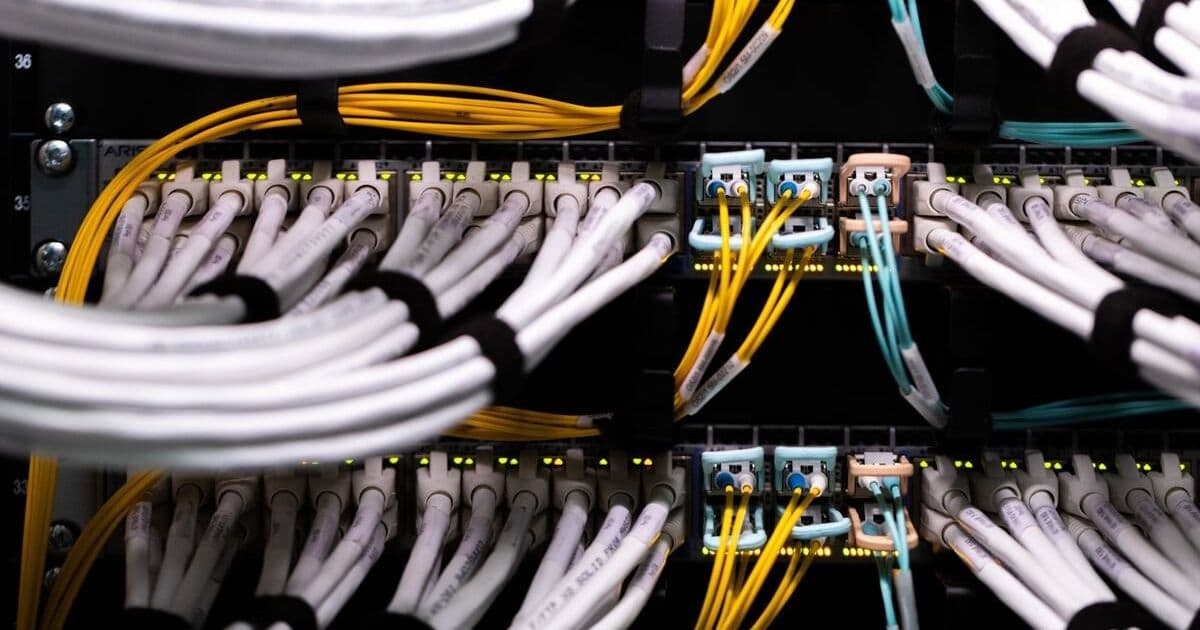
Google is reportedly in talks to form a joint venture with broadband operator Radiate to hold its fiber assets, with Stonepeak Partners investing $1 billion. This move signals a potential strategic pivot away from direct consumer fiber deployment, reflecting the immense capital and operational challenges of building last-mile infrastructure.
The latest reports suggest Google is exploring a joint venture with Radiate, a broadband operator backed by Stonepeak Partners, to house its fiber assets. Stonepeak is expected to invest $1 billion to support the deal. This development, if confirmed, would mark a significant strategic shift for Alphabet, moving from a direct-to-consumer fiber provider to a more passive infrastructure partner.
For years, Google Fiber has been a disruptive force in the U.S. broadband market, pushing incumbent providers to upgrade speeds and lower prices. However, its rollout has been notoriously slow and geographically limited. The model of building fiber-to-the-home (FTTH) networks from the ground up is incredibly capital-intensive and operationally complex. Each city requires extensive permitting, construction, and customer acquisition efforts. Google's approach has often been criticized as a "hobby" project rather than a core business, given the company's primary focus on software and advertising.
Forming a joint venture with a specialized operator like Radiate could be a pragmatic solution. It allows Google to monetize its existing fiber assets without bearing the full burden of future expansion costs. For Radiate and Stonepeak, it provides access to established fiber infrastructure and the potential for a powerful brand partnership. This structure is reminiscent of how other tech giants handle physical infrastructure—leveraging partners to scale while focusing on their core competencies. It's a pattern seen in cloud computing, where companies build data centers but often partner with local providers for last-mile connectivity.
However, this move also raises questions about Google's long-term commitment to the fiber vision. Critics might argue that it's an admission that the direct consumer model is unsustainable for a company of Google's scale. The competitive landscape has also shifted; fixed wireless access (FWA) from T-Mobile and Verizon has captured significant market share, offering a cheaper, faster-to-deploy alternative for many households. By partnering, Google could be effectively ceding the consumer-facing battle to focus on the underlying infrastructure play, potentially selling capacity to other ISPs or leveraging it for its own enterprise and cloud services.
Counter-perspectives highlight the strategic value of owning the last mile. Control over the physical connection to the home provides invaluable data on user behavior and network performance, which can inform Google's broader ecosystem. It also ensures a high-quality, low-latency connection for its services, from YouTube to future AR/VR applications. Walking away from direct deployment could mean losing that strategic advantage. Furthermore, the success of the JV model depends heavily on Radiate's operational capabilities and the alignment of incentives between the partners. If Radiate's expansion plans don't match Google's historical focus on underserved markets, the core mission of improving broadband access could be diluted.
The broader trend here is the tech industry's evolving relationship with physical infrastructure. Companies like Amazon and Microsoft have built vast data center networks, but they often rely on colocation partners and telecom providers for connectivity. Google's potential fiber JV fits into this pattern, suggesting a maturation of the tech giant's approach to hardware. It's a move from being a disruptive builder to a strategic enabler, a shift that could redefine its role in the broadband ecosystem. The outcome will depend on whether this partnership can accelerate fiber deployment or simply become a holding company for assets that see limited growth.
Ultimately, the Google-Radiate talks underscore a fundamental tension in the tech world: the desire to control the entire stack versus the practical need to specialize and partner. For Google, the fiber dream may be evolving into a more sustainable, if less ambitious, reality.
Comments
Please log in or register to join the discussion