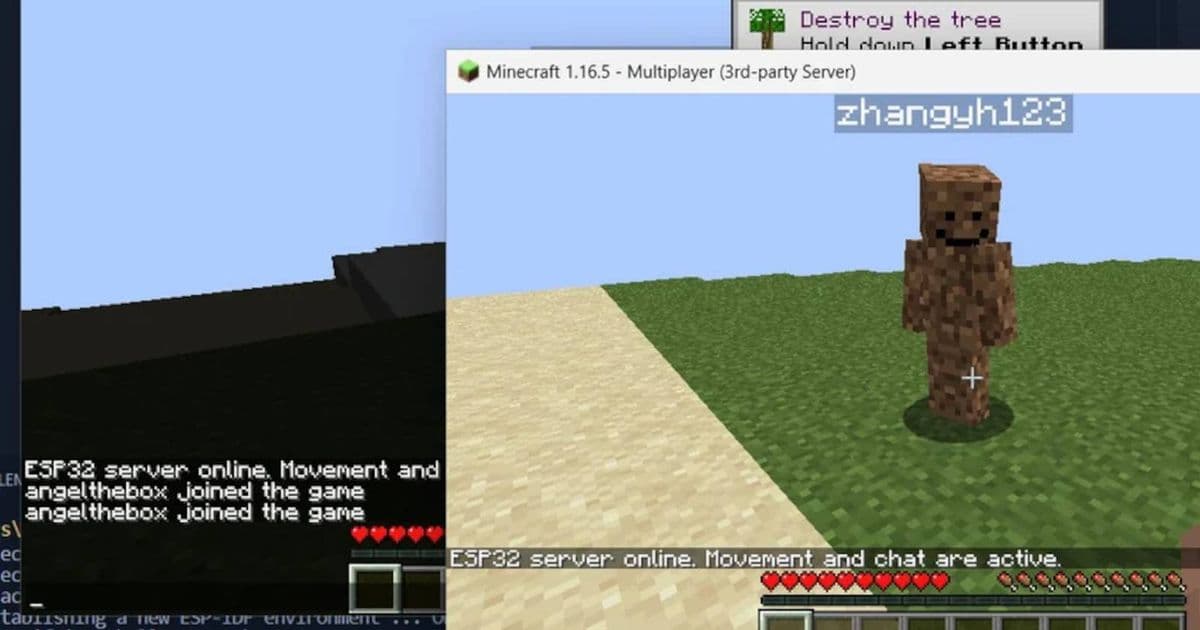
Developer angelthebox successfully ported Minecraft 1.16.5 to ESP32-S3 using C, enabling core gameplay on a $5 chip despite hardware limitations.
A developer has accomplished what many thought impossible: running a full Minecraft server on an ESP32 microcontroller. The project, called Macerun, demonstrates how far embedded systems have come by hosting a complete multiplayer game world on hardware that costs less than a cup of coffee.
The Technical Achievement
The ESP32-S3, a $5-$10 microcontroller with limited RAM and processing power, now hosts a functional Minecraft 1.16.5 server. Developer angelthebox rewrote the entire Minecraft server codebase from Java to C, eliminating the memory overhead that would have made this impossible on such constrained hardware.
This isn't just a proof-of-concept - it's a working multiplayer server. Players can join, walk around, break blocks, place blocks, chat with each other, and experience basic game physics including health and hunger systems. The world generates procedurally on the fly, which is crucial for managing the ESP32's limited memory resources.
What Works and What Doesn't
Despite the impressive feat, Macerun is understandably limited compared to a full Minecraft server. The current implementation supports:
- Server joining and basic movement
- Block placement and destruction
- 2x2 crafting recipes in the inventory
- Server chat functionality
- Basic physics, health, and hunger tracking
- Flash memory persistence for block changes
However, several major features are missing. There are no mobs (animals, monsters, or NPCs), 3x3 crafting doesn't work, and player inventories and positions aren't retained between sessions. These limitations stem from the ESP32's hardware constraints - it simply doesn't have enough RAM to track all the complex state information that a full Minecraft server requires.
Why This Matters
This project represents more than just a technical curiosity. It demonstrates the growing capabilities of embedded systems and opens up new possibilities for distributed gaming and edge computing. Imagine a network of ESP32 servers creating a decentralized Minecraft world, or using similar techniques to run other resource-intensive applications on low-power hardware.
The choice to rewrite from Java to C was crucial. Java's memory management and runtime overhead would have made this impossible on the ESP32. By using C, angelthebox could optimize every aspect of the code for the specific hardware constraints.
Getting Started
For developers interested in exploring this project, the complete source code is available on the Macerun GitHub page. The repository includes setup instructions and documentation for getting your own ESP32 Minecraft server running.
This isn't angelthebox's first rodeo with ESP32 gaming projects. They've previously developed a 3D racing game that runs entirely on the ESP32, complete with hardware controls and display output. That project, along with the NES emulator mentioned in related coverage, shows a pattern of pushing embedded hardware to its limits.
The Future of Embedded Gaming
Projects like Macerun suggest an interesting future where powerful game experiences could be distributed across networks of inexpensive microcontrollers. While playing Minecraft on an ESP32 won't replace your gaming PC anytime soon, it opens up possibilities for educational applications, distributed systems research, and creative uses of embedded hardware that we haven't yet imagined.
The ESP32 has proven itself capable of far more than simple IoT applications. From racing games to NES emulators to full Minecraft servers, this tiny chip continues to surprise developers with its versatility and power.
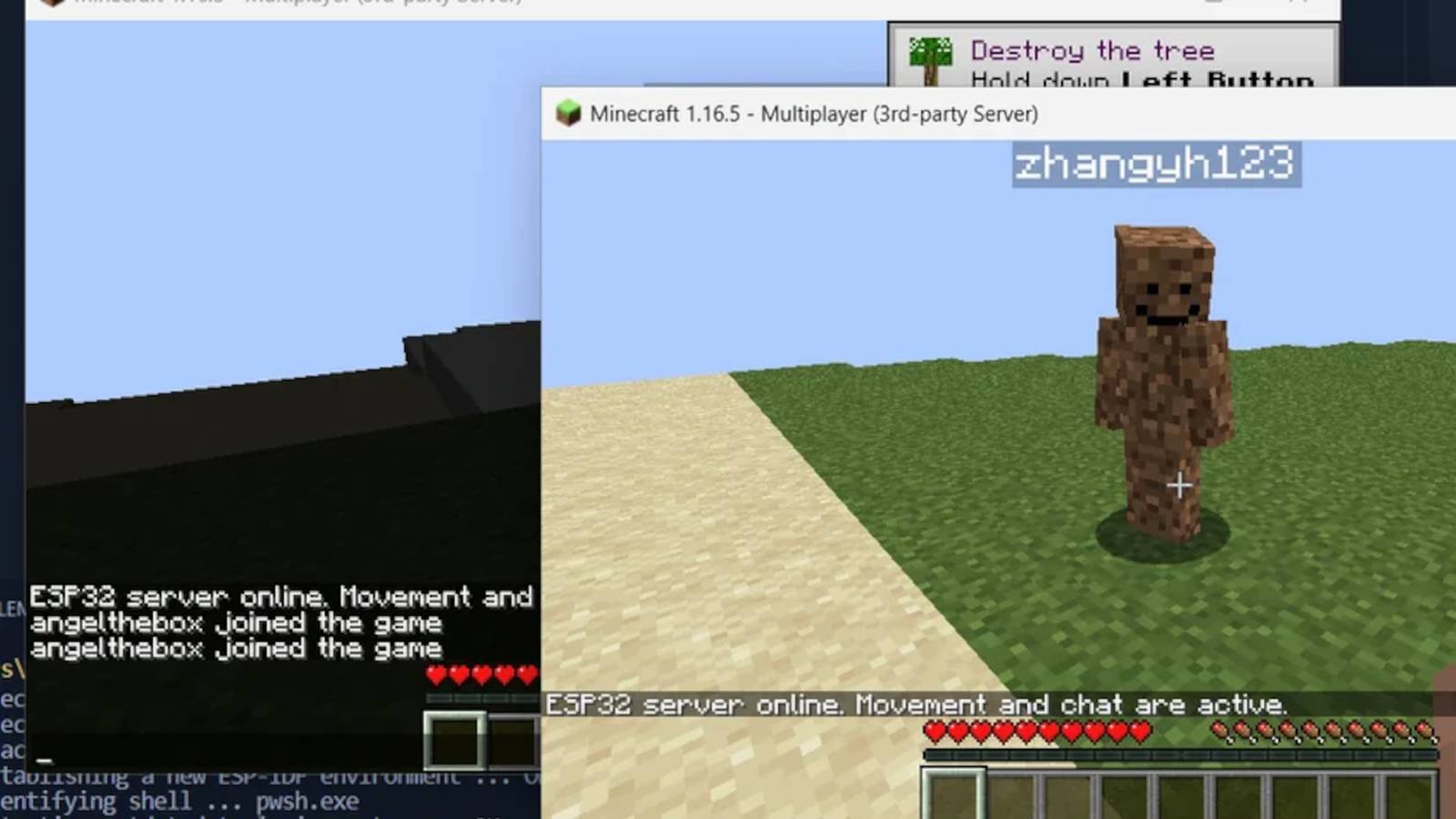
For those interested in the technical details, the Macerun project uses procedural world generation to minimize memory usage, direct flash storage for persistence, and carefully optimized C code to squeeze every bit of performance from the ESP32's limited resources. It's a masterclass in embedded systems programming and a testament to what's possible when developers push hardware to its absolute limits.
Comments
Please log in or register to join the discussion