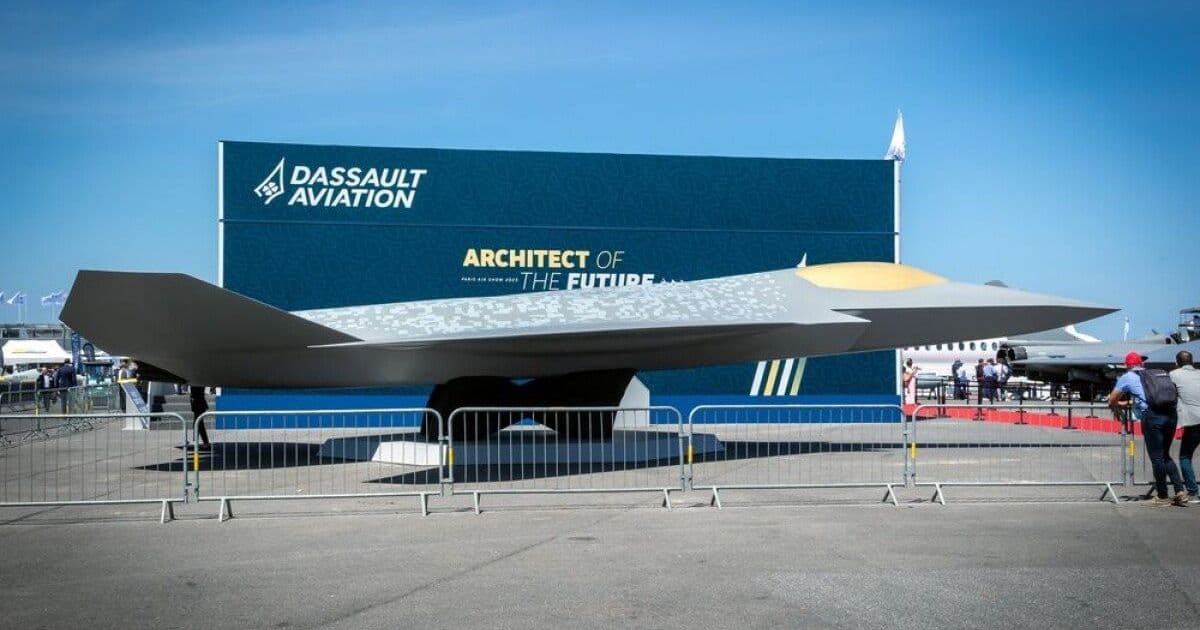
France and Germany just walked away from FCAS, the joint next-gen fighter they've nursed since 2017. The official story is industrial squabbling over workshare. The more interesting story is a disagreement about whether crewed fighters even matter anymore, and who controls the network that ties everything together.
When two governments spend nearly a decade promising a shared sixth-generation fighter and then quietly shelve the aircraft at its center, the temptation is to read it as ordinary procurement dysfunction. France and Germany have now done exactly that with the Future Combat Air System (FCAS, or SCAF on the French side), and the early coverage frames it as a workshare spat between Dassault and Airbus. That framing is accurate as far as it goes. It also misses what makes the collapse worth watching for anyone outside the defense beat.
The surface facts are clear enough. According to Der Spiegel, Dassault and the Airbus group could not agree on how to split the engineering work or how to handle patent rights for new developments. Le Monde reports that Chancellor Merz and President Macron reached a "shared assessment" that the companies simply would not converge on a joint combat aircraft. The program had targeted a flying technology demonstrator by 2026 or 2027 and operational service around 2040. The crewed jet, for now, is canned.
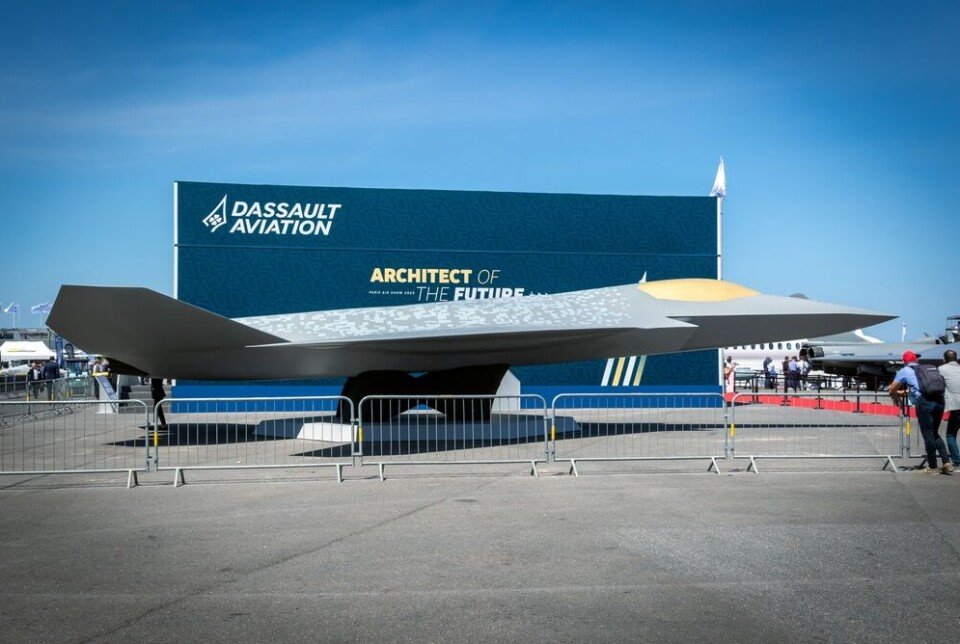
The disagreement that should interest engineers
Strip away the national-champion politics and a genuinely substantive technical fork emerges. France wanted a Rafale replacement that could operate from an aircraft carrier, a hard constraint that shapes airframe, landing gear, and structural weight in ways that ripple through the entire design. Germany, meanwhile, was reportedly beginning to question whether a crewed fighter is the right thing to build at all, given how fast autonomous and drone systems are maturing.
That second point is the one the consensus narrative tends to skip past. It is easy to file FCAS under "Europeans can't cooperate," a story that writes itself. It is harder, and more honest, to acknowledge that the two partners had arrived at materially different bets about where air combat is heading. One side is optimizing for a carrier-capable manned platform with a long service life. The other is asking whether spending into the 2040s on a piloted jet is the best use of money when attritable drones keep getting cheaper and more capable. Those are not reconcilable requirements dressed up as a personality clash. They are different theories of the next twenty years.
FCAS was never only an aircraft, and that is the part most relevant to a software-minded audience. The program envisioned drone wingmen flying alongside the crewed fighter and, binding it all together, a "combat cloud" described in the program's own language as a "nervous system that networks aircraft, drones and other components into an integrated whole." Le Monde notes that these other parts of the project will continue even though the central jet has been dropped.
Why the cloud is the actual prize
Here is where the patent dispute stops looking like bureaucratic pettiness. A combat cloud is, functionally, a distributed real-time system: low-latency data fusion across platforms, contested-network resilience, and a software-defined backbone that decides which sensor feeds which shooter. Whoever owns the interfaces and the intellectual property around that layer owns the program's long-term value, because the airframe depreciates while the network and its software keep evolving. Read in that light, a fight over patent rights is not a footnote. It is a fight over the most durable asset in the whole system.
This pattern is familiar to anyone who has watched platform consolidation in commercial tech. The hardware is the visible thing everyone argues about; control of the connective software is where the leverage actually sits. Defense is arriving at the same realization, just with far higher stakes and far worse incentives for sharing.
The counter-perspective worth holding
It would be tidy to conclude that Germany's drone-first skepticism is simply correct and France is clinging to a manned-fighter past. That conclusion is too clean. Carrier aviation imposes real operational requirements that drones have not yet displaced, and France's history with Rafale shows it is perfectly willing, and able, to build a capable jet alone when partners diverge. Going it alone is expensive and slower, but it is not irrational when your requirements genuinely differ. France will very likely pursue its own next-gen aircraft, exactly as it did before.
There is also a case that the breakup is healthier than a forced marriage. A compromise jet that satisfied neither the carrier requirement nor the drone-centric vision could have produced something worse than two focused programs. Multinational defense projects have a long record of converging on the most expensive common denominator. The Financial Times reports Airbus is keen to lead a new pan-European consortium to replace FCAS, which suggests the collaboration impulse is not dead, just rearranging around a different center of gravity. Spain and Belgium, both participants, now have a choice to make about which orbit to join.
What this does to the wider field
FCAS's stumble reshapes the competitive picture. The UK-Italy-Japan Global Combat Air Programme (GCAP), whose British variant is known as Tempest, is now the main European-led contender for a sixth-generation jet. It aims to replace the Eurofighter Typhoon and Japan's Mitsubishi F-2, targeting service entry around 2035. GCAP had been progressing, but it is not immune to the same disease that just felled FCAS. The difference is the bottleneck: here it is funding clarity rather than industrial deadlock. A long-term multinational contract cannot be signed until the UK publishes its delayed defense investment plan, and the planned 2027 demonstrator flight is already looking optimistic.
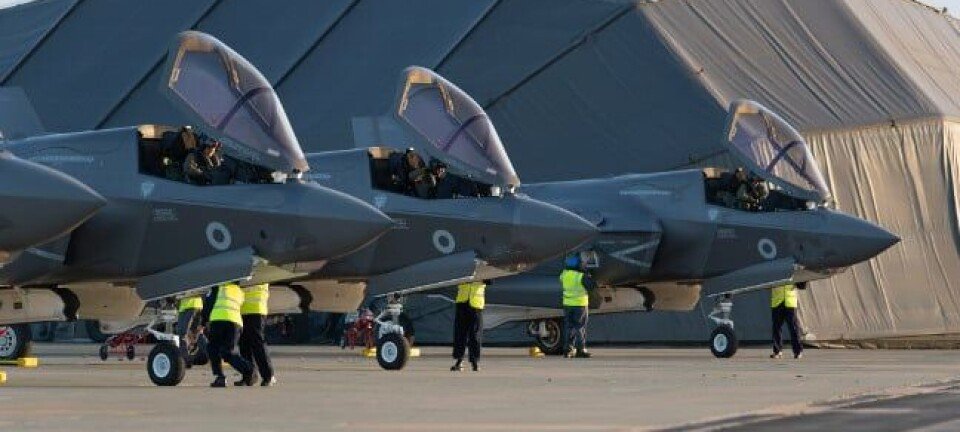
The United States, meanwhile, is building its own sixth-generation aircraft under the Next-Generation Air Dominance program, the Boeing-built F-47, possibly entering service in the early 2030s. Whether European air forces would buy it is an open question, and one freighted with hard-earned skepticism. President Trump previously warned that exported aircraft would have their capabilities deliberately downgraded, a statement that lands differently now that the in-service F-35 has shown the costs of dependency. Software-upgrade delays on the F-35 have left the RAF and Royal Navy unable to integrate European-made weapons, a concrete reminder that buying someone else's jet means buying their release schedule and their export politics too.
That dependency anxiety is the connective thread running under all of these programs. The combat cloud, the patent fights, the wariness about downgraded American exports, and Germany's drone hedging are all expressions of the same underlying question: who controls the software and the network, and what happens when the entity that controls them has interests that diverge from yours. Europe just watched two of its largest economies decide they would rather control their own answers separately than share a compromised one. Whether that produces two strong programs or two underfunded ones is the bet now on the table, and it will be years before anyone can score it.
Comments
Please log in or register to join the discussion