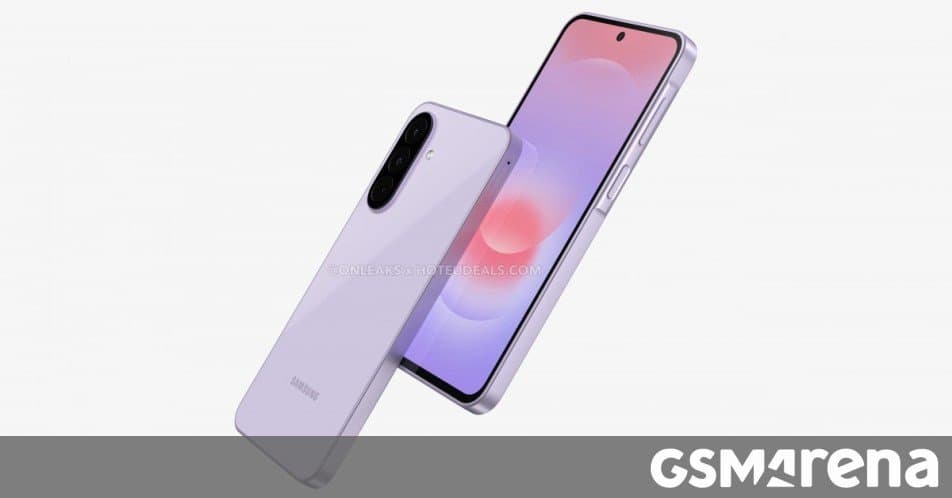
Leaked pricing puts the Galaxy A27 at €349 to start, a €50 jump over the A26, and the spec sheet underneath it isn't doing much to justify the climb.
Samsung's Galaxy A27 has spent the past few weeks bleeding details, first through renders, then more renders, then a full spec dump. The one number everyone actually cares about stayed hidden until now. According to the latest leak, the Galaxy A27 will sell for €349 in the Eurozone with 6GB of RAM and 128GB of storage, climbing to €439 for the 8GB/256GB configuration.
That pricing matters more than it might sound, because the A-series is where Samsung wins volume. These are the phones that show up in carrier stores, family plans, and first-smartphone purchases by the millions. So when the entry point moves, it moves a lot of wallets with it.
A €50 jump that's hard to ignore
The Galaxy A26 launched at €299 for the base model and €369 for the top configuration. The A27 asks for €349 and €439 respectively. That's a €50 bump on the cheap end and a €70 bump at the top. In a segment where buyers are price-sensitive by definition, a 17 percent increase on the base model is the kind of thing that sends people shopping elsewhere.
Discounts almost always follow Samsung launches, and A-series phones in particular tend to drift downward in price within a few months. The A26 itself can already be found well below its launch figure. But launch pricing sets the anchor, and it shapes how the phone gets reviewed and recommended in those critical first weeks.
What the money actually buys
Here's where the leak gets awkward for Samsung. The Galaxy A27 is rumored to ship with a 6.7-inch FHD+ display and the Snapdragon 6 Gen 3 as its processor. The camera setup leads with a 50MP main sensor with optical image stabilization, backed by a 5MP ultrawide, a 2MP macro camera, and a 12MP selfie shooter. Powering all of it is a 5,000 mAh battery with 25W wired charging.
Read that list and the OIS on the main camera is the standout. Optical stabilization at this price tier is genuinely useful, especially for low-light shots and video, since it physically compensates for hand shake rather than relying on software cropping. The rest of the sheet is standard midrange fare. The 2MP macro camera is the usual filler sensor that exists mostly to pad the spec count, and 25W charging is fine but no longer impressive when budget competitors push 67W and beyond.
The Snapdragon 6 Gen 3 is the real question mark. It's a capable enough chip for daily use, but at €349 you're entering territory where the math stops favoring you. The reaction in GSMArena's own comments captured the problem bluntly: the Galaxy A56, Samsung's own higher-tier model, can already be found cheaper while offering a stronger chipset and a better overall package. When your new midrange phone is outclassed by a discounted sibling, the pitch gets complicated fast.
The ecosystem angle is what holds it together
So why would anyone still buy it? The answer is the part that doesn't show up on a spec sheet: software support and ecosystem fit. Samsung has been extending update commitments across its lineup, and the A-series now benefits from years of Android OS upgrades and security patches that budget rivals from smaller brands simply don't match. A Motorola or a generic Android handset might beat the A27 on raw specs at the same price, but it often won't see the same length of OS updates.
There's also the One UI factor. Buyers already living inside Samsung's world, with a Galaxy Watch, Galaxy Buds, or a SmartThings setup at home, get tighter integration by staying on a Galaxy phone. That ecosystem pull is exactly what lets Samsung charge a premium over equivalent hardware. It's the same lock-in logic Apple has used for years, just applied to the Android midrange. The friction of leaving, re-pairing accessories, moving Samsung Pay, relearning a different interface, is real, and Samsung is clearly betting that friction is worth €50.
Whether that bet pays off depends on how aggressively the rest of the market responds. Phones in this bracket rarely sell at launch price for long, and a few months of street-price erosion could quietly fix the value problem the leak has exposed. For now, though, the A27 arrives asking more and offering roughly the same, and that's a tough opening argument to make to the most cost-conscious buyers Samsung has.
Samsung hasn't officially confirmed the pricing, so treat these figures as a strong rumor rather than a final number. The company has acknowledged the A27's existence, which usually means an official reveal isn't far off. When it lands, the question won't be whether the phone is good. It'll be whether it's €50 better than the one it replaces.
Comments
Please log in or register to join the discussion