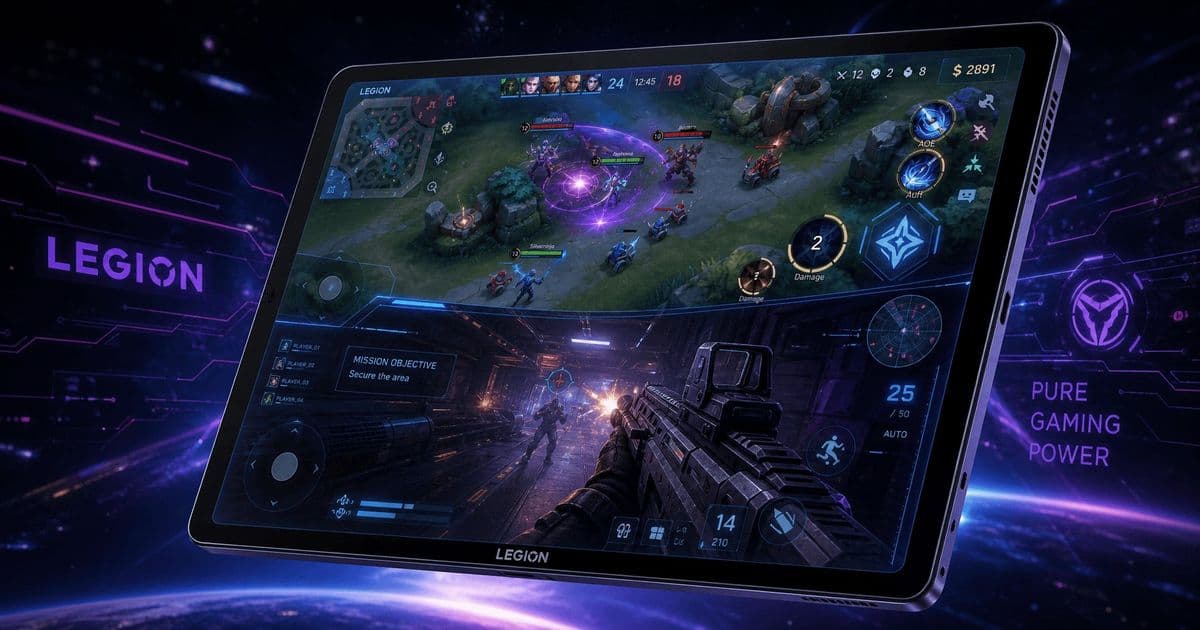
JD.com reports gaming tablet transactions jumped 150% year-over-year in 2026, and a wave of new devices from Red Magic, REDMI, iQOO, Lenovo, and OnePlus is chasing the trend. Strip away the launch-event language and the story is mostly about thermal physics: phones get hot, throttle, and shrink the screen, and a bigger slab of aluminum solves all three.
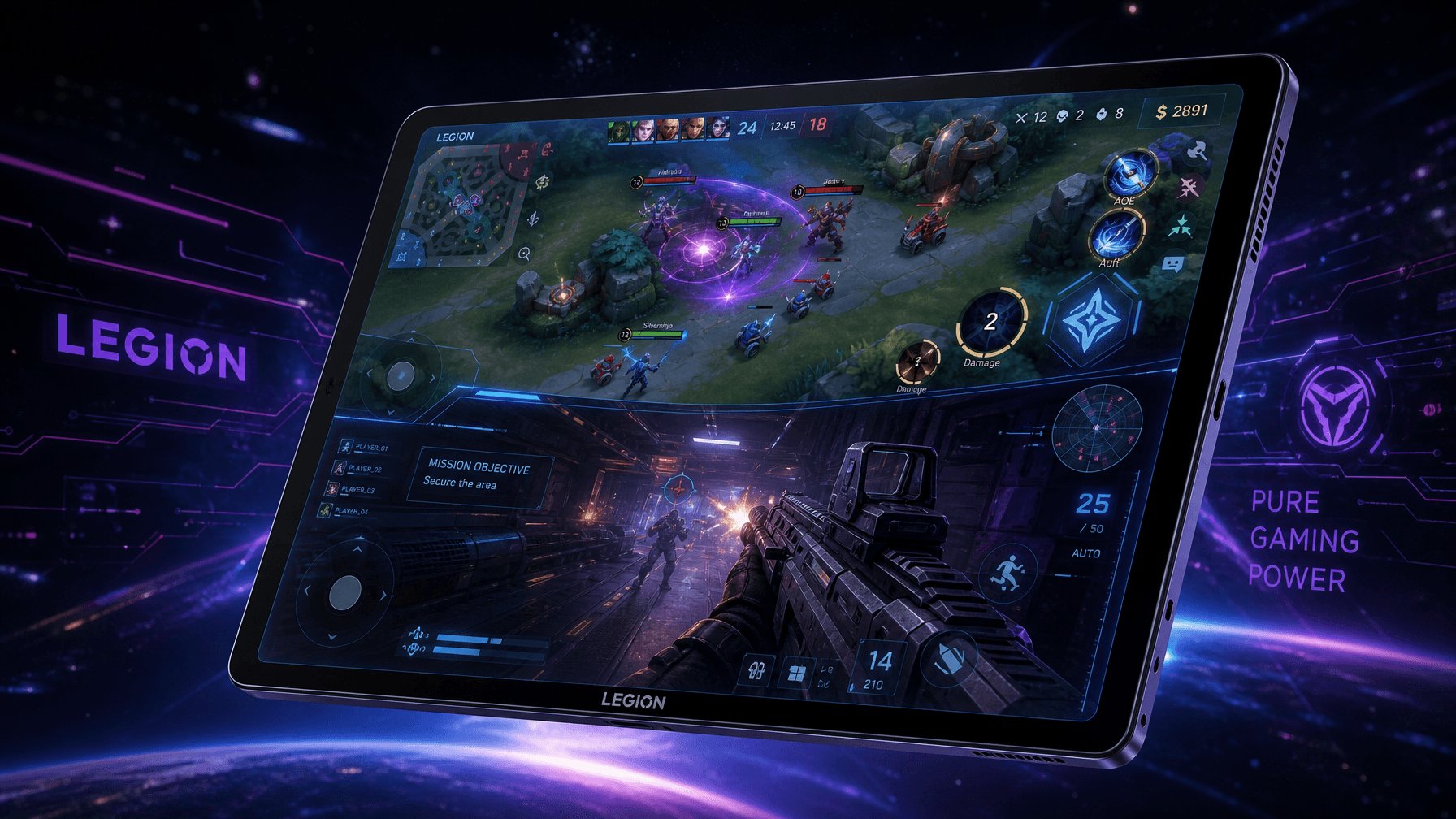
The headline number is doing a lot of work. JD.com says gaming tablet transaction volume rose more than 150% year-over-year in China in 2026, and that figure is now anchoring a narrative about an entirely new device category. Before treating it as a structural shift, it helps to ask what 150% growth off a small base actually represents. Gaming tablets were, by the article's own framing, a niche concept until recently. Tripling a niche still leaves you with a niche, just a louder one. The interesting question is not whether the percentage is real, but whether the underlying demand is durable or a marketing-manufactured category that vendors are willing it into existence.
What's actually being claimed
The pitch is that mobile gamers are abandoning smartphones for larger-screened tablets, and that a fresh crop of hardware, the Red Magic Gaming Tablet 5 Pro, REDMI K Pad 2, iQOO Pad 6 Pro, Lenovo Legion Y700 Gen 5, and OnePlus Pad 3 Pro, is purpose-built to capture them. These are positioned as portable consoles rather than media or productivity slates. The supporting data is genuine and worth taking seriously: IDC put China tablet shipments at 33.76 million units in 2025, up 13.1% year-over-year, with the consumer segment growing faster at 14.4%. Research firm iiMedia found tablets surpassed dedicated gaming consoles to become the third-most-popular gaming device, behind smartphones and PCs, for the first time in 2025.
That last data point is the most defensible part of the story. Overtaking the Switch and its competitors in a market where dedicated consoles never had strong distribution is a measurable milestone, not a press release adjective.
What's actually new
Very little of this is new technology. A gaming tablet is a phone SoC, the same Snapdragon 8-series or Dimensity flagship silicon found in handsets, mounted in a chassis with more room. What's new is the thermal envelope. The three frustrations the article names, small screens, overheating during extended play, and unstable frame rates on demanding open-world titles, are all downstream of one constraint: a phone is a heat-limited device. Sustained performance on mobile is almost never bounded by raw compute. It's bounded by how fast the chassis can shed heat before the SoC throttles to protect itself.
A tablet wins here for boring physical reasons. More surface area means more passive dissipation. More internal volume means room for vapor chambers and, in some Red Magic and Legion designs, active fans. A larger battery means the same chip can run at a higher sustained power draw without collapsing the runtime. None of that is a breakthrough in silicon. It's the same chip given permission to run closer to its actual ceiling for longer. When a vendor advertises stable 120fps in a title that throttles to 60fps on the equivalent phone after fifteen minutes, that gap is the entire product thesis, and it's a thermal story, not a compute one.
The survey work backs this reading. A joint study by 36Kr, Houlang Research Institute, and JD Consumer Research across 1,000 respondents found screen quality, sustained frame rates, and thermal management as the top buyer priorities. Notice what's absent from that list: peak benchmark scores. Buyers are implicitly telling vendors that the meaningful spec is the one most marketing pages bury, the frame rate you still have an hour into a session.
The market context behind the hardware
The demand pull is real and large. Mobile gaming accounts for over 70% of China's total gaming market revenue. The China Music and Digital Audio Association reported April 2026 revenue of 303.69 billion RMB, up 11.04% year-over-year. Sensor Tower data from March 2026 showed Honor of Kings, Peacekeeper Elite, and Delta Force topping the China App Store revenue charts, with 38 Chinese publishers collectively earning $2.11 billion in a single month.
Those titles matter to the hardware story in a specific way. They are graphically demanding, session-length games where competitive players care about frame stability, not just average framerate. A dropped frame in a battle royale firefight is a lost engagement. That creates a population of users with a concrete, repeatable reason to want a device that won't throttle, which is exactly the niche these tablets are engineered to fill. The category isn't being invented from nothing; it's being matched to a workload that genuinely strains phones.
The limitations the launch slides skip
A few constraints temper the enthusiasm. First, the substitution claim is overstated. People are not carrying a tablet instead of a phone; they're carrying it in addition to one. That makes the gaming tablet a discretionary second device, which historically makes a category vulnerable when consumer spending tightens. The 150% growth figure tells you about early adopters, not about whether a mainstream buyer will purchase a single-purpose gaming slate.
Second, the form factor cuts both ways. A larger screen is better for visibility and heat, but it's heavier to hold through a long session and harder to pocket. Vendors are addressing this with kickstands and controller attachments, which quietly admits the device wants to be a console, not a handheld. At that point the comparison set is no longer phones; it's the Switch and handheld PCs, where the software ecosystem and ergonomics are more mature.
Third, the software side is the unglamorous bottleneck. A tablet only delivers its thermal advantage if games are optimized to push higher sustained settings on the larger device, rather than inheriting phone defaults. That requires per-title developer work, and outside the top revenue earners, that work often doesn't happen. The cloud gaming angle that iiMedia highlights partly sidesteps this by moving rendering off-device, but cloud gaming carries its own ceiling: it converts a thermal problem into a network and latency problem, which is a worse trade for the twitch-reaction competitive titles driving the trend.
What actually changes
The honest version of this story is narrower than the category-defining framing suggests. Chinese OEMs have correctly identified that flagship phone silicon is heat-starved, that a large share of gaming revenue comes from demanding sustained-session titles, and that there's a willing buyer for a device that runs those titles without throttling. That's a sound product hypothesis, and the iiMedia console-overtaking data suggests it's working better than skeptics would have guessed a year ago.
What it is not is a reinvention of the tablet or a new computing paradigm. It's a thermally generous chassis wrapped around a known SoC, sold to a real and well-funded audience. Whether 2026 makes gaming tablets mainstream or simply a healthy niche depends on questions the current data can't yet answer: whether second-device demand survives a spending downturn, whether developers optimize beyond the top three titles, and whether the next phone generation's improved cooling narrows the gap that justifies the purchase in the first place. The surge is real. The category's permanence is still a forecast, not a fact.
Comments
Please log in or register to join the discussion