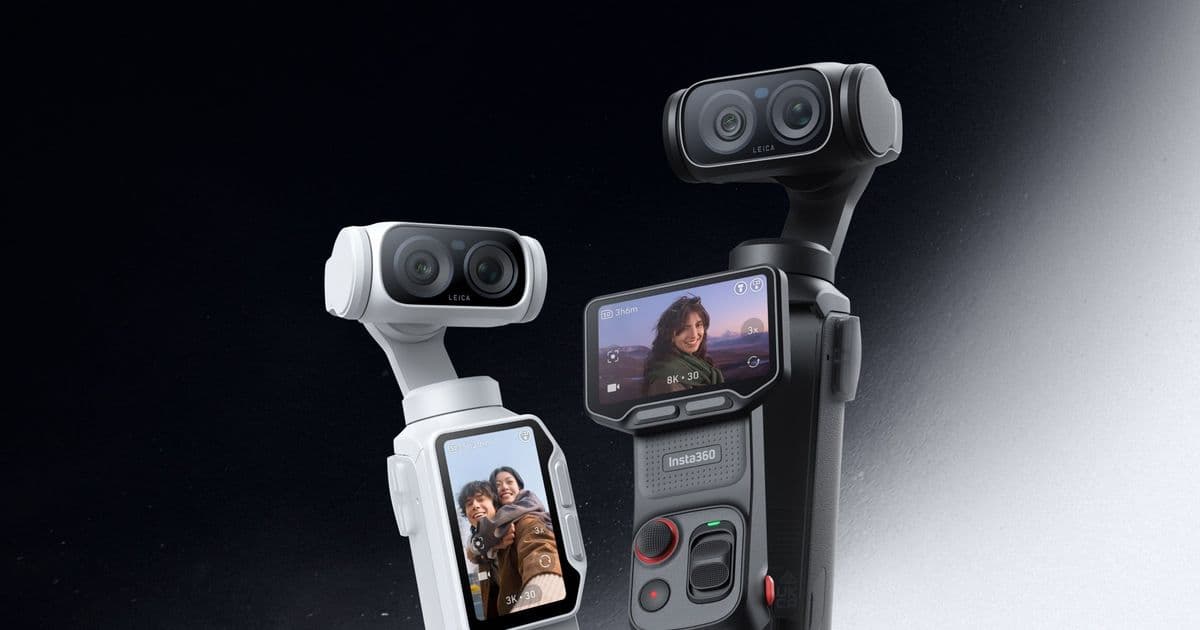
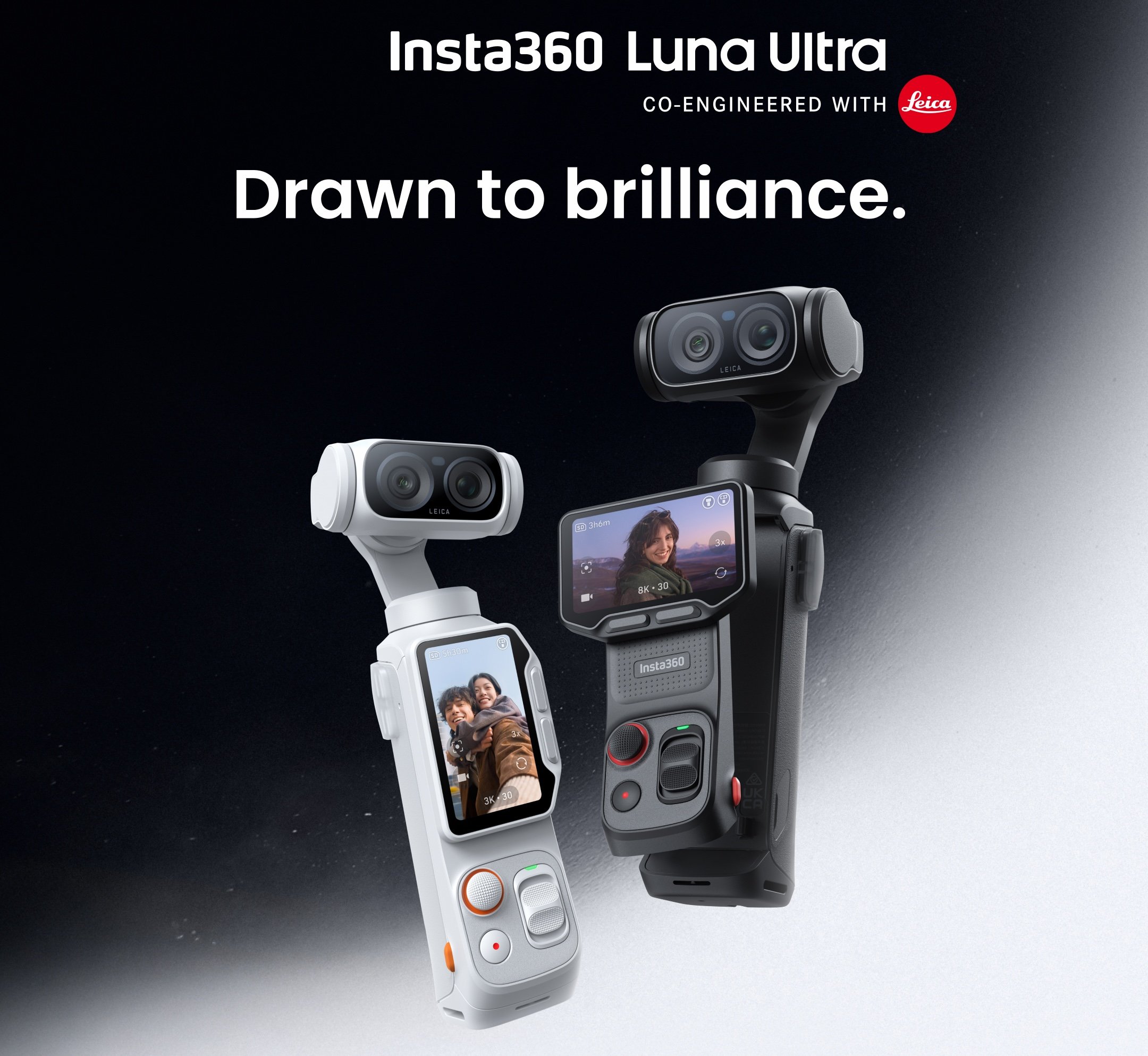
Insta360's first gimbal camera arrives with a 1-inch 8K sensor, a second telephoto lens, and a detachable OLED screen that doubles as a remote. At $769.99, it undercuts no one but packs hardware DJI's Pocket line has never offered.
Insta360 has spent years building a reputation around 360-degree action cameras, so a pocketable gimbal camera is new territory for the company. The Luna Ultra is its first attempt, and it lands squarely in DJI's backyard. The Osmo Pocket 3 has been the default pick in this category for anyone who wants stabilized handheld video without strapping a rig together, and DJI's next iteration, widely referred to as the Pocket 4P, is still under wraps. Insta360 is not waiting for that fight to start on DJI's terms.
What's new
The headline feature is the dual-lens system, something no Osmo Pocket has shipped with. The primary camera is a Leica Summicron lens sitting in front of a 1-inch 8K sensor at f/1.8, which is the same sensor class DJI uses in the Pocket 3. Where the Luna Ultra breaks new ground is the second lens, a dedicated telephoto built around a 1/1.3-inch sensor at f/2.0. Having two physical focal lengths in a unit this size is unusual, and it changes how you frame shots. Instead of cropping into a single sensor and losing detail, you switch optics. The camera advertises 12x zoom total, with 6x of that classified as lossless.
The rest of the imaging spec sheet is dense. You get a 20mm equivalent wide focal length, 14 stops of dynamic range, and mechanical 3-axis stabilization, which is the part that earns the gimbal name. Video tops out at 8K/30 fps with Dolby Vision, and there is 10-bit I-Log capture for anyone who wants to color grade in post rather than bake the look in at record time. On the stills side it pulls 37 MP UltraPhotos and 200 MP panoramas. A Triple AI chip handles image processing, which Insta360 credits for the tracking and framing features.
{{IMAGE:3}}
The detachable 2-inch OLED touchscreen is the cleverest piece of hardware here. It pops off the body and becomes a wireless remote with HD transmission rated to 20 meters, so you can set the camera down and monitor or trigger it from across a room. The screen carries its own 210 mAh battery to make that work. Audio is handled by four microphones, three on the gimbal body and one on the detachable screen, plus a built-in wind guard borrowed in spirit from the Insta360 X5, and direct compatibility with Insta360's existing wireless mic system.
How it compares
Against the current Osmo Pocket 3, the Luna Ultra matches the 1-inch sensor and beats it on optical flexibility with the second telephoto lens. DJI's unit relies on a single lens and digital cropping for tighter shots, so the Luna Ultra's lossless 6x zoom is a real hardware advantage rather than a software trick. The detachable screen is another point of separation. The Pocket 3 has a rotating screen but nothing you can remove and use as a remote.
Storage is generous at 47 GB built in, expandable to 1 TB over microSD, where DJI leaves you entirely dependent on a card. Battery capacity is 1,550 mAh, rated for up to four hours of shooting, and fast charging takes it from empty to 80 percent in roughly 23 minutes. That charge time is the kind of practical detail that matters more on a shoot day than peak resolution numbers.
{{IMAGE:4}}
The tracking suite is where Insta360 leans on its software heritage. Deep Track 5.0, active zoom tracking, group tracking, auto tracking, and smart framing all aim at the same problem, keeping a moving subject centered and in focus without a second operator. These features tend to live or die on real-world testing, and that is where the Pocket line has historically been strong, so this is the column where DJI's next model could push back hardest.
Who it's for
At $769.99, the Luna Ultra is not a budget pick. It is aimed at solo creators, vloggers, and run-and-gun shooters who want a single device that covers wide and tight framing without lens swaps or a full camera bag. The dual-lens design and lossless zoom make it the more capable tool on paper for anyone who shoots subjects at varying distances, while the detachable remote suits creators who film themselves and need to manage the shot from a distance.
If you already live inside DJI's accessory ecosystem, waiting to see what the Osmo Pocket 4P brings is reasonable. But if you want the most optically flexible pocket gimbal available right now, Insta360 has put a genuinely different hardware proposition on the table. The camera is available in cosmic black and stellar white through the Insta360 store, Amazon, and Best Buy, with no bundle pricing announced yet.
Comments
Please log in or register to join the discussion