A blogger's rant about his media-centre keyboard hibernating his PC every time he hits Alt+F4 taps into a wider frustration: hardware makers keep reinventing the F-key, and a lot of programmers think most of them got it wrong.
There is a particular kind of small, recurring annoyance that tech people are unusually good at noticing, cataloguing, and then arguing about at length. The function key sits squarely in that category. Dan Q, writing on his blog danq.me, recently put words to a grievance that shows up in keyboard forums, mechanical-keyboard subreddits, and the occasional viral poll: the way manufacturers handle the Fn key, and the F1 through F12 row it modifies, is frequently broken in ways that range from mildly irritating to genuinely disruptive.
His specific complaint is concrete and relatable. A wireless keyboard and trackpad combo serves his living-room media PC, the kind of setup running Jellyfin, Netflix, and Steam Big Picture. The manufacturer repurposed the F-key row for media shortcuts, and stuck a "sleep" command on F4. The trouble is that F4 also lives under Alt+F4, the universal Windows gesture for closing an application. When the keyboard's function-lock silently resets, which it does after a battery change or a long power-off, an attempt to quit an app instead tells an aging machine to hibernate. The penalty is a minute of watching RAM get flushed to disk and reloaded, all to end up exactly where he started.

A trend, not a one-off
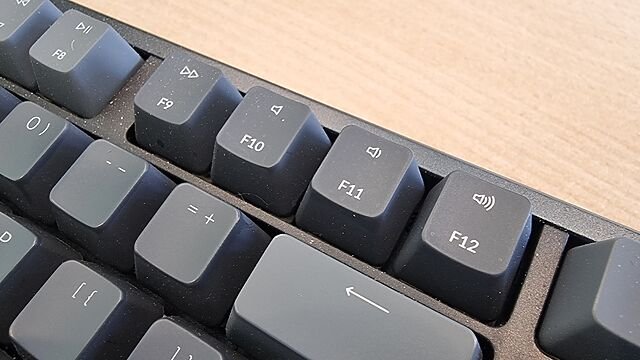
What makes this more than one person's bad luck is how widely the pattern repeats. Walk through the laptop and budget-keyboard market and you will find that the default behavior of the top row has quietly inverted over the past decade. On a growing number of consumer machines, pressing F5 no longer refreshes a browser or reloads a build; it dims the screen or skips a track. The traditional F-key function has become the secondary action, reachable only by holding Fn. Apple normalized this with its laptops, and the rest of the industry followed, often without Apple's consistency.
The community signal here is fairly clear if you know where to look. Mechanical keyboard enthusiasts overwhelmingly favor boards that default to standard F-key behavior, and "F-lock" or "function row toggle" is a frequently requested feature in firmware projects like QMK and VIA. Developers, who lean on F-keys for debugging (F5, F9, F10, F11 in most IDEs and debuggers), tend to be the loudest critics, because for them the F-row is not a novelty strip. It is load-bearing.
What "done right" looks like
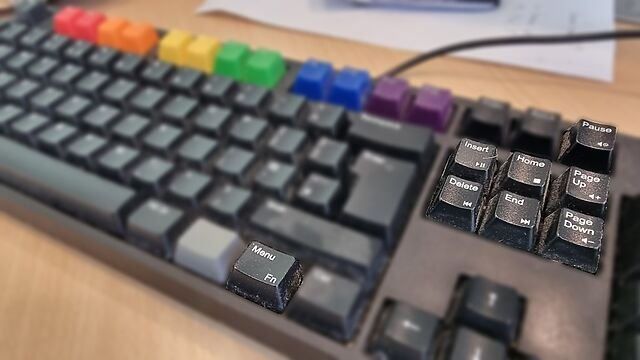
Dan's piece is useful because he does not stop at complaining. He sketches a small specification for acceptable behavior, and it is worth restating because it doubles as a decent design rubric. First, where keys do double duty, the secondary action should be low-impact and quickly reversible, so a misfire costs you a second, not a minute. Second, either the traditional F-key behavior should be the default, or switching modes should be trivial and discoverable, not buried in an undocumented chord or locked behind a proprietary driver. Third, and this is the one hardware vendors fail most often, once you set a preference it should persist through power loss and battery swaps rather than reverting to factory defaults.
He credits two boards with getting it right: the WASD Code, which treats media functions as genuinely secondary, and the Keychron K10, which mirrors the host Mac's layout and remembers its mode. The contrast he draws is instructive. The problem is rarely the existence of Fn. It is the combination of a high-cost secondary action, a default that fights muscle memory, and state that refuses to stick.
The counter-arguments are real
It would be easy to frame this as vendors versus users, but the picture is messier, and the comment sections tend to surface the other side quickly. The most obvious rebuttal is the one Dan raises against himself: you can disable sleep and hibernation at the OS or even BIOS level, and the problem evaporates. Plenty of people have little patience for a hardware complaint that has a software fix sitting one settings panel away.
There is also a defensible case for media keys as the default. For the large majority of laptop buyers who are not programmers, adjusting brightness and volume is a far more common task than reloading a debugger. From that angle, Apple's choice to make media functions primary is not a UX failure but a correct reading of who actually buys the hardware. The F-key purists are, in market terms, a minority optimizing for their own workflow.
The disappearance of Apple's Touch Bar, the OLED strip that replaced physical function keys entirely, cuts in an interesting direction here. Dan calls it a feature he hated, and he was far from alone; Apple killed it and brought back real keys. That episode suggests the market does push back when a redesign goes too far. A键 you can only operate by looking at it crosses a line that a mislabeled F4 does not, which is perhaps why one was reversed and the other persists.
Where the critics have the stronger footing is on persistence and discoverability. Almost nobody defends a keyboard that silently forgets its mode after a battery change, or that hides its F-lock behind a chord you have to search the manual to find. Those are not trade-offs serving a different user; they are just defects. The line worth drawing, then, is less about which behavior should be default and more about whether the device respects the choice you made and lets you change it without a treasure hunt.
The broader pattern this fits is one developers will recognize from software too: defaults are politics, and state that does not persist is a bug masquerading as a setting. A function key seems like a trivial thing to write hundreds of words about. The fact that so many technical people do, repeatedly, is the actual evidence that the small stuff still matters to the people who spend their whole day with their hands on the keys.
Comments
Please log in or register to join the discussion