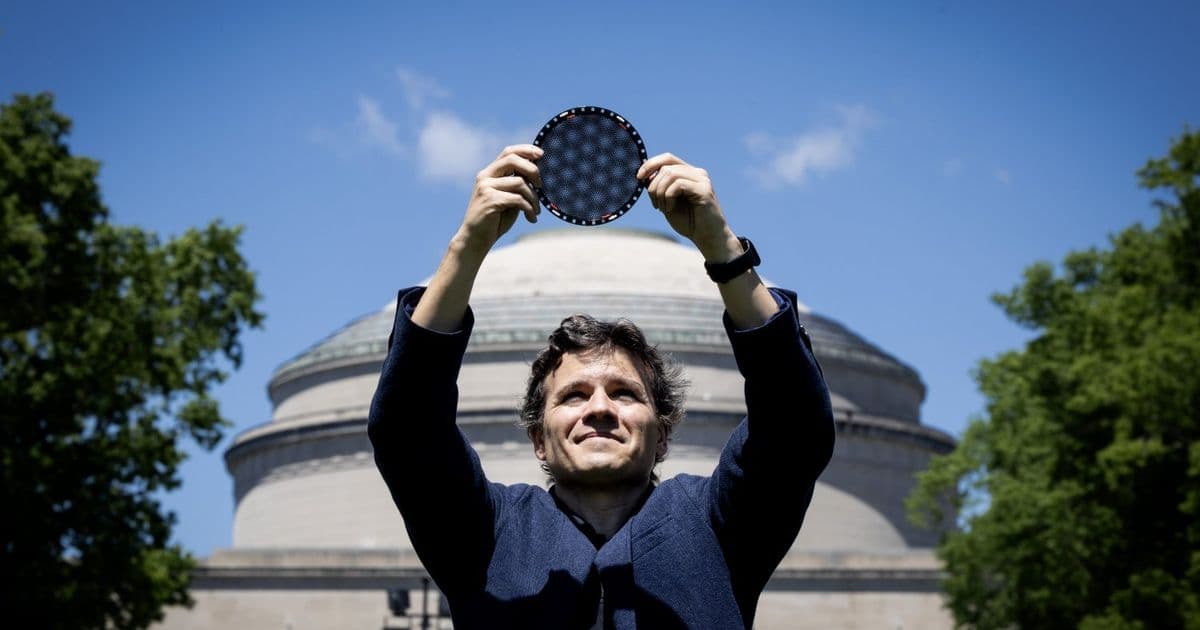
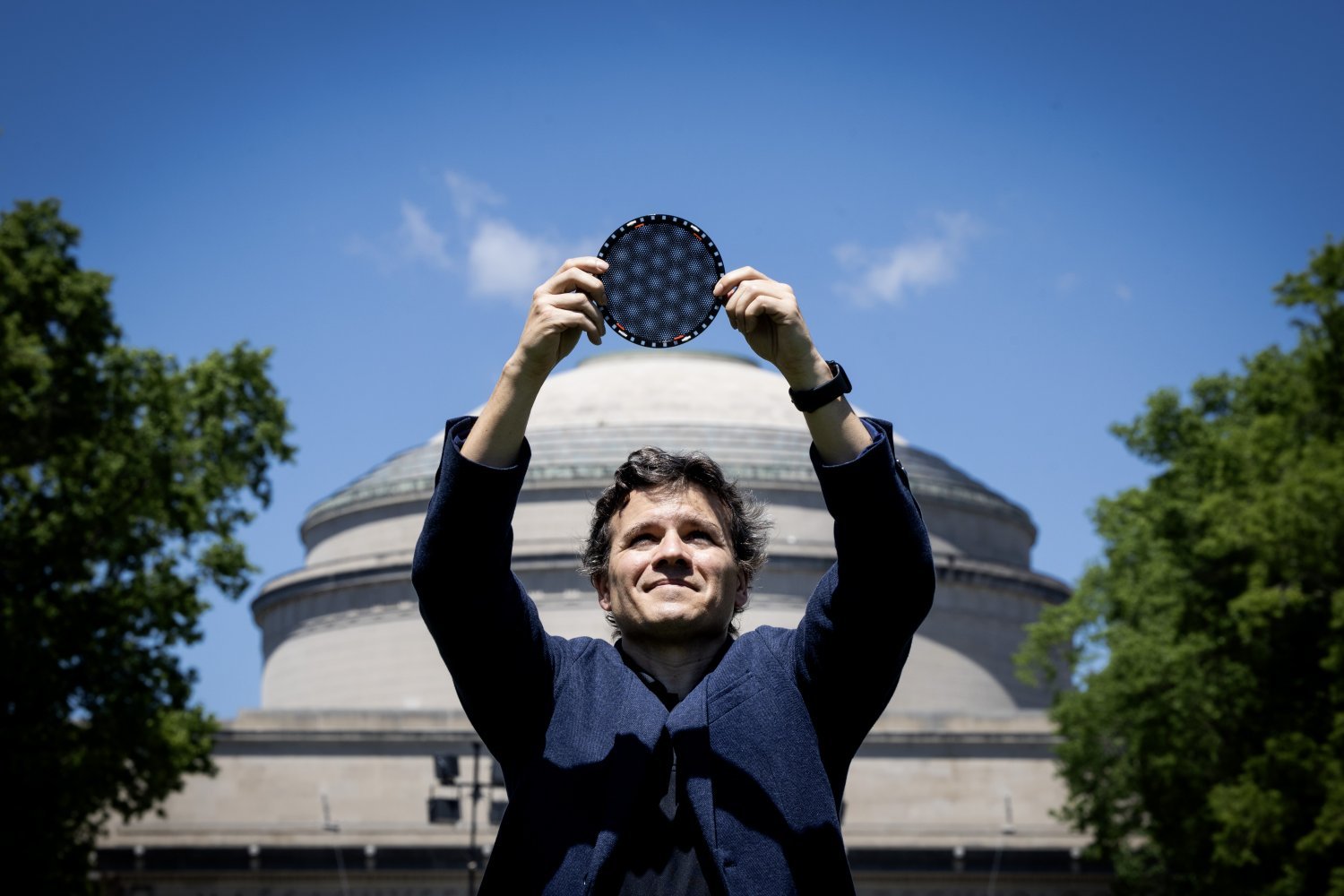
MIT physicist Pablo Jarillo-Herrero, along with Rutgers' Eva Andrei and UT Austin's Allan MacDonald, won the 2026 Kavli Prize in Nanoscience for showing that rotating two stacked sheets of graphene by a precise "magic angle" can switch on superconductivity. The work turned the twist between atomic layers into a tuning knob for quantum behavior, and it has reshaped how researchers think about engineering materials from the bottom up.
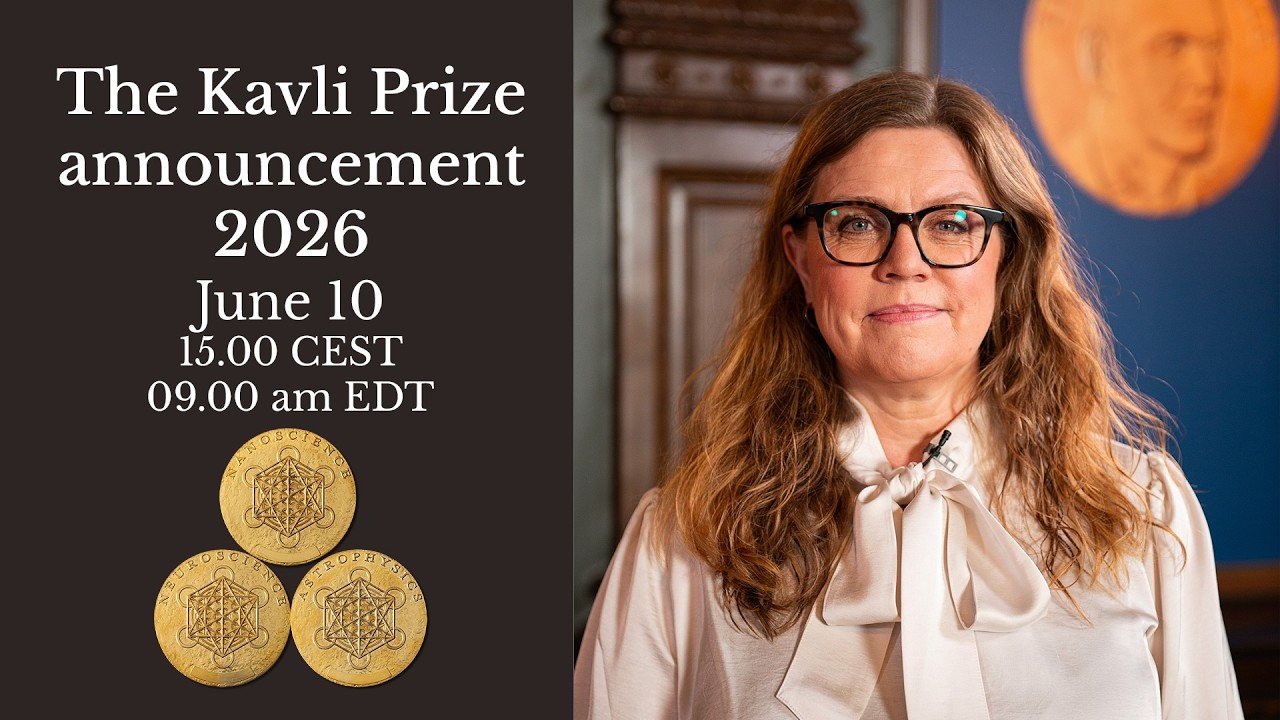
MIT professor of physics Pablo Jarillo-Herrero is one of three researchers awarded the 2026 Kavli Prize in Nanoscience for foundational work that established the field now called twistronics. He shares the prize, and the accompanying $1 million, with Eva Y. Andrei of Rutgers University and Allan MacDonald of the University of Texas at Austin. The Kavli Prizes, awarded every two years through a partnership among the Norwegian Academy of Science and Letters, the Norwegian Ministry of Education and Research, and the Kavli Foundation, recognize advances in astrophysics, nanoscience, and neuroscience.
The central idea behind twistronics is deceptively simple. Take two atomically thin sheets of a two-dimensional material, the most common example being graphene, which is a single layer of carbon atoms locked into a hexagonal honeycomb lattice. Stack one sheet on top of the other, then rotate the top layer by a small angle relative to the bottom. The mismatch between the two lattices produces a larger periodic pattern called a moiré superlattice, the same interference effect you see when two window screens overlap. What the three laureates established, across roughly a decade of theory and experiment, is that this twist angle alone, with no change in chemistry, can dramatically rewrite the electronic behavior of the stack.
How the field came together
The story unfolds in three steps. In 2009, Andrei and her group used scanning tunneling microscopy and spectroscopy to study graphene directly. They showed that small variations in the twist angle between layers profoundly altered the electronic structure. That observation carried a deeper message: geometry, the physical arrangement of atoms in space, could control a material's electronic properties just as decisively as chemical composition. For materials science, where the standard approach to engineering new properties is to mix in different elements, this was a different lever entirely.
In 2011, MacDonald provided the theory that explained what was happening. He showed quantitatively that at certain discrete angles, which he called magic angles, the electrons in the stacked layers slow down dramatically. The energy bands that normally let electrons move freely become nearly flat, meaning electrons of very different momenta end up at almost the same energy. When electrons crowd into a flat band like this, the interactions between them stop being a minor correction and start dominating the physics. MacDonald's framework became the theoretical backbone of what are now broadly called moiré materials, and it told experimentalists exactly where to look.
The payoff arrived in 2018, when Jarillo-Herrero's group built devices from two graphene sheets twisted to roughly 1.1 degrees, the predicted magic angle, and measured what happened. They found correlated insulating states, where electrons that should conduct instead lock into place because of their mutual repulsion, and, by tuning the carrier density slightly, superconductivity. Producing a superconductor and a correlated insulator in the same device, controlled purely by an electric gate and a mechanical twist, demonstrated that a single tunable platform could host the kind of rich physics previously associated with complex copper-oxide compounds.
"It was a big surprise, because the technique we used, though conceptually straightforward, was hard to pull off in the lab," Jarillo-Herrero said. The difficulty is worth dwelling on, because it is where the engineering lives.
Why the technique was so hard
Hitting a 1.1-degree target between two sheets each one atom thick is a brutal fabrication problem. The relevant window is a fraction of a degree wide, and the layers tend to relax and snap toward more stable alignments on their own. The breakthrough method, often called tear-and-stack, uses a single graphene flake torn in two so the two halves start out crystallographically aligned, then deliberately rotates one half by the small desired angle before stacking. Even then, twist angle drifts across a sample, and only small regions land in the magic window. Researchers spent considerable effort characterizing devices to find areas where the angle was uniform enough to show the effect. This is a recurring theme in nanoscience: the conceptual insight and the experimental craft are tightly coupled, and the prize recognizes both.
What it enables, and what it does not
The practical importance of twisted bilayer graphene is less about graphene specifically and more about the method. A magic-angle device is a clean, structurally simple system whose electron density, displacement field, and twist angle can all be dialed independently. That makes it a controllable test bed for studying strongly correlated electron physics, the same regime that governs high-temperature superconductors but which is notoriously hard to isolate in conventional crystals. Since 2018, the same recipe has been extended to twisted trilayers, twisted transition-metal dichalcogenides, and other layered combinations, each revealing magnetism, fractional quantum states, or superconductivity under different conditions.
It is reasonable to be precise about the limits. The superconductivity in these systems appears at temperatures of a few kelvin, far below anything practical for power transmission or magnets, and the devices are micron-scale flakes assembled by hand, not manufacturable components. "This work could potentially lead to the creation of superconductors at room temperature, which would have an enormous technological impact," said Deepto Chakrabarty, head of MIT's physics department, and the word to hold onto there is potentially. The near-term value is scientific: a system simple enough to model and tunable enough to probe, which lets researchers test theories of correlated electrons that have resisted experiment for decades.
Jarillo-Herrero made the case for that kind of work directly. "This award honors fundamental physics research in nanoscience," he noted in an essay about his path to the prize. "It is incredibly important for society to continue to support fundamental research: Although it often doesn't have a direct near-term application, in the long run it happens to be the most transformative and impactful in society."
Context at MIT and beyond
The recognition adds to a long list for Jarillo-Herrero, who is also the Cecil and Ida Green Professor of Physics and a member of the Research Laboratory of Electronics. His group's earlier work earned a Physics World Breakthrough of the Year and a BBVA Foundation Frontiers of Knowledge Award. His win brings the all-time count of MIT faculty Kavli laureates to nine, joining names such as Mildred Dresselhaus, Rainer Weiss, and Alan Guth.
For anyone working at the intersection of materials and devices, the broader lesson of twistronics is the one Andrei's first experiments hinted at: structure is a design parameter. The ability to engineer electronic behavior by mechanically arranging existing materials, rather than synthesizing new compounds, points toward a way of building functional quantum systems from a small toolkit of well-understood two-dimensional crystals. Turning that principle into manufacturable technology remains a long road, but the principle itself is now firmly established, and this prize marks its arrival as a mature field. More detail on the laureates' contributions is available in the official 2026 Kavli Prize in Nanoscience announcement.
Comments
Please log in or register to join the discussion