
Beijing's proposed 2 trillion yuan national computing grid would lock out Nvidia and AMD by 2028. The funding is the easy part. The wafers are not, with SMIC's 7nm-class line already running above 93% utilization and domestic HBM supply throttling Huawei's accelerator output.
China is drafting a five-year program to spend roughly 2 trillion yuan ($295 billion) on a nationwide mesh of AI data centers, with a mandate that at least 80% of the underlying technology, accelerators included, come from domestic suppliers like Huawei. The figure comes from a Bloomberg report citing people familiar with the discussions, and it reframes a question that has hung over China's compute ambitions for two years: not whether Beijing can fund the buildout, but whether its foundries and memory suppliers can physically fill the racks.
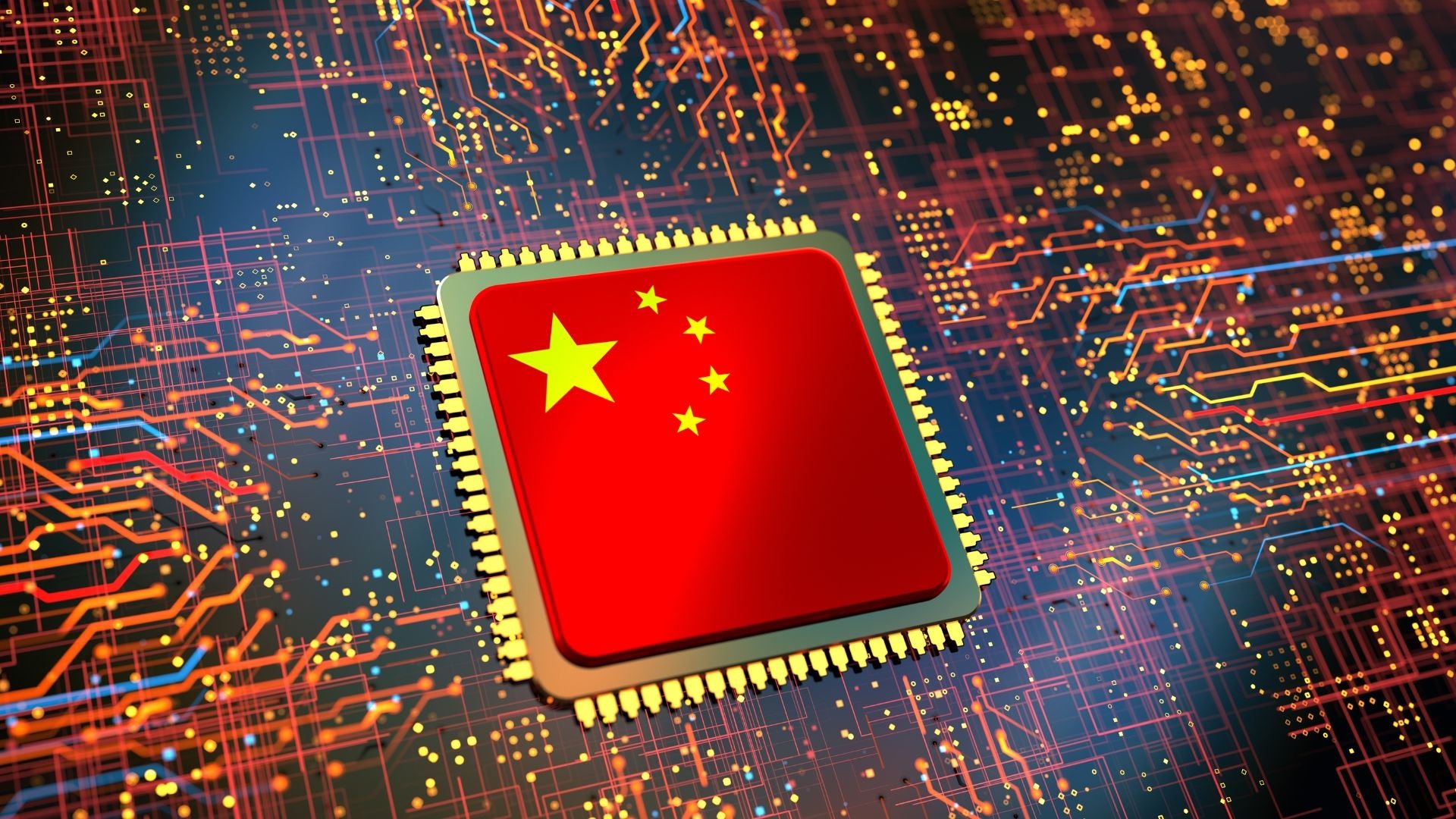
The National Development and Reform Commission is steering the blueprint. State carriers China Mobile and China Telecom would operate most of the facilities and stitch them into a single computing grid by 2028. The capital structure leans on sovereign debt and ultra-long special government bonds, and once power grid upgrades are folded in, the total requirement could climb past 5 trillion yuan. For comparison, that approaches the scale of the entire planned U.S. hyperscaler capex pipeline, except routed almost entirely through state instruments rather than commercial balance sheets.
The 80% rule is a supply constraint disguised as a procurement target
A domestic-sourcing floor of 80% effectively bars Nvidia's H-series and B-series parts and AMD's Instinct line from these projects. That removes the release valve China has quietly relied on. With foreign accelerators off the table, the ceiling on the entire program becomes whatever SMIC can pull off its lines.
SMIC's most advanced stable process is its N+2 node, roughly equivalent to TSMC's 7nm, produced without extreme ultraviolet lithography through multi-patterning on DUV tools. That node is already running above 93% utilization. There is almost no slack in the system, and every government-certified Chinese chipmaker is competing for the same wafer starts. You cannot certify your way around a fab that is already nearly full.
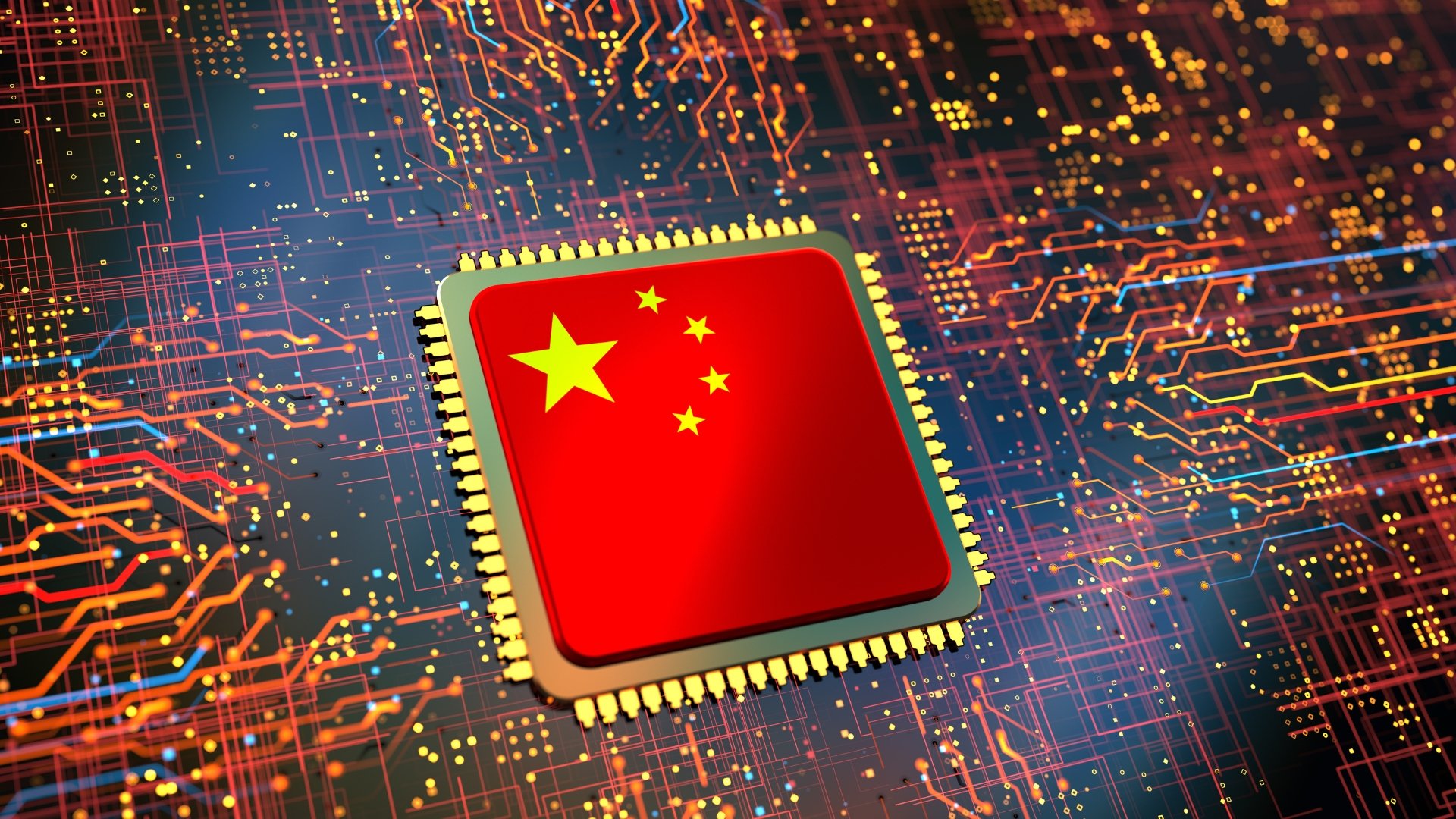
The second chokepoint sits in the memory stack. High-bandwidth memory, the stacked DRAM that feeds modern training accelerators, is barely produced domestically at the required grades. HBM supply directly gates how many Ascend-class parts Huawei can actually assemble, because an accelerator without its memory stack is an inert die. Huawei shipped around 812,000 chips last year and projects about $12 billion in processor revenue for 2026, a cadence its own supply chain has reportedly strained to hold.
The 2030 math doesn't close
Estimates put domestic coverage at only around 76% of Chinese AI chip demand by 2030, even as that market expands toward $67 billion. An 80% sourcing rule against a 76% supply projection leaves a structural gap that no amount of bond issuance fills directly. Beijing has been narrowing the foreign-silicon path regardless. Last August it required data centers to source at least 50% of chips locally. By November, state-funded projects were barred from foreign accelerators entirely, with builds under 30% complete reportedly ordered to rip out Nvidia, AMD, and Intel parts already installed.
Industry voices inside China have flagged the risk. SMIC co-CEO Zhao Haijun warned that racing to add capacity could leave data centers idle, comparing it to building highways before the traffic arrives. That is the classic overbuild hazard: depreciation starts the day the facility powers on, whether or not silicon ever fills it. Chinese chip executives have separately put the leading-edge gap in AI data center silicon at five to ten years.
The workload split tells the rest. When DeepSeek was directed toward Huawei hardware for model training, it reverted to Nvidia for the heaviest runs. Domestic parts appear serviceable for inference, where memory bandwidth and interconnect demands are lower, but still falter on large-scale training, where node maturity, HBM throughput, and rack-level networking compound. A national grid optimized for inference is a different and cheaper machine than one meant to train frontier models, and the plan's 2028 timeline will likely expose which of the two China can actually deliver.
What emerges is a program where the financing is the solved problem and the physics is not. Funding a grid is a question of political will; producing tens of thousands of leading-edge accelerators without EUV and with thin HBM supply is a question of yield, capacity, and time. The 2028 target will test whether policy can outrun the wafer count.
Comments
Please log in or register to join the discussion