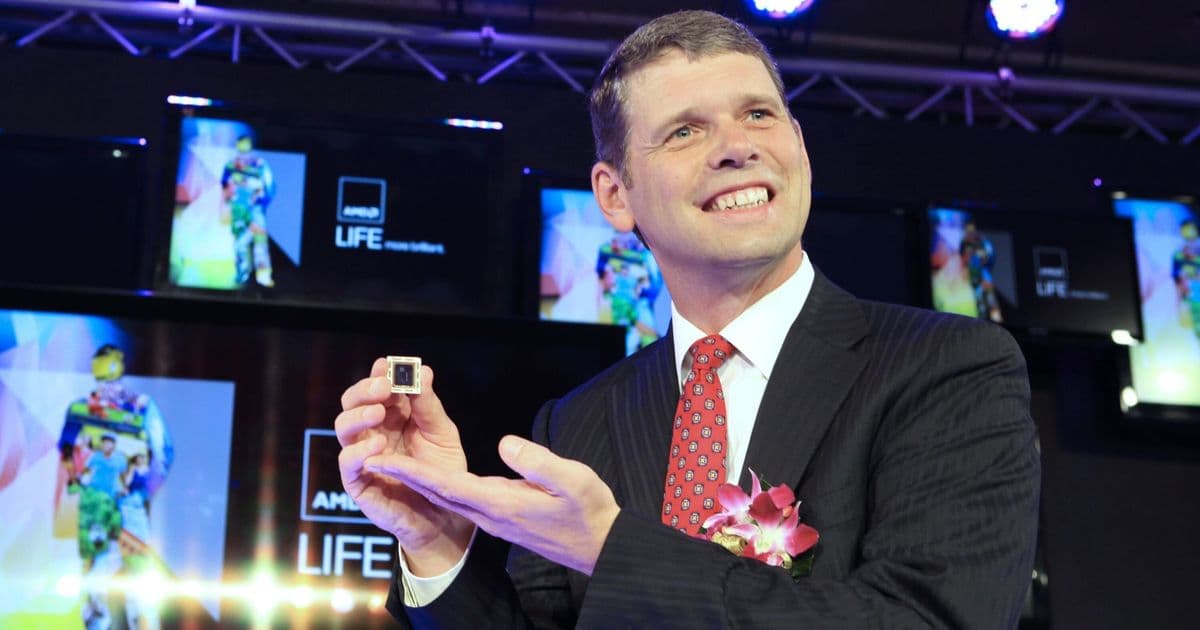
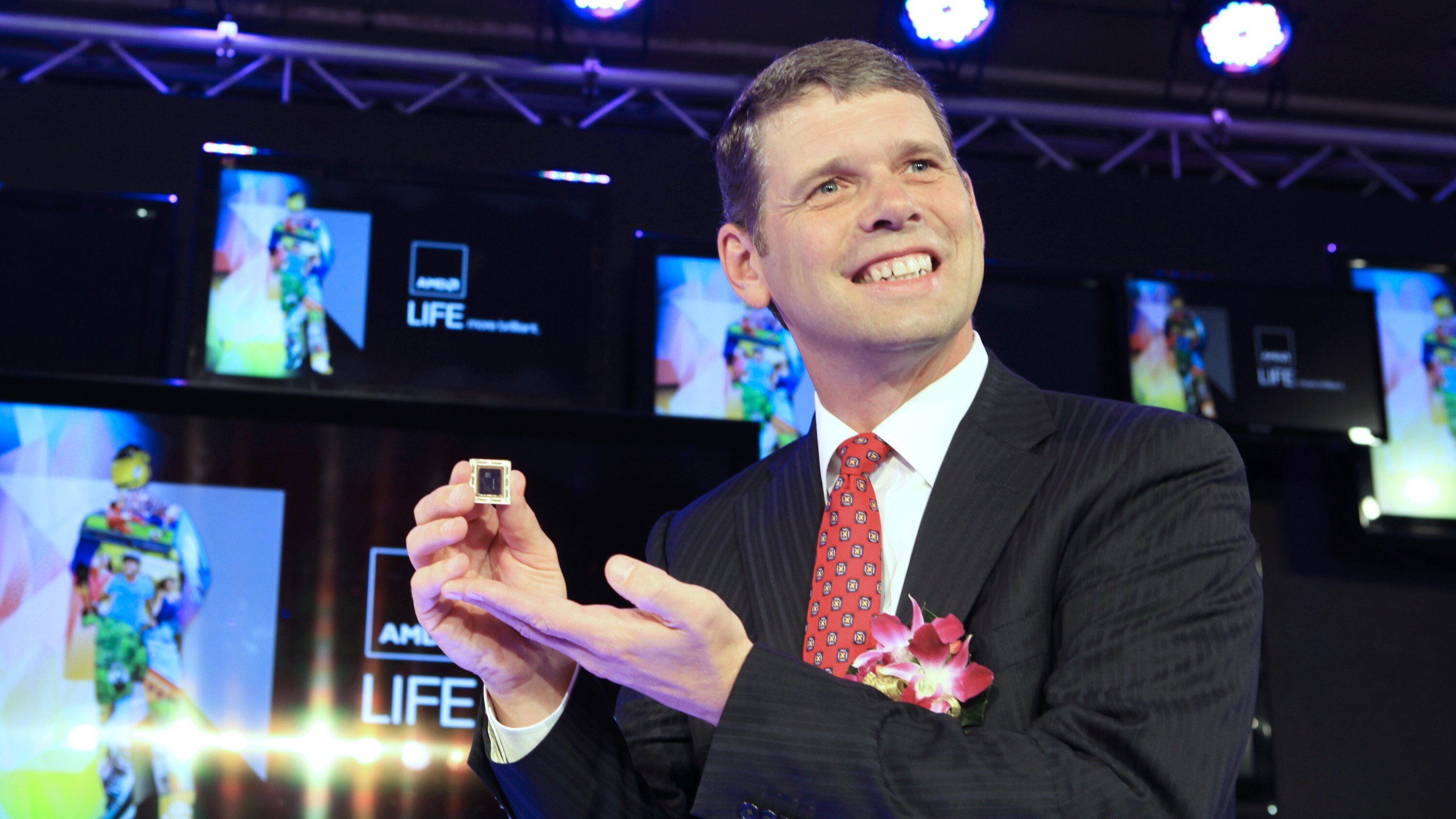
An HVAC technician found a sealed Mini-ITX machine reportedly gifted to former AMD chief Rory Read, complete with a wrapped Windows 8.1 disc and signatures from Lisa Su and most of the 2014 executive bench. The hardware inside, anchored by a Sapphire R9 285 ITX card on the 28nm GCN node, places the build squarely in the era when AMD was bleeding cash and laying the groundwork for Zen.
An HVAC technician on a routine service call walked out with one of the more unusual pieces of semiconductor memorabilia to surface in years: a fully sealed, never-powered-on desktop reportedly gifted to former AMD CEO Rory Read, signed by Dr. Lisa Su and most of the company's 2014 leadership team. The machine had been sitting in a customer's basement, part of a stash of leftover inventory from a computer shop the homeowner once ran.
The case carries a message that reads "To Rory - All the Best from Team AMD," alongside Su's signature. Comparisons against her autograph on AMD's special-edition signed Ryzen processors line up, though there is no chain of custody to formally authenticate it. The roster of additional signatures is what makes the artifact hard to dismiss as a forgery: Mark Papermaster, Raj Naik, Devinder Kumar, Colette LaForce, John Byrne, and Darrell Ford. Faking that many executive signatures for a single collectible would be an odd investment.
What's actually inside the box
The chassis is a Xigmatek XEN6329 Mini-ITX enclosure, a part that now commands north of $1,000 on the secondary market thanks to scarcity rather than performance. The components inside are firmly of their moment. The graphics card appears to be an ITX-length Sapphire Radeon R9 285, a 2014 product built on AMD's Tonga silicon. Tonga was fabricated on TSMC's 28nm process, the same node AMD leaned on across most of its GPU stack at the time, and it introduced an updated Graphics Core Next revision with improved tessellation and the first consumer hardware support for what would become AMD's color compression and FreeSync efforts. The 285 shipped with 1,792 stream processors and a 256-bit memory bus artificially narrowed from Tahiti's 384-bit interface, a cost-engineering decision that told you everything about AMD's margin pressure in that period.
The build's condition is the headline. Twelve years on, it is described as completely dust-free, with original packing materials intact and a still-wrapped Windows 8.1 installation disc that was never opened. Whatever this machine was meant to be, it never did a single boot cycle.
Why a 2014 AMD gift carries weight
The timing maps directly onto the lowest point in AMD's modern history, which is what gives the object its context. Read ran AMD from 2011 to 2014, arriving in the wake of the Bulldozer architecture's launch. Bulldozer's clustered multithreading design, with shared front-ends and floating-point units across module pairs, underdelivered on per-core throughput and lost decisively to Intel's Sandy Bridge and Ivy Bridge parts on both performance and efficiency. AMD's client CPU share cratered, the company had essentially no foothold in the mobile boom then reshaping computing, and its market capitalization reflected a firm many analysts expected to be broken up or sold for its IP.
Read's tenure was a stabilization play rather than a growth story, and the moves he made are still paying out. He locked in the semi-custom APU contracts that put AMD silicon inside Sony's PlayStation 4 and Microsoft's Xbox One, a console partnership that survives into the current generation and gave AMD a reliable, high-volume revenue floor while the rest of the business was bleeding. He brought Jim Keller back to AMD to architect Zen alongside Mike Clark, the clean-sheet design that eventually undid Bulldozer's damage. And he recruited Lisa Su in 2012, mentoring her toward the CEO seat on the conviction that an engineer needed to run the company for the long haul.
Read's reputation as a turnaround specialist, forged earlier at IBM and Lenovo, fits the gift's framing. The signed machine reads less like an executive perk and more like a parting token from a leadership team that had just been handed the pieces of a recovery. AMD's subsequent arc, from sub-$2 share prices to a Zen-driven resurgence and a data-center business now measured against Nvidia, makes the 2014 hardware inside the case look like a time capsule from the moment before the inflection.
A collector's footnote with real provenance

The leading theory among commenters is that Read pawned the system off at a computer shop, where it sat in inventory until it was salvaged, though a forgotten repair or setup drop-off is also plausible for a busy executive. None of that can be confirmed. What can be said is that the combination of period-correct silicon, an unopened OS disc, factory packaging, and a deep bench of verifiable executive signatures makes this a genuinely rare crossover between AMD's corporate history and its engineering one. For a company whose comeback is now studied as a case study in semiconductor strategy, a sealed machine from the year the turnaround began is about as on-the-nose as memorabilia gets.
Comments
Please log in or register to join the discussion