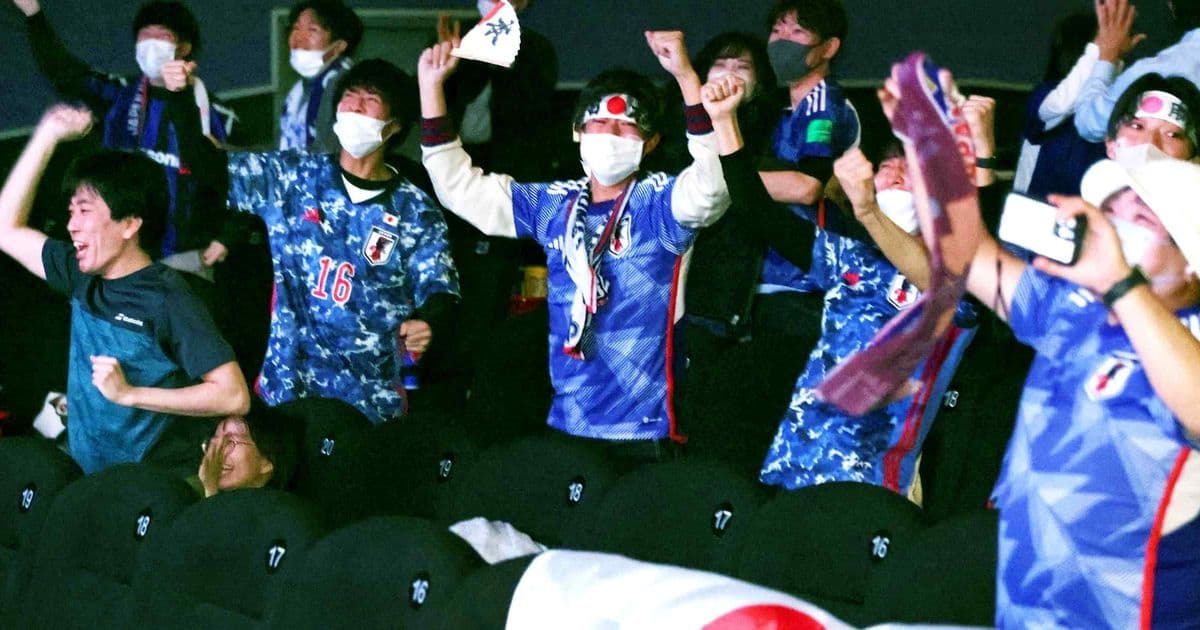
FIFA wants Asian broadcasters to pay more for a tournament that will air at 3 a.m. across much of the region. With DAZN abandoning exclusivity in Japan and free-to-air players holding back, the economics of premium sports rights are being rewritten in real time.
Asia is FIFA's largest audience by raw numbers, yet the region's broadcasters are pushing back hard against the rights fees attached to the 2026 World Cup in North America. The reason is structural rather than emotional: with games in the United States, Canada and Mexico scheduled to kick off during Asian overnight hours, the prime-time advertising windows that historically justified nine-figure rights deals simply will not exist for most matches.
The standoff exposes a widening gap between how FIFA prices its marquee property and how the value of live sports rights actually accrues in a market fragmented by time zones, streaming platforms and shifting viewing habits.
What is happening
FIFA has been seeking higher rights fees across Asian markets even as the commercial case for those fees weakens. Broadcasters in Japan and South Korea, two of the region's most lucrative media markets, have resisted. Many of the tournament's matches will air between roughly midnight and 6 a.m. local time, the dead zone for advertising rates. A broadcaster paying a premium for exclusivity cannot recover that outlay through linear ad sales when the audience is asleep and the replays compete with the live event.
The clearest signal of the strain came from DAZN, the sports streaming service, which decided to forgo exclusive World Cup broadcast rights in Japan in favor of a wider-reach strategy. Exclusivity is normally the entire point of bidding aggressively for a tournament of this scale. Walking away from it suggests DAZN concluded that the subscriber acquisition math no longer supports paying a premium to lock competitors out, and that broader distribution, even shared, serves its business better than a walled garden few will stay up to watch.
The market context
Live sports rights have been one of the few categories in media insulated from cord-cutting, precisely because live events resist time-shifting and piracy in ways scripted content does not. That scarcity premium is what let rights holders push fees ever higher over the past decade. The World Cup sits at the top of that pyramid, and FIFA has built revenue projections around the assumption that each cycle commands more than the last.
That assumption is now colliding with three forces at once. The first is the time-zone problem, which is specific to a North American tournament but severe: overnight kickoffs strip out the demographic and advertising value that anchors a rights bid. The second is the rise of streaming as a primary distribution channel, which changes who is bidding and on what terms. Platforms like DAZN monetize through subscriptions and global scale rather than national ad inventory, so their willingness to pay does not track the local advertising market the way an incumbent broadcaster's would. The third is the fragmentation of viewing itself. Younger audiences increasingly consume tournaments through highlights, clips and social feeds rather than full live broadcasts, which erodes the value of holding the full live feed exclusively.
Japan and South Korea illustrate the squeeze. Both are mature, high-spending markets where free-to-air broadcasters have traditionally carried national-team matches as public events, accepting thin or negative margins for the prestige and reach. But free-to-air players cannot justify record fees for content that airs at 3 a.m., and the streaming entrants that might otherwise fill the gap are themselves recalibrating, as DAZN's retreat from exclusivity shows.
What it means
For FIFA, the resistance complicates a revenue push that depends on Asia absorbing higher prices. If the region's broadcasters collectively decline to meet the asking price, FIFA faces a choice between accepting lower fees, unbundling rights into cheaper non-exclusive packages, or watching deals close late and at a discount. Each of those outcomes chips at the narrative that World Cup rights are an asset whose value only rises.
The DAZN decision points toward where this likely settles. Non-exclusive, multi-platform distribution spreads the cost of expensive content across more parties and trades scarcity value for reach. For a streaming service trying to grow a subscriber base in Japan, being one of several outlets carrying the World Cup may drive more sign-ups than being the sole, costly gatekeeper to matches that air while the country sleeps. That logic, if it holds, pressures the exclusivity premium that underpins the entire rights model.
The broader implication reaches beyond football. Rights holders across global sports have assumed that streaming entrants would keep bidding up prices indefinitely as they chased flagship content. The Asian World Cup negotiations suggest those entrants are now disciplined buyers who will walk from exclusivity when the unit economics do not work. A tournament whose match times happen to gut the advertising case is an extreme test, but it surfaces a question every rights seller will eventually face: what is exclusivity worth when the audience is fragmenting and the buyers have learned to say no? The answer being negotiated in Tokyo and Seoul this month will inform how the next round of major sports rights gets priced everywhere.
Comments
Please log in or register to join the discussion