
Microsoft’s lumber-company demo is less about lumber than about the new cloud buying question: which provider can turn model choice, guardrails, deployment, and cost control into the shortest path from pilot to production?
What changed
Microsoft published a practical AI agent demo on Microsoft Community Hub showing a business user building an agent in Microsoft Foundry and deploying an AI chat application to Azure within a 20-minute live build window. The scenario is intentionally plain: a regional lumber company wants help deciding whether to sell inventory now at a steep discount or hold it longer based on historical pricing and storage costs.
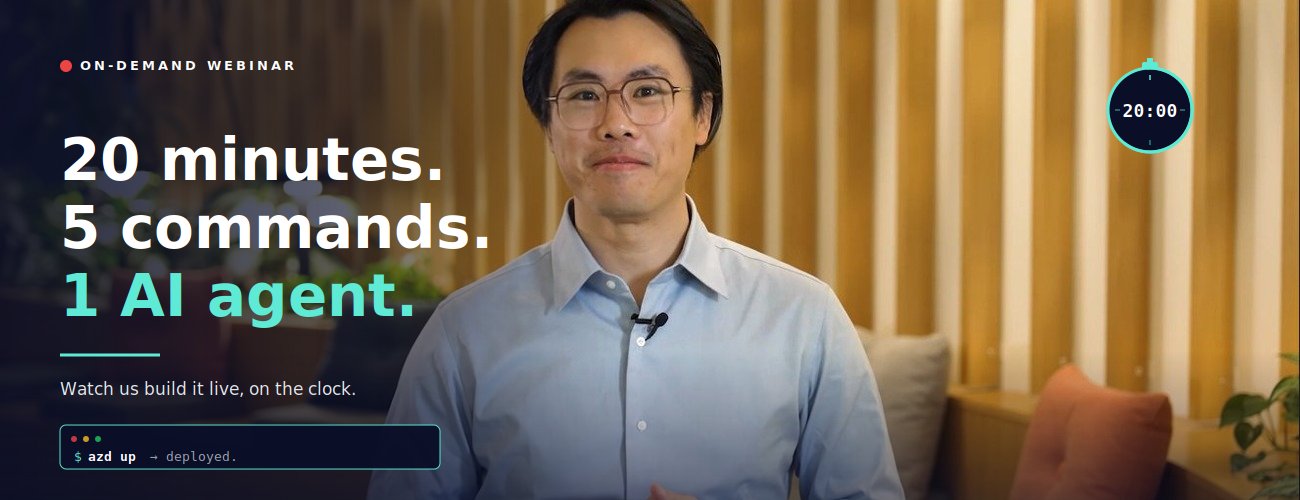
That matters because the demo is not positioned as model research. It is a cloud operating model pitch. Microsoft is showing that agent creation, model selection, grounding data, guardrails, voice interaction, observability, and deployment can be handled inside a managed Azure workflow instead of being assembled as a custom platform project from the start.
The workflow described in the post has two parts. First, the user opens Foundry, reviews available models, uploads a CSV with historical lumber prices, writes plain-language agent instructions, and asks for a recommendation. The agent produces a break-even style analysis that weighs current discounting against the potential upside of waiting, including the point where storage costs begin to erode margin. Then the builder adds voice mode and policy controls for jailbreak resistance, prompt injection defense, data leakage prevention, and response filtering.
Second, the demo shifts from agent design to application deployment. The app is deployed through Azure Developer CLI using a small command sequence: authenticate, clone a template, move into the folder, run azd up, and later use azd down to remove resources. The deployed runtime lands on Azure infrastructure, with Azure Container Apps presented as the managed container target.
For a cloud buyer, the story is not that a single demo proves production readiness. The story is that Microsoft is compressing the prototype path for agentic applications while trying to keep the operational center of gravity inside Azure. Foundry is being framed as the control plane, Container Apps as the pragmatic runtime, Azure identity and security as the governance layer, and Microsoft 365 or Teams as distribution channels for business users.
Provider comparison
The clearest comparison point is Amazon Bedrock Agents. AWS approaches the same problem from a different center of gravity. Bedrock is attractive for teams that already run workloads on AWS, use IAM heavily, standardize on services such as Lambda, API Gateway, S3, DynamoDB, OpenSearch, or Step Functions, and want access to multiple foundation model providers through a managed service. Bedrock Agents can orchestrate tasks, call tools, use knowledge bases, and sit close to AWS-native application infrastructure.
Azure’s advantage in the Microsoft demo is not just agent creation. It is the combined path from agent to enterprise workflow. If the target users live in Microsoft 365, Teams, Entra ID, SharePoint, Fabric, Power Platform, or Dynamics, Foundry gives Microsoft a strong adjacency story. An inventory-pricing agent is useful as a standalone app, but it is more valuable when it can appear where sales, finance, and operations already work. That is the part Azure buyers should weigh carefully. The integration pattern may matter more than the model picked on day one.
Google Cloud’s closest comparison is the Gemini Enterprise Agent Platform, formerly associated with Vertex AI Agent Builder. Google’s strength is data and AI-native tooling, especially for organizations already invested in BigQuery, Looker, Google Kubernetes Engine, Cloud Run, and the Gemini model family. If the agent’s primary job is to reason over large analytical datasets, retrieval pipelines, or customer-facing search experiences, Google Cloud can be a strong candidate. It also has a clean deployment path through managed services such as Cloud Run, which competes directly with Azure Container Apps for containerized application hosting.
The provider decision should start with four practical questions.
First, where does the business data already live? A lumber pricing agent built from a CSV is fine for a demo. A production version might need ERP data, current inventory, supplier contracts, storage charges, freight rates, customer commitments, futures pricing, and approval rules. If those systems are in Microsoft 365, Fabric, Dataverse, or SQL Server, Azure has a shorter integration path. If they are in AWS data stores and event systems, Bedrock will often reduce plumbing. If the analytical center is BigQuery, Google Cloud deserves a serious look.
Second, what governance model does the company already trust? Agentic systems raise practical control questions: who can create agents, which data can be used for grounding, which tools can the agent call, how are prompts and outputs logged, and how does the company investigate bad answers? Microsoft’s Foundry documentation emphasizes lifecycle management, governance, model choice, and observability. AWS buyers will look to IAM, CloudTrail, Bedrock guardrails, and native monitoring. Google Cloud buyers will look to IAM, audit logs, Vertex AI controls, and Gemini governance capabilities. The best platform is often the one your security team can govern without inventing a parallel process.
Third, how portable does the architecture need to be? Multi-cloud strategy does not mean every workload runs on every cloud. It means the company is intentional about where it accepts provider-specific value and where it preserves optionality. A Foundry-based agent tied deeply into Teams and Microsoft Graph may be the right decision if that distribution channel is core to the business. A Bedrock agent tied to Lambda and private AWS data sources may be the right decision for an AWS-first operations platform. A Gemini-powered agent tied to BigQuery may be right for analytics-led businesses. The migration risk comes from mixing model prompts, tool contracts, retrieval design, identity assumptions, and deployment automation in ways that are hard to separate later.
Fourth, what is the cost unit that will scale? AI agent costs are not only model tokens. They include hosted app runtime, retrieval storage, vector indexing, logging, evaluation, voice processing, network traffic, and engineering support. Azure Container Apps pricing is consumption-oriented, with per-second resource allocation, request-based billing, and scale-to-zero behavior described on the Azure Container Apps pricing page. Microsoft Foundry pricing depends on the underlying services and model choices, with details available through Microsoft Foundry pricing. AWS publishes Bedrock model and feature pricing on the Amazon Bedrock pricing page. Google provides agent and generative AI pricing through its Agent Platform pricing page.
For executive comparison, the pricing conversation should be framed as operating economics, not line-item shopping. Azure may reduce implementation cost for Microsoft-centric organizations. AWS may reduce integration cost for companies already standardized on AWS application services. Google Cloud may reduce data activation cost when BigQuery and Gemini are the natural control points. The cheapest token price is not always the cheapest production system.
Business impact
The most useful business takeaway from Microsoft’s demo is that agent projects are moving from experimental AI labs into application delivery pipelines. A visible countdown timer is a marketing device, but the underlying message is real: cloud providers are trying to make agent creation feel like configuring an application service, not assembling a research stack.
That changes how CIOs and platform teams should evaluate AI pilots. The old pilot question was whether the model could answer correctly. The better question now is whether the organization can operate the full workflow: model selection, grounding, prompt controls, tool permissions, deployment, cost monitoring, logging, and teardown. In the Microsoft demo, azd down is not a minor detail. It speaks to a real FinOps problem. Experiments that are easy to create but hard to retire become recurring cloud waste.
For a midsize company, the lumber example is also a good pattern because it starts with a bounded decision. Should we sell inventory now or hold it? That is a better first use case than a broad general assistant. It has defined inputs, business rules, financial trade-offs, and a decision owner. The agent can be judged against historical outcomes and human analyst recommendations. It can also be constrained. The agent does not need to negotiate contracts, approve discounts, or change ERP records on day one. It can recommend, explain, and route for approval.
That is the maturity path I would advise for most companies.
Start with advisory agents that produce recommendations and cite their inputs. Add workflow actions only after the recommendations are trusted. Put approval gates around anything that changes prices, inventory, customer terms, or financial records. Track cost per decision, not only cost per prompt. Compare the agent’s recommendation quality against the business metric it is meant to improve, such as gross margin, inventory carrying cost, quote turnaround time, or analyst hours saved.
Migration planning should begin before the first production release. Keep business logic separate from provider-specific prompt wrappers where practical. Store evaluation datasets outside the agent builder so they can be reused across providers. Define tool interfaces clearly, for example getInventoryPosition, getStorageCost, getHistoricalPriceRange, and createSalesRecommendation. If those interfaces are clean, the company can change models or hosting patterns later with less rework. If the prompt, tool calls, identity model, and deployment scripts are tangled together, every provider move becomes a rebuild.
For Azure-first organizations, the Microsoft demo supports a practical recommendation: use Foundry for the first serious agent pilot when the use case needs Microsoft identity, business-user distribution, and managed deployment more than custom platform engineering. Pair it with Container Apps for lightweight service hosting, use Azure cost controls from the start, and document the assumptions behind every model and data source selection.
For AWS-first organizations, do not move the pilot to Azure just because the demo is polished. Recreate the same pattern with Bedrock Agents, AWS-native data stores, and your existing deployment pipeline. The strategic comparison should be based on integration cost, governance fit, latency, model availability, and operational ownership.
For Google Cloud-first organizations, test the same use case against Gemini and your data platform. If the agent’s value comes from analytical depth across large structured datasets, Google Cloud may be the more direct route, especially when BigQuery is already the source of truth.
The broader shift is that cloud providers are turning agent development into a managed platform contest. Microsoft is emphasizing end-to-end enterprise workflow inside Azure and Microsoft 365. AWS is emphasizing agent orchestration near its broad application infrastructure. Google is emphasizing Gemini and data-centered AI systems. Buyers should avoid choosing based on a single demo. Use the demo as a blueprint for your own bake-off: one real business decision, the same dataset, the same acceptance criteria, the same governance requirements, and a full cost estimate that includes build, run, observe, and retire.
Microsoft’s 20-minute lumber agent is not a finished enterprise architecture. It is a useful signal that agent platforms are becoming packaged enough for business teams to test real operational decisions. The strategic work now is deciding which cloud can carry those decisions into production without creating avoidable lock-in, unmanaged cost, or a governance model the organization cannot sustain.
Comments
Please log in or register to join the discussion