At Build 2026, Microsoft made Microsoft Discovery generally available and paired it with Ginkgo Bioworks' autonomous labs, turning agentic AI orchestration into a service that can place real wet-lab orders. For cloud strategists, this is less about biology and more about how Azure is extending its agentic platform into vertical, physical workflows that AWS and Google have not matched.
What changed
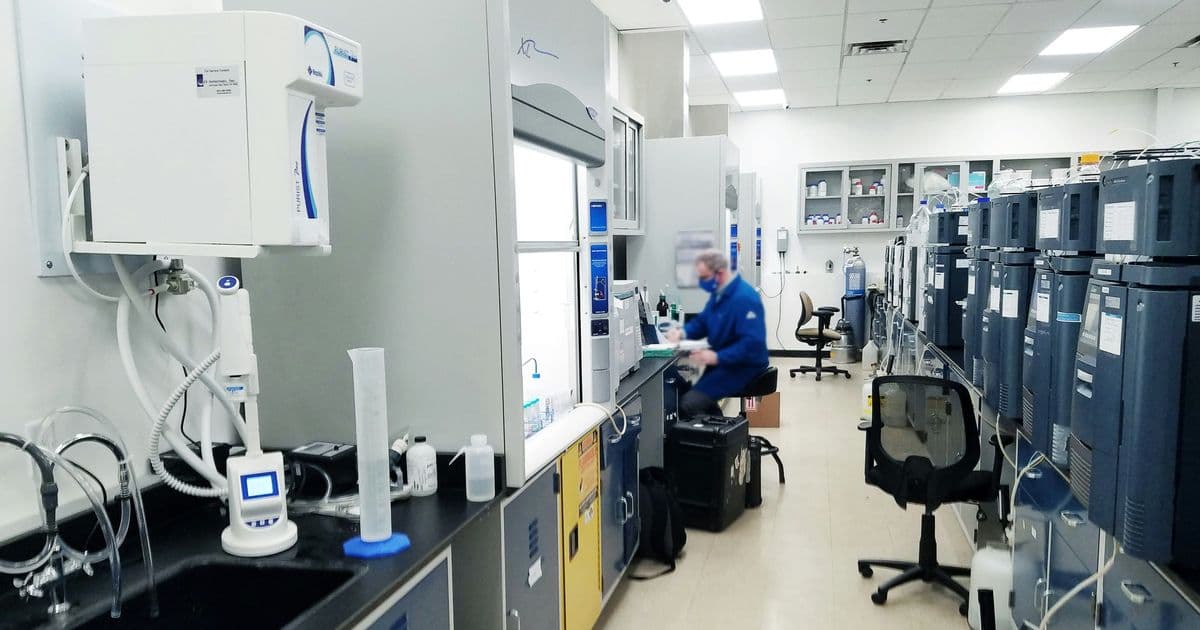
At Microsoft Build 2026, Microsoft moved Microsoft Discovery from preview to general availability and announced a working integration with Ginkgo Bioworks. The headline is biological, but the architectural story is squarely a cloud one. Microsoft Discovery is positioned as a platform for building and governing agentic AI workflows across scientific and engineering disciplines. The Ginkgo partnership attaches a physical execution layer to that platform, so an agent that scopes and plans an experiment can hand the validated protocol to Ginkgo Cloud Lab and have it run on automated wet-lab infrastructure, with results flowing back for analysis.
The reference workflow Microsoft describes is an RNA design-to-data loop. AI agents inside Discovery plan and scope the experiment. Ginkgo's automated lab synthesizes DNA templates, runs in vitro transcription, purifies, quantitates yield and purity, and returns the data. Notably, Ginkgo Cloud Lab surfaces a full cost estimate before any physical work begins. The user describes the experiment in plain language, supplies additional parameters if needed, validates the cost estimate, places the order, and stores or shares the results. That sequence, describe to order to results, is the same consumption pattern cloud buyers already know from provisioning compute. The difference is that the resource being provisioned is a physical lab run.
This is what Microsoft calls a lab-in-the-loop model wrapped around the traditional Design-Make-Test-Analyze cycle. The strategic point for cloud architects is that Microsoft is treating laboratory execution as just another callable backend behind an agentic orchestration layer, the same way Azure treats storage, inference, or a third-party API.
Provider comparison
The relevant comparison is not Ginkgo versus another lab company. It is how the three major clouds are approaching agentic, vertical scientific workflows, because that determines lock-in and where your AI orchestration spend lands.
Microsoft's bet with Discovery is platform extensibility. The company is explicit that Discovery is meant to connect first-party Microsoft models and compute with partner tools, datasets, and execution engines. The Ginkgo deal is the proof point: Microsoft supplies reasoning, orchestration, and compute, while a partner supplies the autonomous lab. For an enterprise already standardized on Azure, this means the agentic control plane, identity, governance, and billing can stay inside Microsoft's tenant while specialized execution is brokered out. That governance-and-orchestration framing is consistent with how Microsoft has positioned Copilot and Azure AI Foundry, and it is the clearest differentiator against the other two clouds.
Amazon Web Services covers adjacent ground with AWS HealthOmics and the Bedrock agent tooling, but those remain largely digital. HealthOmics manages genomic and multi-omic data and pipelines; it does not broker physical experiment execution. AWS's strength is breadth of managed bio-data services and raw compute scale, and for teams whose bottleneck is data processing rather than wet-lab throughput, that may be the better fit. The gap is the physical execution loop that the Ginkgo integration provides.
Google Cloud's center of gravity is model capability through Vertex AI and the scientific research coming out of DeepMind, including the AlphaFold lineage. Google tends to lead on the prediction and modeling side. What it has not productized is an integrated, governed agentic platform that hands work to an autonomous lab as a billable service. If your strategy weights best-in-class predictive models over end-to-end workflow orchestration, Google remains compelling, but you assemble the execution layer yourself.
The practical read: Microsoft is competing on workflow completeness and governance, AWS on data-service breadth and scale, Google on model quality. Discovery plus Ginkgo is the first credible example of a hyperscaler closing the loop from agentic reasoning all the way to physical experimentation as a metered service.
Pricing and migration considerations
Pricing here has two layers, and they behave differently. The Discovery orchestration and compute layer follows familiar Azure consumption economics: agent reasoning, model inference, and compute are metered like other Azure AI workloads, which means your existing Azure commitment discounts and reserved capacity strategies apply. The Ginkgo Cloud Lab layer is a separate, physical-services cost, and the upfront cost estimate before order placement is the feature that matters for finance teams. It makes wet-lab spend predictable and auditable in a way that traditional CRO engagements rarely are. Budget owners can see the line item before committing, which is closer to a cloud spend model than a procurement contract.
For migration and lock-in, weigh a few things before standardizing on this stack. The orchestration logic, agent definitions, and governance policies you build inside Discovery are Azure-specific; porting them to another cloud later is non-trivial, the same lock-in calculus that applies to any deep platform adoption. The Ginkgo execution layer, by contrast, is a partner integration, so your dependency there is on the Discovery-to-Ginkgo connector rather than on Azure itself. Teams should also confirm where experimental data lands, how it is governed, and whether residency and compliance requirements for sensitive biological data are met inside the Azure tenant, since pre-clinical research data carries regulatory weight that ordinary application data does not.
Business impact
For a cloud consultant advising a life-sciences or R&D-heavy organization, the recommendation is to treat this as a signal about platform direction rather than a feature to adopt blindly. Ginkgo CEO Jason Kelly framed the goal as faster iteration cycles, less manual hands-on time, and more systematic computational analysis for pre-clinical research. Strip away the biology and the same pattern applies to any vertical where an agent can plan work and a partner backend can execute it physically. Microsoft is building the template for brokering physical execution through an agentic cloud layer.
The near-term action items are concrete. If your organization already runs on Azure and has scientific or engineering workflows that bottleneck on execution, Discovery's GA status makes a proof-of-concept reasonable now rather than speculative. If you are multi-cloud or anchored on AWS or Google, the right move is to track whether comparable physical-execution brokering appears on those platforms before you let this single capability pull your AI orchestration spend toward Azure. The lock-in lives in the orchestration layer, not the lab, so design your agent workflows with portability in mind even if you adopt Discovery today.
The broader takeaway is that the competition among clouds is shifting from who has the best models to who can govern complete, real-world workflows end to end. Microsoft Discovery's general availability, with a partner that turns plans into physical results and prices them upfront, is a clear move in that direction, and it raises the bar for what an agentic cloud platform is expected to do. More detail is available through Microsoft's Discovery resources and on the Ginkgo Bioworks site.
Comments
Please log in or register to join the discussion