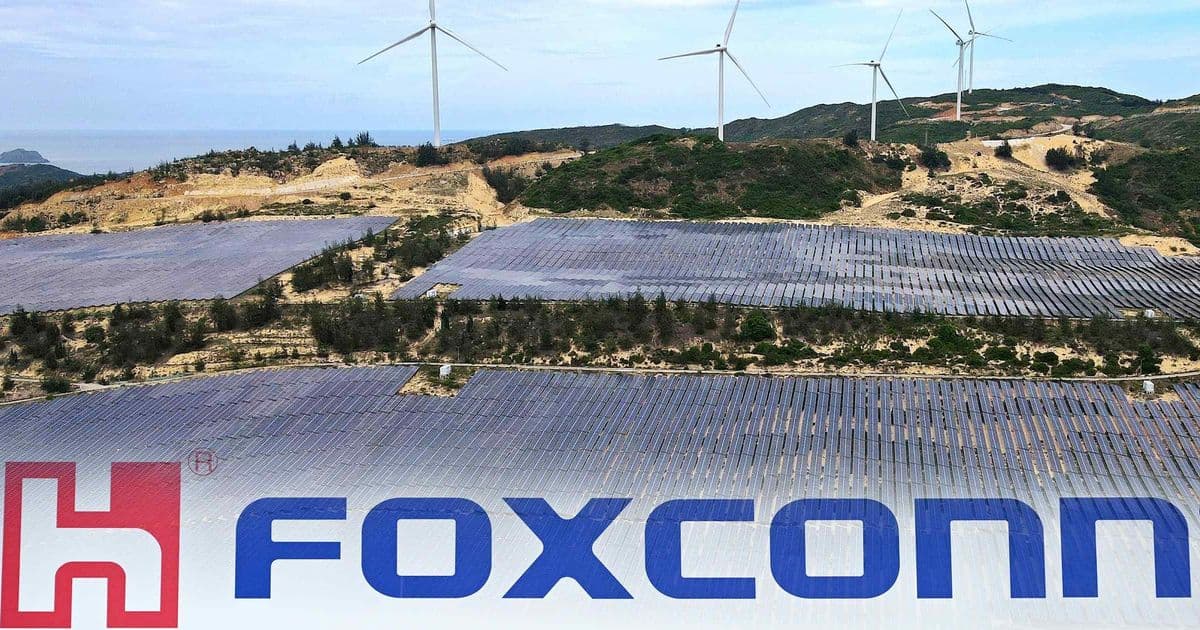
Foxconn, the contract manufacturer behind Apple devices and Nvidia AI servers, plans to build out 1 gigawatt of solar and wind capacity in Vietnam. The move ties together three pressures squeezing the electronics supply chain at once: the energy appetite of AI hardware, customer demands for clean power, and the geographic shift away from China.
Foxconn, formally Hon Hai Precision Industry and the world's largest contract electronics maker, said it will invest in 1 gigawatt of solar and wind power in Vietnam to supply its factories and the network of suppliers clustered around them. The announcement, made June 10 in Ho Chi Minh City, frames energy procurement as a manufacturing strategy rather than a sustainability footnote.
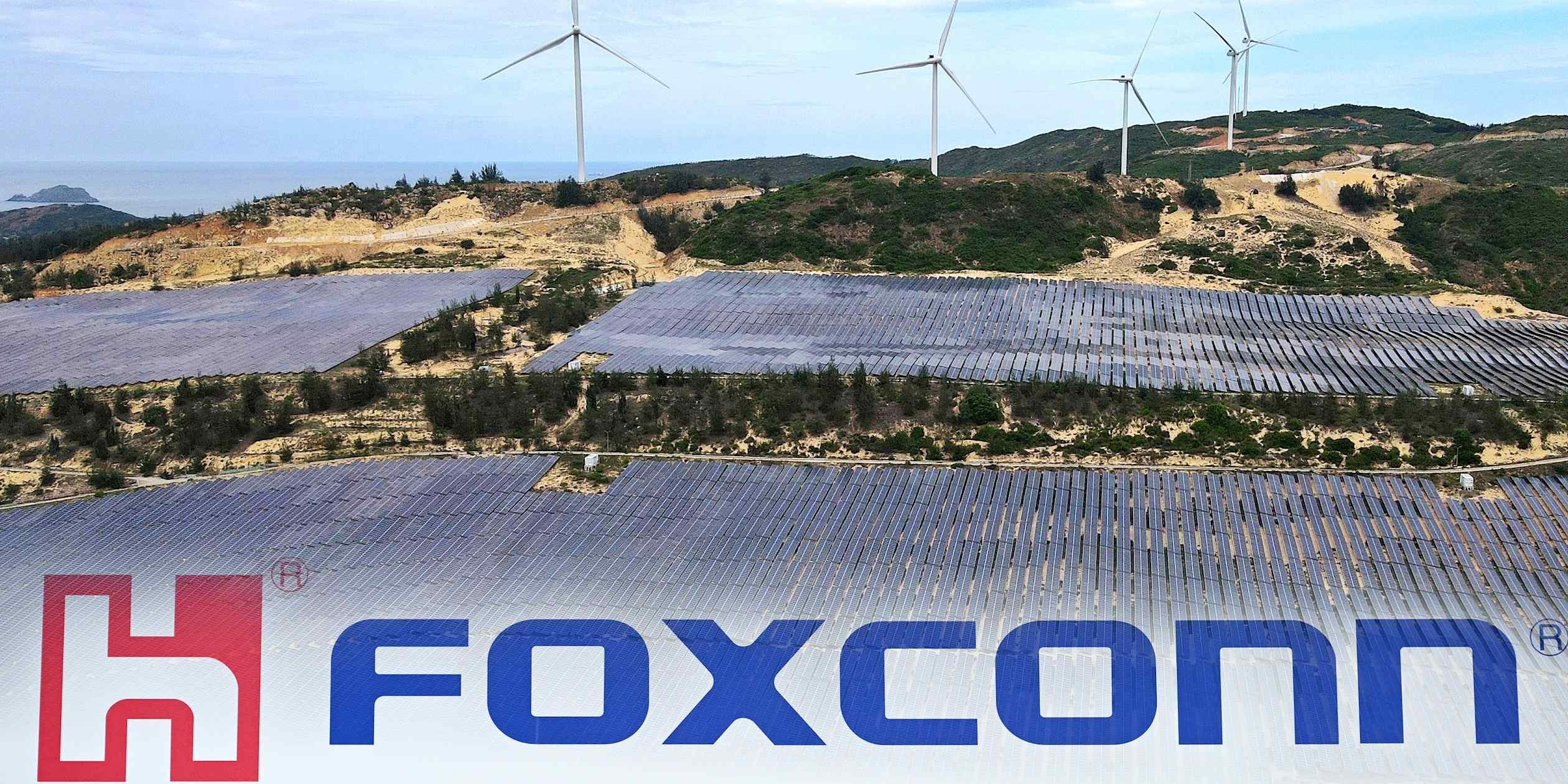
A gigawatt is a meaningful figure. It is roughly the output of a single large nuclear reactor, and enough to power hundreds of thousands of homes. For a manufacturer, committing to that scale signals two things at once: the company expects its Vietnamese operations to keep expanding, and it wants control over the electricity those operations consume rather than depending entirely on the national grid.
Why energy became a manufacturing problem
The context here is the AI hardware build-out. Foxconn assembles the bulk of Nvidia's AI server systems, and that business has reshaped the company's revenue mix. A Foxconn subsidiary recently said it aims to double its Vietnam revenue in 2026 on the strength of AI demand, and the company has begun shipping next-generation optical interconnect technology used inside AI data centers. Building and testing this hardware is power-intensive, and the data centers that eventually run it are among the most energy-hungry facilities ever constructed.
That creates a feedback problem. The same AI boom driving Foxconn's order book is also straining electricity supplies across Asia. Vietnam, which has positioned itself as the primary alternative to Chinese electronics assembly, has faced grid reliability questions during peak demand periods. A factory that cannot guarantee stable power cannot guarantee delivery schedules, and missed schedules in the Nvidia supply chain carry steep costs.
Securing 1 GW of dedicated renewable capacity is Foxconn's hedge against that risk. By generating its own solar and wind power, the company insulates critical production from grid shortfalls and locks in long-term energy costs rather than riding spot-price volatility. A separate signal of how tight things have become: a Vietnamese solar startup recently raised $15 million amid what reports described as an Iran-linked energy shock, underscoring how supply disruptions ripple into the country's power calculus.
The customer pressure underneath
The clean-energy angle is not optional for Foxconn's biggest customers. Apple has committed to carbon neutrality across its entire supply chain by 2030, and it pushes that requirement down to assembly partners. Nvidia and the hyperscale cloud companies buying its servers carry similar climate commitments. For Foxconn, renewable capacity in Vietnam is partly a procurement requirement dressed as an investment. Winning and keeping marquee contracts increasingly depends on being able to document clean power behind the products.
This is how environmental targets set in Cupertino translate into solar farms in southern Vietnam. The contract manufacturer absorbs the obligation and the capital expense, then folds it into the cost of doing business with brands that have made public decarbonization pledges.
Part of a larger Vietnam wager
The power investment fits a pattern of Foxconn deepening its Vietnamese footprint. The company has committed $250 million in the country to produce electric vehicle parts and continues to expand electronics assembly there as it diversifies away from concentrated Chinese production. Each new factory raises the company's local energy needs, which makes owning generation capacity more logical the larger the manufacturing base grows.
The broader trend is electronics giants treating energy infrastructure as a core competency. Across the sector, manufacturers and their customers are signing power deals directly rather than leaving electricity to utilities. The same week, General Motors partnered with Peak Energy on sodium-ion battery storage, and Japan's Mitsubishi HC teamed with Canada's Brookfield to buy European wind and solar assets explicitly as an AI-driven play. The common thread is that compute and the hardware behind it now drive serious capital into power generation.
For Vietnam, the arrangement is a useful one. The country gets foreign capital building out renewable capacity, additional generation feeding a strained grid even when it serves a private buyer, and confirmation that its bid to be Asia's electronics hub is holding. For Foxconn, it is a way to keep the AI server lines running no matter what the grid does, while checking the clean-energy box its customers now insist on. The investment reads less like a green gesture and more like operational insurance for a business whose growth depends on uninterrupted, low-carbon electrons.
Comments
Please log in or register to join the discussion