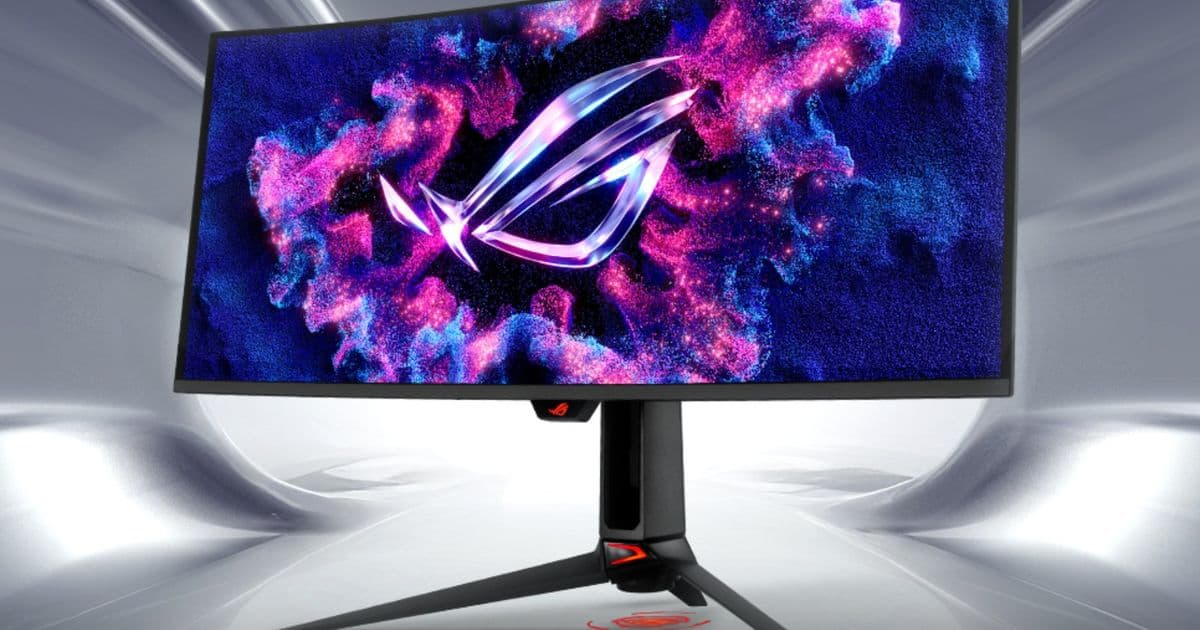
Asus put the first 5th Gen QD-OLED ultrawide on sale in the US, and it lands at $1,299. The panel finally fixes OLED text fringing, but rivals using the same screen will cost hundreds less.
Asus finally put its CES 2026 headliner on store shelves. The ROG Swift OLED PG34WCDN is now selling through Amazon and Newegg for $1,299, making it the first display you can actually buy that uses Samsung Display's 5th Gen QD-OLED panel, also called the RGB Stripe QD-OLED. The price tag also makes it the most expensive entry in a category that is about to get crowded.
What's new
The headline change sits at the sub-pixel level, and it matters more than the spec sheet suggests. Earlier QD-OLED monitors used a triangular sub-pixel layout that produced visible color fringing on text, the thin red or green halos you notice around black letters on a white background. It was the single most common complaint about QD-OLED desktop panels, and the reason a lot of people who wanted OLED for gaming kept an IPS or VA monitor around for actual work.
Samsung Display's 5th Gen panel switches to a conventional RGB stripe layout, the same arrangement LCDs have used for years. The practical result is sharper text rendering and far less fringing, which closes most of the gap between QD-OLED and traditional panels for desktop and productivity use. You still get the per-pixel contrast and instant pixel response that make OLED worth buying in the first place.
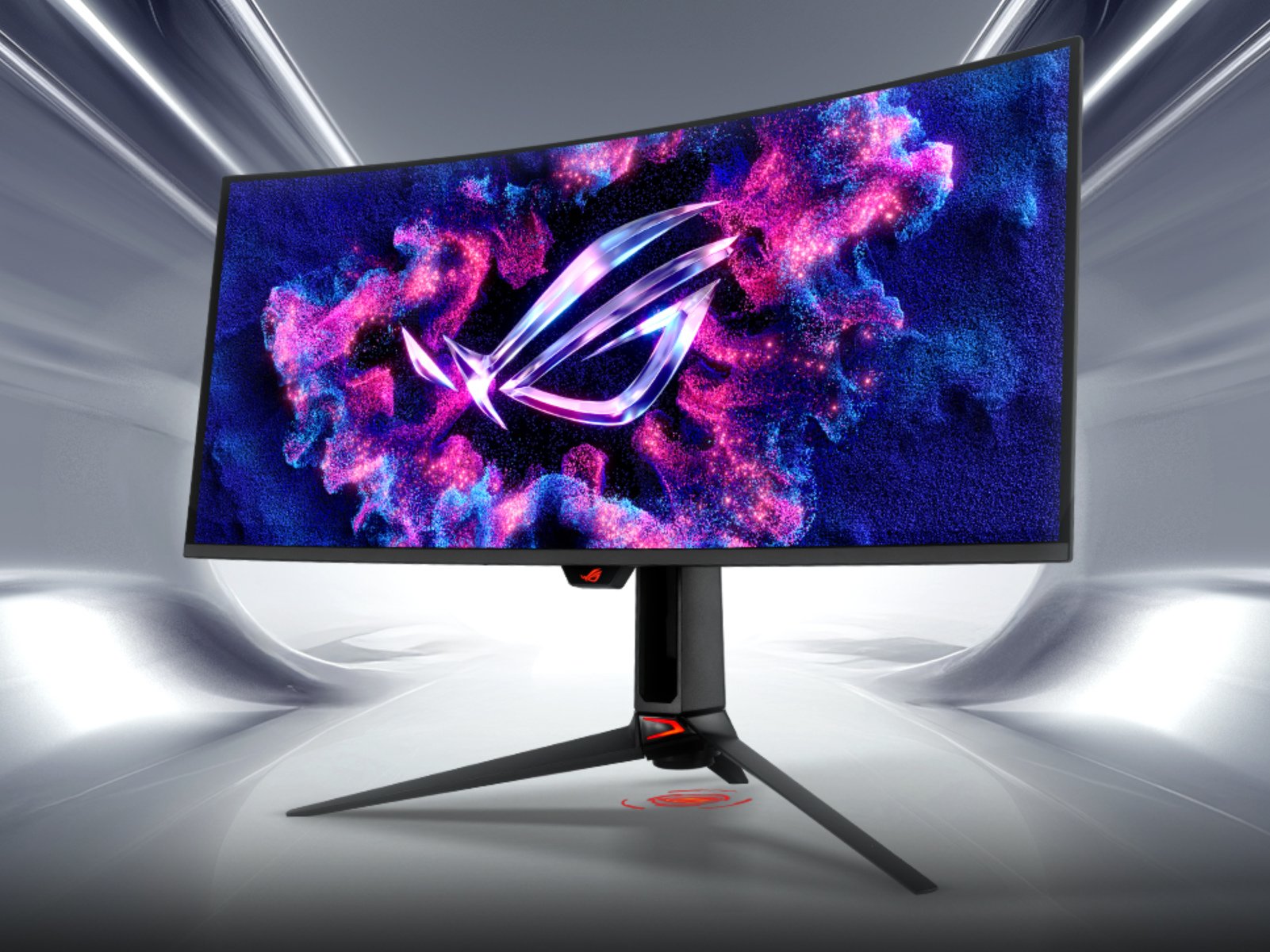
The panel itself is a 34-inch ultrawide with an 1800R curve, a 3440 x 1440 resolution, and a 360Hz refresh rate. Brightness reaches up to 500 nits full-screen and 1,300 nits peak in HDR, which are strong numbers for QD-OLED, a technology that has historically lagged Mini LED on sustained brightness. Asus also pairs it with a new BlackShield coating that the company says deepens blacks by 40% and resists scratches 2.5 times better than previous QD-OLED screens.
One caveat on that coating: it is applied by Samsung Display, not Asus, so it ships on every 5th Gen QD-OLED monitor regardless of brand. BlackShield is Asus marketing for a panel-level feature, not an Asus exclusive. Treat it as a baseline for the whole generation rather than a reason to pick this model over the others.
{{IMAGE:2}}
How it compares
Connectivity is where Asus pushes ahead of older ultrawides. The PG34WCDN includes full-bandwidth DisplayPort 2.1 with UHBR20, which provides enough headroom to drive 3440 x 1440 at 360Hz without display stream compression in many configurations. There is also a USB-C port with 90W power delivery, enough to charge most thin-and-light laptops while running the panel as a single-cable docking display. That combination is still uncommon at this resolution and refresh rate.
The pricing story is less flattering. MSI's MPG 341CQR QD-OLED X36 uses the identical Samsung panel and is listed at $899.99, a full $400 below the Asus. The catch is availability: the MSI has not actually reached store shelves yet, so for now the only way to get this panel is to pay Asus money. Buyers who can wait will likely have cheaper options soon, since the same screen is also headed to the Gigabyte MO34WQC36, the Acer Predator X34 F3, and HP's OMEN 34-inch OLED.
That list points to the real dynamic here. When several monitors share one panel, the differences come down to ports, stand quality, firmware, warranty, and burn-in coverage rather than image quality. The Asus commands a premium for its DisplayPort 2.1 UHBR20 implementation and 90W USB-C, and whether that is worth $400 over the MSI depends on how much you value single-cable laptop docking and compression-free bandwidth.
Who it's for
The PG34WCDN suits someone who wants a 34-inch ultrawide OLED right now and uses the monitor for both gaming and daily desktop work, where the RGB stripe layout earns its keep. The 90W USB-C and DisplayPort 2.1 also make it a sensible pick for anyone driving the display from a recent laptop and wanting one cable for power and video.
Everyone else should weigh patience against the early-adopter tax. The panel is excellent, but it is the same panel coming to four other brands at lower prices. If you do not need the Asus port selection and you can wait a few months, the MSI and the others will almost certainly deliver the same picture for less. Buy the Asus because of what surrounds the panel, not because of the panel itself, since that part is no longer exclusive.
Comments
Please log in or register to join the discussion