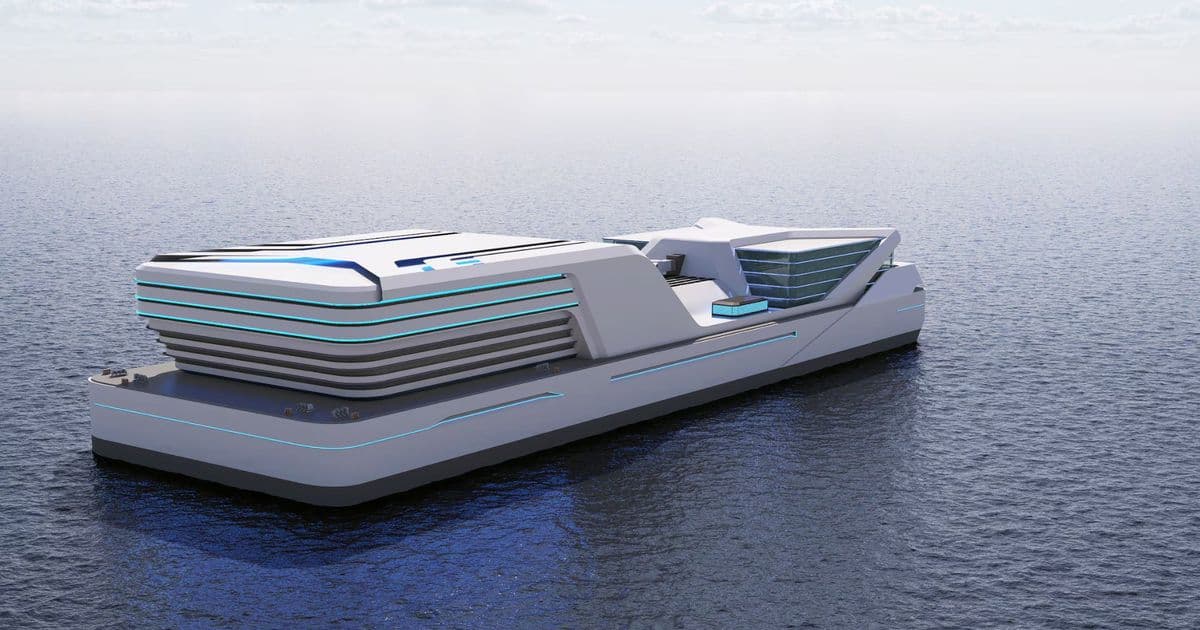
Samsung Heavy Industries signed a three-way agreement to commercialize a 50MW seaborne data center that cools with seawater and powers itself with solid oxide fuel cells, a design built to bypass the grid connection queues choking land-based AI buildouts.
Samsung Heavy Industries has signed a three-way agreement with Greek shipowner Capital Clean Energy Carriers and classification society Lloyd's Register to commercialize a 50MW floating data center, a project that pushes AI compute off land and onto the water. The deal was signed at the Posidonia shipping exhibition in Athens earlier this month, according to Chosun Biz, and it follows a separate joint development agreement between the shipbuilder and Supermicro to test whether dense AI server racks can run reliably in a marine environment.
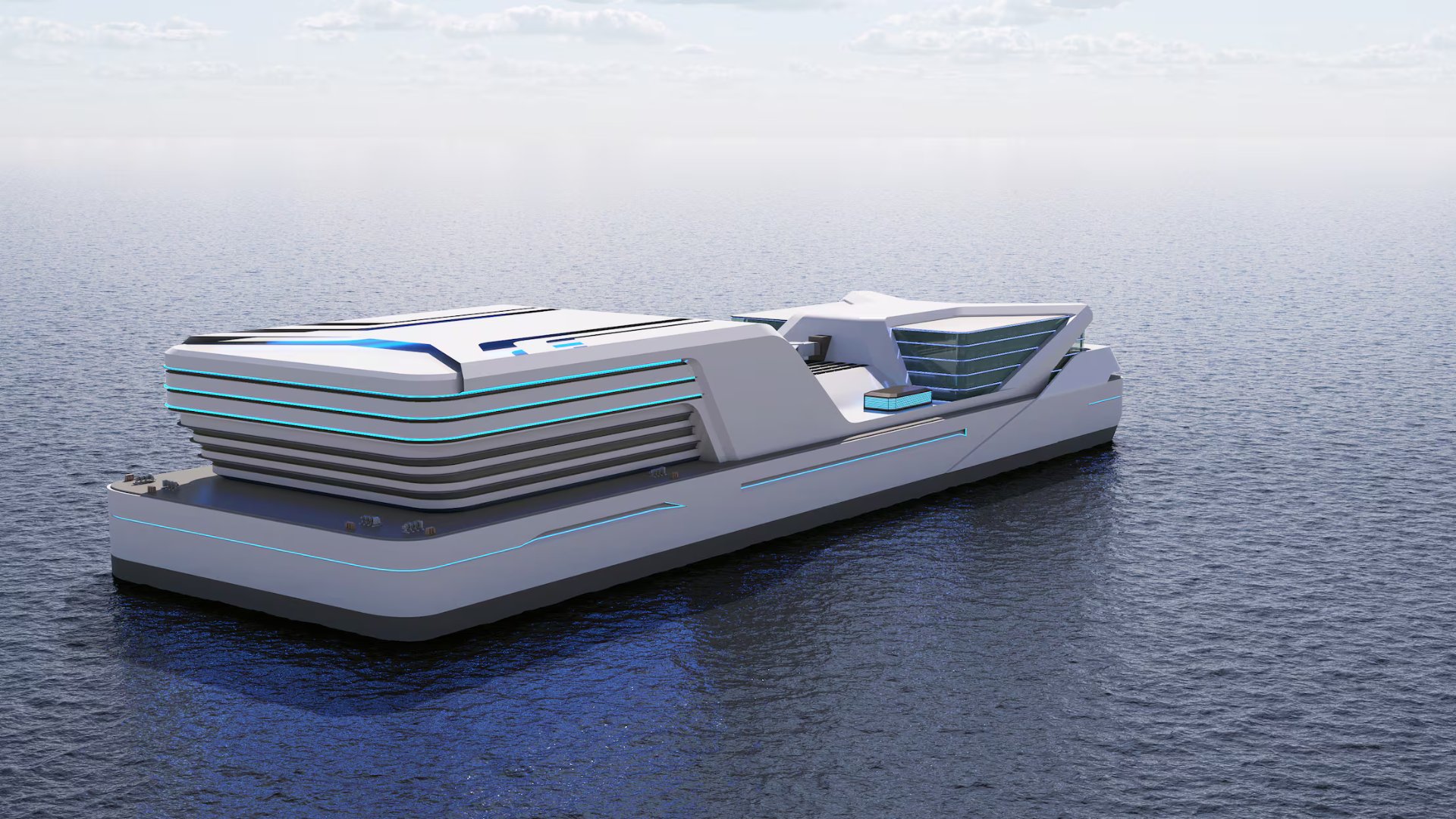
The business case here is structurally different from the way hyperscalers build today. Under the proposed model, shipowners purchase the platforms and lease compute capacity to operators on long-term contracts, the same way they charter LNG tankers and crude carriers. That moves the capital burden onto maritime asset owners who already understand multi-decade leasing economics, and it turns a data center into something closer to a financeable vessel than a fixed building.
How the platform is built
The memorandum of understanding divides the work three ways. Samsung Heavy handles technology and construction, Capital leads project sourcing and investment, and Lloyd's Register covers regulation and certification. Samsung Heavy signed a second memorandum with consulting arm Lloyd's Register Advisory covering feasibility studies and an assessment of the North American market, where grid interconnection delays have become the binding constraint on new capacity.
The 50MW design received approval in principle from the American Bureau of Shipping and Lloyd's Register in April. Power flexibility is the central engineering choice. When moored in ports or coastal waters, the platform can draw external power through subsea cables. When that is not available or not economic, it generates its own electricity using solid oxide fuel cells running on liquefied natural gas. Solid oxide fuel cells convert fuel to electricity electrochemically rather than through combustion, which gives them higher electrical efficiency than a conventional gas turbine and lets them run on LNG without a separate reforming step in many configurations. The point of the dual setup is to sidestep the grid connection queues that have stalled land-based projects across the U.S. and Europe, where waits for a high-capacity interconnect can run for years.
Cooling comes from seawater, an effectively unlimited heat sink that removes the freshwater consumption problem now drawing scrutiny at inland sites. Samsung Heavy is leaning on its floating LNG production facility experience to integrate power, cooling, networking, and safety systems into a single hull, which is the harder part of the problem than any individual subsystem.
The reliability question
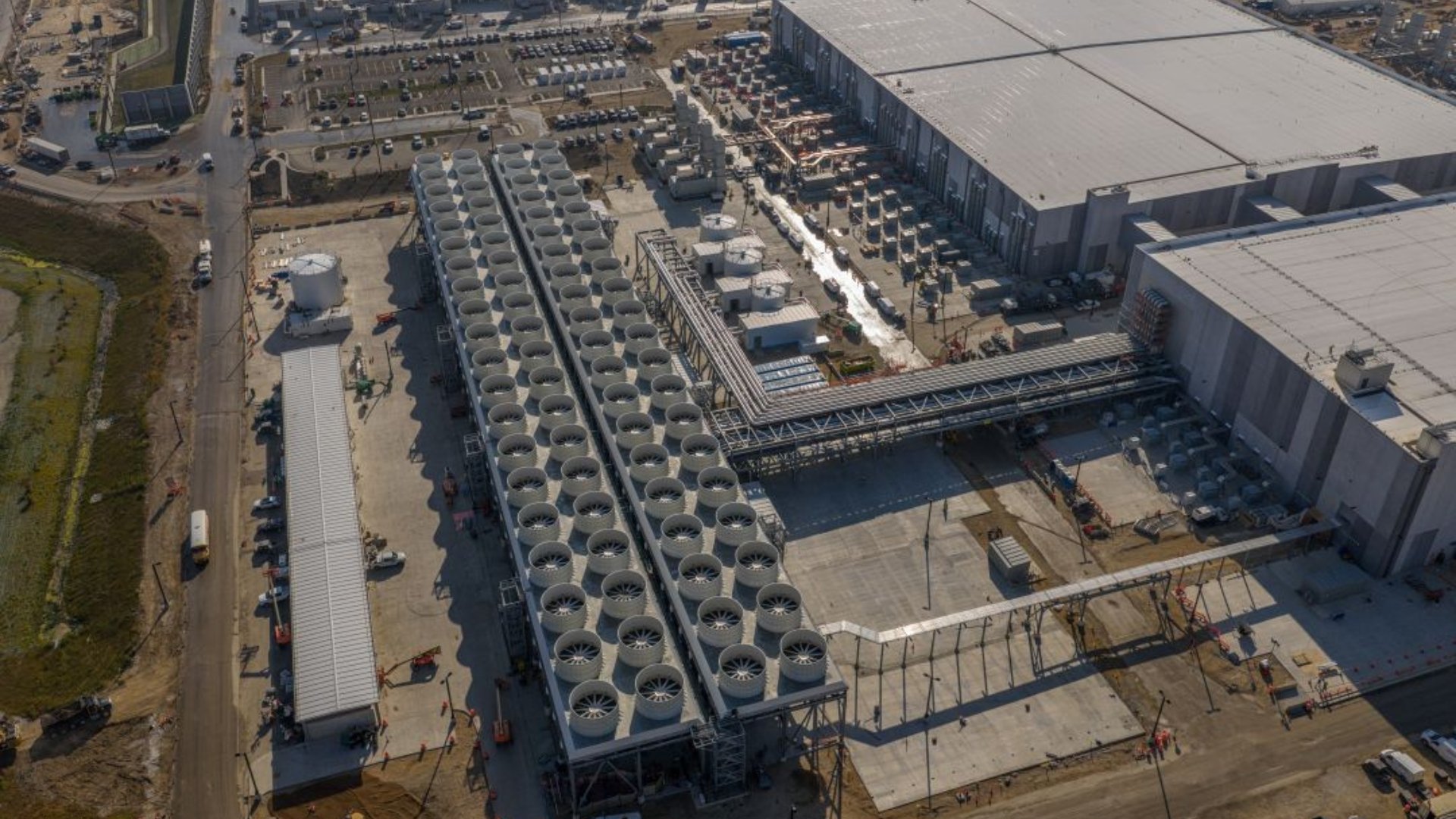
The agreement with Supermicro exists to answer a specific question: can precision AI hardware tolerate vibration, tilt, salt, and humidity over a multi-year service life? These are not trivial concerns for systems packed with GPUs running at full utilization. Samsung Heavy will develop offshore positioning control and the sealing technologies needed to keep salinity and moisture away from the electronics, while Supermicro validates server operating conditions in both river and marine environments. Salt fog corrosion and the mechanical stress of a moving platform are exactly the failure modes that data center operators design out on land, so proving the envelope is a prerequisite for any serious deployment.
Jerry Kalogiratos, CEO of Capital Clean Energy Carriers, framed the appeal around mobility, saying in Lloyd's Register's announcement that floating data centers offer "a scalable and flexible solution, with the unique advantage of mobility." A vessel can be towed to where demand or cheap power is, which no land-based facility can claim.
A crowded waterline
Samsung Heavy is not alone. Japan's MOL is building a 73MW floating data center with Karpowership for a 2027 deployment. China's 24MW subsea facility off Shanghai entered full operation last month. Nautilus Data Technologies already runs a much smaller 6.5MW barge at the Port of Stockton, California, making it the closest thing to a proven commercial reference today. The Samsung Heavy project would be among the largest if it reaches deployment, and at 50MW it sits in the range of a mid-sized terrestrial facility rather than a token pilot.
The potential anchor tenant is the most interesting open thread. Samsung Heavy signed a letter of intent with OpenAI in October, alongside Samsung's 900,000-wafer-per-month Stargate memory commitment, covering joint development of floating data centers. That ties the shipbuilder's offshore ambitions to the largest single source of AI compute demand currently in the market. To date, however, there is no signed customer contract for a named deployment, which keeps the entire effort in the demonstration and certification phase rather than construction.
The broader signal matters more than any single hull. When a major shipbuilder, a shipowner, a server vendor, and two classification societies all commit engineering and capital to putting compute on the water, it reflects how severely power availability and interconnection timelines now gate AI infrastructure on land. The grid, not the silicon, has become the scarce resource, and floating capacity is one of several attempts to route around it.

Comments
Please log in or register to join the discussion