AWS moved its first Graviton5 instances, M9g and M9gd, to general availability with up to 25% more compute, the fastest memory in the cloud, and a formally verified hypervisor. For teams weighing Arm migration or comparing cloud price-performance, this generation sharpens an already wide gap.
AWS has made Amazon EC2 M9g and M9gd instances generally available, marking the production debut of its fifth-generation Graviton processors. Announced in preview at re:Invent 2025, these are the first instances built on Graviton5, and they arrive with measured customer results rather than vendor projections. ClickHouse reported a 36% performance gain over the prior M8g generation with no code changes, Honeycomb measured 36% better throughput per core across a six-month production A/B test, and HubSpot cut MySQL query duration by up to 60%.
What changed
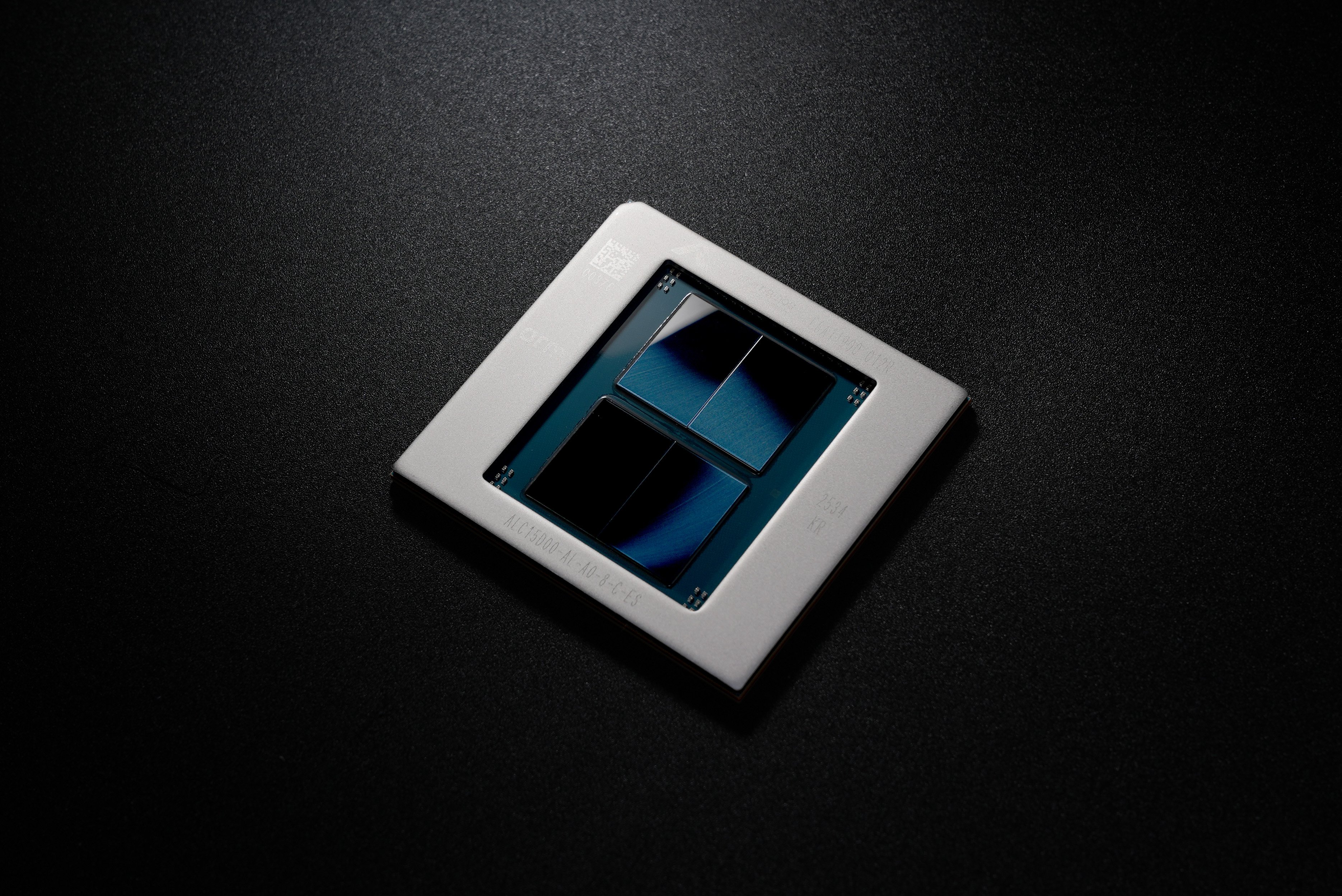
Graviton5 is a generational step, not a refresh. AWS quotes up to 25% better general compute performance versus Graviton4, with workload-specific gains reaching up to 35% for web applications, 35% for machine learning inference, and 30% for databases. The architecture behind those numbers matters more than the headline percentages. Each chip carries 192 cores, a 5x larger L3 cache, up to 33% lower inter-core latency, and DDR5-8800 memory. AWS is positioning Graviton5 as the first CPU in its fleet to support PCIe Gen6 and the latest DDR5, which it claims gives these instances the fastest memory of any processor instances in the cloud.
The cache and latency improvements are aimed squarely at a workload class AWS expects to grow fast: agentic AI. As AI systems shift from answering single prompts to running code, calling tools, evaluating results, and orchestrating multi-step tasks, the bottleneck moves from accelerators back to general-purpose CPUs. Those orchestration steps are CPU-bound, concurrency-heavy, and sensitive to memory bandwidth. Meta is deploying Graviton at scale starting with tens of millions of cores for its agentic AI efforts, which puts it among the largest Graviton customers anywhere.
Networking and storage scaled alongside compute. M9g and M9gd offer up to 15% higher network bandwidth and 20% higher Amazon EBS bandwidth on average, with up to double the network bandwidth at the largest size. Both also support Instance Bandwidth Configuration, which lets you shift up to 25% of bandwidth allocation between EBS and VPC networking. That tuning knob is useful for database read/write-heavy or logging-heavy workloads where the default split is not optimal.
The security story is the genuinely novel part. Built on the sixth-generation Nitro System, these instances introduce the Nitro Isolation Engine, a purpose-built component that mediates all access to virtual machine memory, CPU register state, and I/O through a minimal API surface. AWS applied formal verification to mathematically prove the isolation behavior holds in general, not just across test cases, and is calling Nitro the first formally verified cloud hypervisor. For regulated workloads where tenant isolation is a compliance question, a mathematically proven boundary is a stronger argument than a pen-test report.
Provider comparison
Arm in the cloud is no longer a single-vendor story. Microsoft ships Azure Cobalt 100, Google offers Axion-based instances, and Ampere-based options appear across Oracle Cloud and others. What AWS continues to lean on is footprint. After five generations and eight years of custom silicon, Graviton powers over 350 instance types serving more than 120,000 customers, plus a deep ISV partner ecosystem and broad managed-service support. The competitive gap is less about peak single-instance performance and more about how many of your services, from RDS to ElastiCache to EKS node groups, already run on Arm without you managing the silicon directly.
For teams running a multi-cloud strategy, the practical comparison is price-performance per workload, not core-for-core specs. Graviton's value has consistently come from the combination of competitive per-instance pricing and meaningful performance gains, which compounds into real cost-per-transaction reductions. The energy efficiency angle adds a second axis: AWS designed these instances to package compute, memory, and I/O to maximize energy utilization, which feeds directly into sustainability reporting that an increasing number of enterprise buyers now require.
Sizing and the M9gd difference
M9g holds a 1 vCPU to 4 GiB memory ratio across sizes from medium (1 vCPU, 4 GiB) up to 48xlarge and metal-48xl (192 vCPUs, 768 GiB). That ratio targets general-purpose work: application servers, microservices, midsize data stores, caching fleets, containerized apps, large-scale Java, and agentic AI orchestration.
M9gd adds local NVMe SSD storage, up to 11.4 TB, with 30% higher IOPS and storage performance than the Graviton4-based M8gd. The storage scales with size, from a single 59 GB device on the medium up to 3 x 3800 GB NVMe on the 48xlarge. Pick M9gd when you need low-latency local scratch space, key-value stores, media processing, batch and log processing, or caching that benefits from instance-local disk rather than network-attached EBS.
Business impact and migration considerations
The migration question is the one most teams will actually weigh. Moving from x86 to Arm has historically meant recompilation, dependency audits, and validation work. AWS is trying to remove that friction with AWS Transform, an AI-powered service that automates code transformations for migrating Java applications from x86 to Graviton, handling compatibility analysis, recompilation, dependency updates, and validation. Combined with the Graviton Getting Started Guide and the Graviton Savings Dashboard for tracking realized cost reductions, the tooling has matured to the point where a Java fleet migration is a project with predictable scope rather than an open-ended research effort.
The honest caveat is that not every workload ports cleanly. Software with x86-specific native dependencies, proprietary binaries without Arm builds, or hand-tuned assembly still needs case-by-case evaluation. The customer results AWS cites, like ClickHouse's zero-code-change gain, apply most cleanly to interpreted and JIT-compiled stacks or anything already running on open-source components with Arm builds.

M9g and M9gd are live now in US East (N. Virginia), US East (Ohio), US West (Oregon), and Europe (Frankfurt), available through Savings Plans, On-Demand, Spot, Dedicated Instances, and Dedicated Hosts. Current pricing is on the Amazon EC2 pricing page. For organizations already standardized on Graviton, the upgrade path is straightforward and the performance gains are documented. For those still running general-purpose fleets entirely on x86, this release is a reasonable trigger to run a price-performance comparison on a representative workload, because the gap between staying put and moving has widened again with this generation.
Comments
Please log in or register to join the discussion