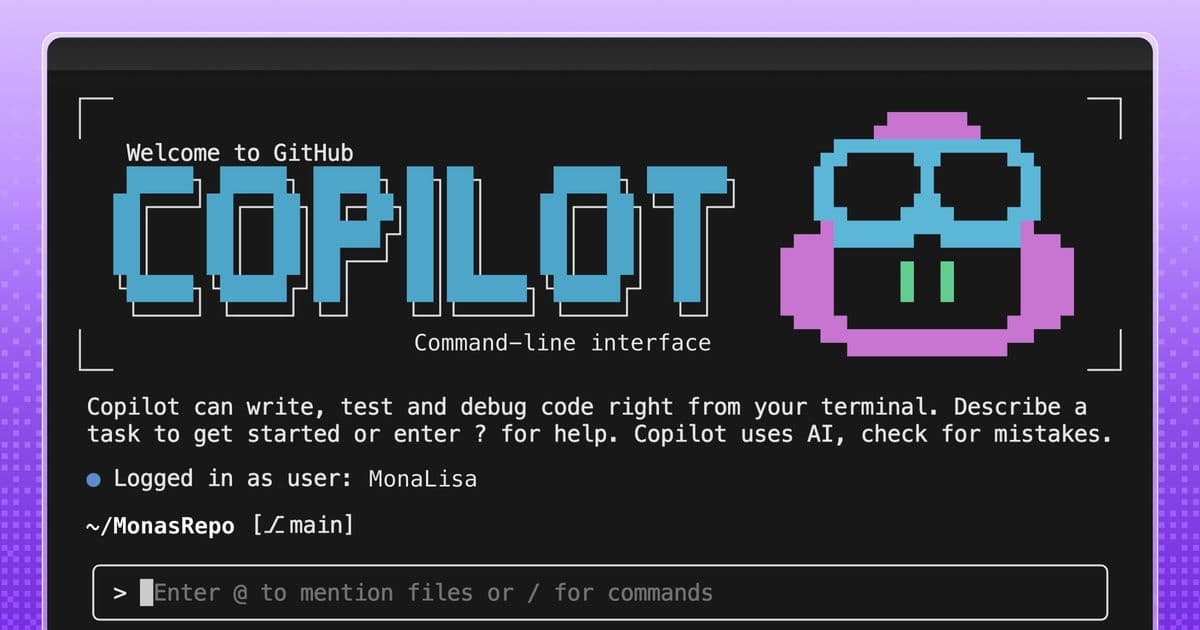
GitHub is moving Copilot CLI closer to IDE-grade code understanding by wiring terminal agents into the same Language Server Protocol infrastructure developers already rely on in editors.
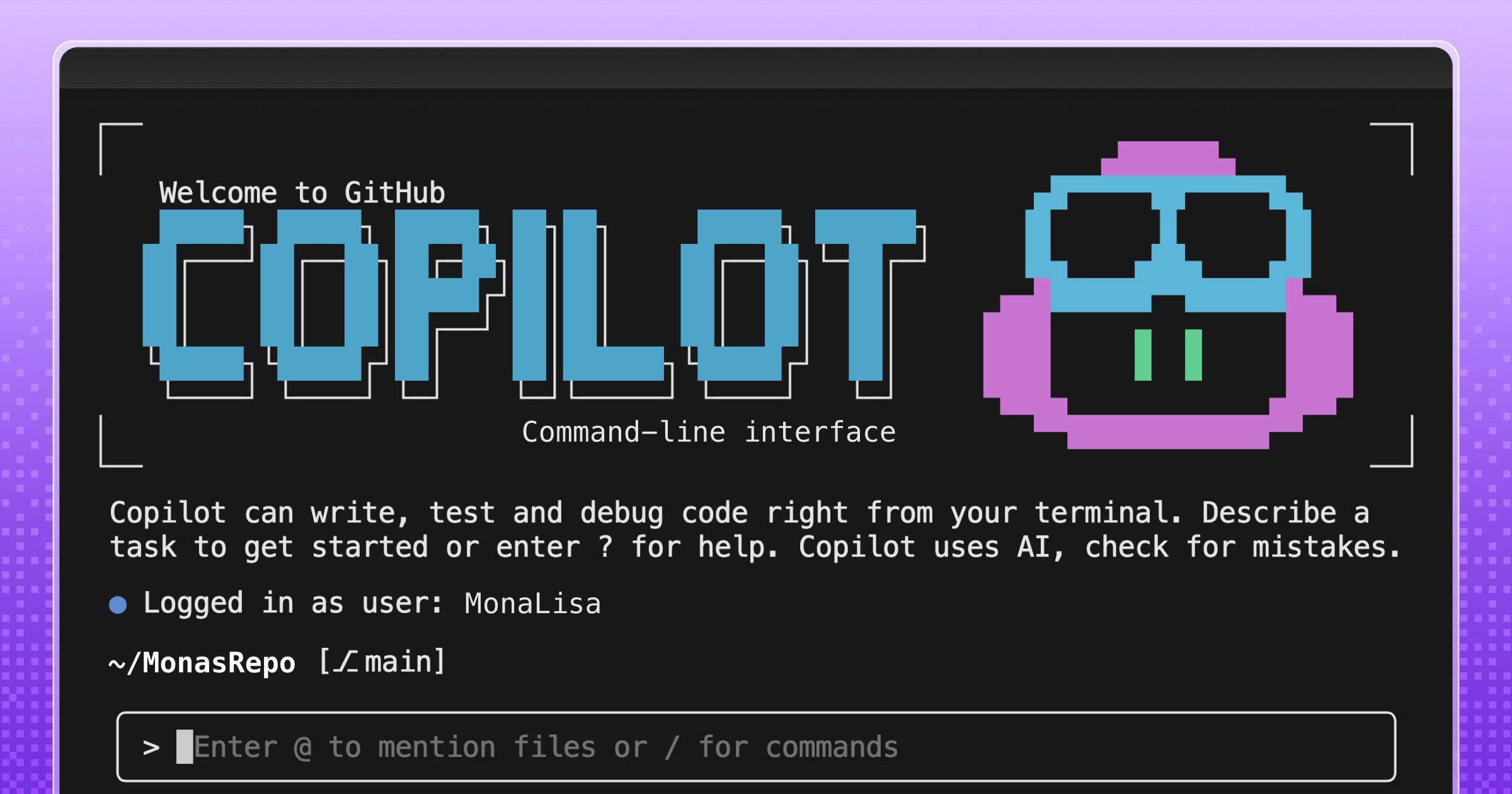
Service Update
GitHub’s June 10, 2026 update for GitHub Copilot CLI introduces an LSP Setup skill that configures language servers for terminal-based coding agents. The practical change is simple: instead of having the agent inspect source trees, dependency folders, JAR files, or node_modules with text search, Copilot CLI can ask a language server for structured answers about symbols, types, definitions, references, and documentation.
That matters because the Language Server Protocol is already the contract behind many editor features in Visual Studio Code, including go to definition, find references, hover docs, and type resolution. GitHub is effectively extending that same code intelligence pattern into the terminal agent workflow. The agent still operates in a command-line environment, but it can now consult a service whose job is semantic understanding rather than text matching.
The update is delivered as a Copilot CLI skill, not as a new standalone cloud service. The skill walks through language selection, operating system detection, server lookup, installation, configuration, and verification. GitHub’s post describes support data for 14 languages, with curated install commands, binary names, and JSON snippets. Examples include typescript-language-server for TypeScript, jdtls for Java, and rust-analyzer for Rust.
No pricing change was announced in the supplied update. From an architecture planning perspective, that means this should be evaluated as a capability expansion around GitHub Copilot CLI rather than a new billable service tier. Teams should still check their existing GitHub Copilot plans and enterprise policies, especially where CLI agent usage, repository access, and developer tooling are governed centrally.
The configuration model is intentionally plain. A user-level config can live at ~/.copilot/lsp-config.json, while repository-level config can live at lsp.json or .github/lsp.json. Repository-level configuration takes precedence, which is the right default for teams that want consistent behavior per codebase. The generated structure uses an lspServers object with command, args, and file extension mappings, for example Java mapped to jdtls and .java files.
Use Cases
The most immediate use case is dependency-aware code generation. Without a language server, a terminal agent often has to infer APIs by reading files directly. In a Java service, that can mean finding a Maven dependency under ~/.m2/repository, extracting a JAR, and searching for method names inside compiled artifacts. In a TypeScript application, it can mean walking node_modules. In Python, it may inspect installed packages inside site-packages. Those approaches can work, but they are brittle when overloads, generics, inherited members, and generated types are involved.
With an LSP server configured, Copilot CLI can make requests that resemble what an editor already does. If the agent needs the definition of a symbol, it can ask for textDocument/definition. If it needs usage sites before changing a function signature, it can ask for references. If it needs a method’s return type, hover documentation, or resolved import chain, the language server can answer from the project model rather than from loose text search.
That changes the integration pattern for AI-assisted development. The CLI agent becomes a consumer of local developer infrastructure. The language server acts like a semantic sidecar running near the repo. The package manager, build system, and dependency cache still matter, but the agent no longer has to reconstruct the project graph from scratch every time it needs context.
For event-driven and FaaS teams, this is especially relevant because serverless codebases often spread behavior across small handlers, shared libraries, schema packages, generated clients, and infrastructure definitions. A Lambda handler may call a shared domain package, publish an event to EventBridge, and rely on generated TypeScript types from an OpenAPI or protobuf contract. A text search agent can find the handler. A language-server-aware agent has a better chance of following the actual type path from handler input to event payload to downstream consumer.
A cloud architect evaluating this would look at three high-value workflows. First, refactoring handlers and shared packages across AWS Lambda, Azure Functions, Google Cloud Run functions, or similar compute services. Second, tracing event contracts across producers and consumers when the same type appears in multiple packages. Third, improving code review assistance where the agent needs to understand whether a change affects only one function or a wider dependency chain.
The repository-level configuration option is also important for platform teams. A central developer experience group can check in .github/lsp.json for a service template, making code intelligence part of the project contract. That is similar to checking in lint rules, formatting rules, test commands, or dev container settings. The goal is not only better local convenience. It is repeatability across many repositories.
This also fits managed cloud service workflows where infrastructure code and application code live together. A repo might contain Terraform, TypeScript Lambda functions, Java microservices, and Python automation. If the skill supports the relevant language servers, the CLI agent can get better answers in each part of the repo without treating all files as untyped text. Over time, this pattern could make terminal agents more useful in polyglot platform repositories.
Trade-offs
The main architectural trade-off is that better code intelligence now depends on correct local setup. The language server binary has to be installed, reachable on PATH or referenced by absolute path, and compatible with the project. That is manageable, but it introduces operational details that teams need to own. A misconfigured jdtls, stale TypeScript server, or missing Rust component can reduce the quality of the agent’s answers.
There is also a scope decision. User-level configuration is convenient for individual developers who move across many repositories. Repository-level configuration is better for teams that want predictable behavior. The repository option should be preferred for production service repos, especially where generated code, monorepo package boundaries, or nonstandard build conventions affect symbol resolution.
Language servers are not free in resource terms. They build indexes, hold project state in memory, and sometimes need build metadata. In a large monorepo, that can affect startup time and workstation performance. For cloud teams already running local emulators, containerized dependencies, test watchers, and infrastructure tools, adding language servers to the agent path should be planned rather than assumed invisible.
Security and governance deserve attention as well. The update described here uses local language servers, but the agent consuming their results is still part of an AI coding workflow. Enterprises should evaluate which repositories Copilot CLI can access, where prompts and context may flow, and how this interacts with existing GitHub Copilot business controls. The LSP integration improves local code understanding, but it does not remove the need for policy around code suggestions, secret handling, and review gates.
The biggest benefit is precision. The biggest cost is setup maturity. Teams with standardized dev environments, dev containers, or managed workstation images will get more value because they can make language-server availability predictable. Teams with highly customized local machines may see uneven results until the configuration is made repeatable.
From a broader architecture view, this is a useful signal about where coding agents are going. The agent is not replacing the project model. It is connecting to it. That is the right direction for complex cloud systems, where correctness depends on understanding types, contracts, generated clients, dependency graphs, and runtime boundaries. For FaaS and event-driven systems, the terminal agent becomes more useful when it can reason about the code paths behind small functions rather than only the files that contain them.
GitHub’s LSP Setup skill makes Copilot CLI less like a clever shell assistant and more like an architectural participant with access to structured code facts. That does not eliminate human review, test design, or deployment discipline. It does give the agent a better substrate for work that depends on real code understanding, which is exactly where cloud teams need help when services, events, and managed integrations multiply.
Comments
Please log in or register to join the discussion