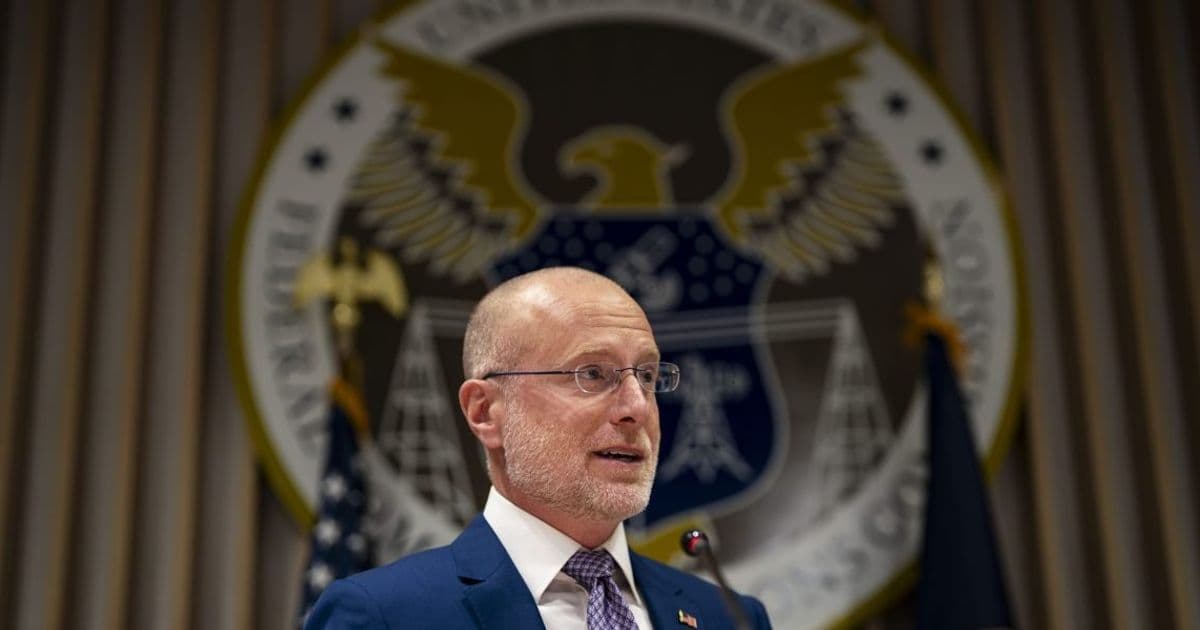
FCC Chair Brendan Carr is threatening to revoke broadcast licenses for TV stations airing content he claims is 'misinformation' about the 2020 election, raising serious First Amendment concerns.
The Federal Communications Commission is facing intense scrutiny after its chairman, Brendan Carr, issued a letter threatening to revoke broadcast licenses for television stations that aired content he claims constitutes "misinformation" about the 2020 presidential election.
Carr's letter, sent to major television networks including ABC, CBS, NBC, and Fox, demands that these companies provide information about their election coverage policies and threatens potential license revocations if they fail to comply. The FCC chair specifically cited concerns about "false claims" regarding the 2020 election results that were broadcast on these networks.
The move has sparked immediate backlash from free speech advocates and legal experts who argue that the FCC's actions represent an unprecedented government intervention in editorial decision-making. Critics point out that broadcast licenses are granted based on technical criteria and public interest obligations, not political content approval.
This controversy emerges against the backdrop of ongoing debates about media responsibility and government oversight of information dissemination. The FCC's traditional role has been to ensure technical compliance and enforce content standards related to obscenity and indecency, not to police political accuracy or editorial choices.
Legal scholars note that the First Amendment provides robust protections for editorial independence, and government agencies typically cannot condition licenses on specific content decisions. The threat of license revocation based on content disagreements raises fundamental questions about press freedom and the separation of government from editorial judgment.
Broadcast industry representatives have expressed concern about the chilling effect such threats could have on news coverage, particularly regarding controversial political topics. The potential for government retaliation based on content disagreements could fundamentally alter how news organizations approach election coverage and other politically sensitive subjects.
The FCC's actions also highlight the complex relationship between government regulation and media freedom in the digital age. While traditional broadcast media faces direct government licensing oversight, online platforms operate with greater editorial independence, creating an uneven regulatory landscape.
This development comes at a time when trust in media institutions is already at historic lows, and political polarization around news coverage has intensified. The FCC's intervention could further erode public confidence in both government institutions and media organizations.
Broadcast networks are now faced with difficult decisions about how to respond to the FCC's demands while maintaining editorial independence and protecting their First Amendment rights. The situation represents a significant test of the boundaries between government oversight and press freedom in the United States.
The controversy also raises questions about the appropriate role of government agencies in addressing concerns about misinformation. While many agree that false information can be harmful, the use of regulatory power to influence news coverage represents a departure from traditional American approaches to press freedom.
As this situation develops, it will likely prompt broader discussions about the balance between combating misinformation and preserving the fundamental principles of free press and editorial independence that have long been cornerstones of American democracy.
The FCC's actions may also have implications for other forms of media regulation and could set precedents for how government agencies approach content oversight in an increasingly polarized media environment.
This controversy underscores the ongoing tension between government authority and press freedom, particularly in an era where concerns about misinformation have led some to advocate for greater regulatory intervention in media content decisions.
Comments
Please log in or register to join the discussion