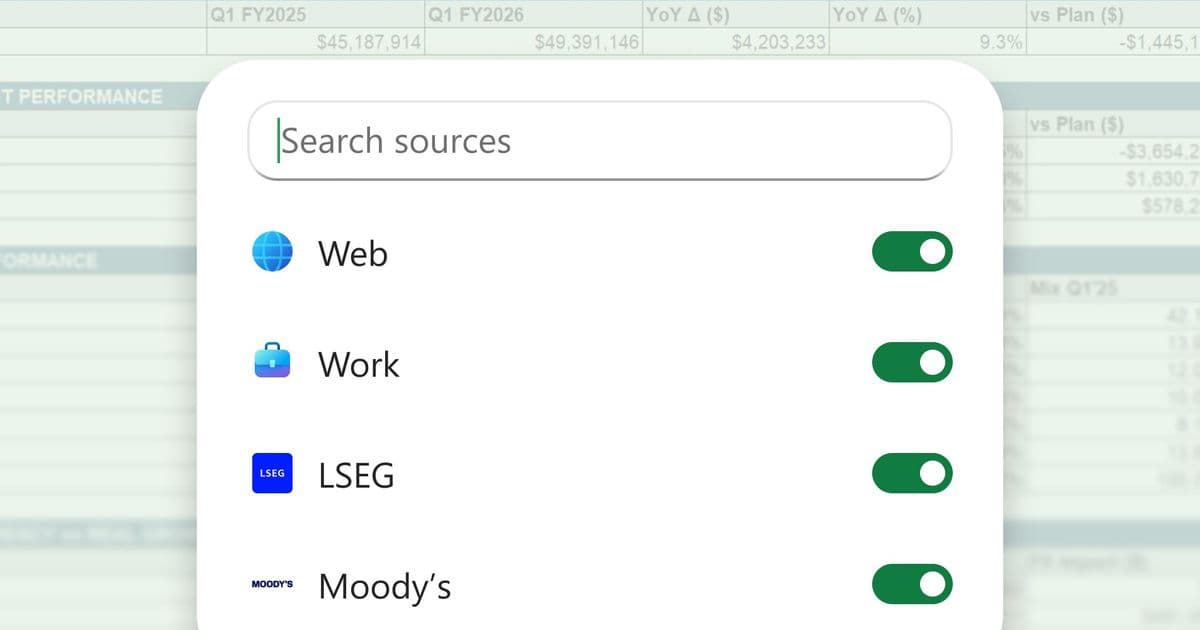
Microsoft 365 Copilot now pulls live market and credit data from LSEG and Moody’s directly into Excel via the Model Context Protocol. This article compares the new federated connectors with traditional data‑integration approaches, examines pricing and licensing implications, and outlines migration steps for finance organizations looking to modernize their analytics stack.
Federated Copilot Connectors for LSEG and Moody’s – Strategic Implications for Finance Teams
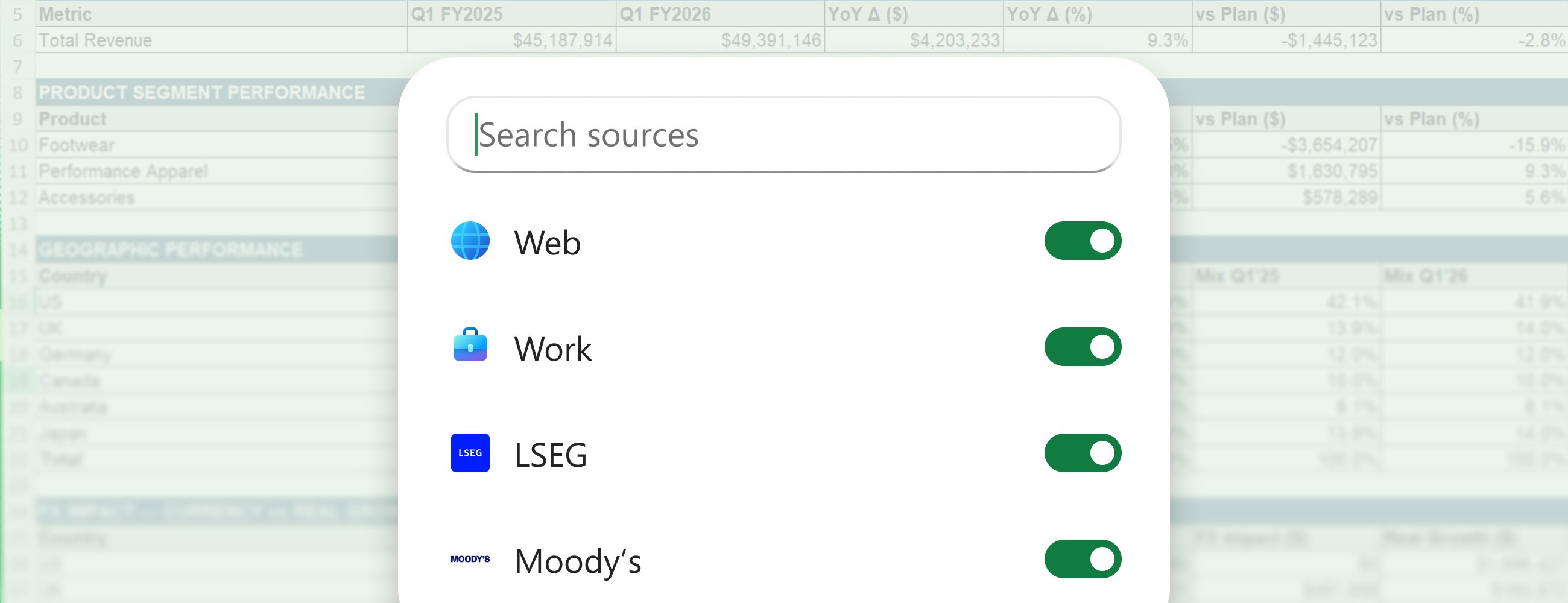
Microsoft announced that Copilot in Excel can now query live data from the London Stock Exchange Group (LSEG) and Moody’s through the emerging Model Context Protocol (MCP). The connectors are marketed as “federated,” meaning the data is fetched at query time rather than pre‑loaded into a static data lake. For finance departments that still rely on manual copy‑paste of market rates or credit ratings, this shift promises a measurable reduction in data‑staleness and operational friction.
What changed?
- Live query model – Instead of exporting CSVs or using scheduled ETL jobs, the Excel‑based Copilot prompt triggers a real‑time request to the provider’s MCP server.
- Standardized API surface – MCP defines a common schema for market data (FX, equity prices, curves) and credit data (ratings, research, news). This reduces the need for custom adapters per vendor.
- Governance baked in – Provider credentials, entitlement checks, and audit logs travel with the request, preserving compliance footprints that finance teams demand.
- Availability – The connectors are live today for Microsoft 365 Copilot customers on Excel for Web, Windows, and Mac. BYOL licensing is required for the MCP server component.
Provider comparison – LSEG vs. Moody’s vs. traditional alternatives
| Aspect | LSEG Connector | Moody’s Connector | Typical Legacy Approach |
|---|---|---|---|
| Data type | FX spot/forward rates, equity prices, swap curves, pricing feeds | Credit ratings, research reports, entity profiles, news | CSV exports, Bloomberg Terminal API, custom REST services |
| Latency | Near‑real‑time (sub‑second to a few seconds) | Near‑real-time, refreshed on each prompt | Batch loads (hourly‑daily) or manual refresh |
| Governance | Entitlement checks enforced by MCP server; audit trail stored in Azure Log Analytics | Same model; Moody’s licensing controls per‑user access | Often ad‑hoc spreadsheets, limited auditability |
| Pricing model | BYOL MCP server + per‑user Copilot license; LSEG data subscription separate | BYOL MCP server + per‑user Copilot license; Moody’s data subscription separate | Vendor‑specific subscription (e.g., Bloomberg) plus internal integration cost |
| Integration effort | Low – just enable the connector in the Sources menu, authenticate, and start prompting | Low – same workflow as LSEG | High – requires custom code, ETL pipelines, and ongoing maintenance |
| Scalability | Scales with Excel usage; MCP can be hosted on Azure Kubernetes Service for enterprise load | Same | Dependent on internal data pipelines; scaling often requires additional engineering resources |
Why the comparison matters
Finance teams typically evaluate data providers on three axes: cost, speed to insight, and risk/compliance. The federated connectors compress the “speed to insight” axis dramatically because the data is fetched exactly when the analyst asks for it. Cost‑wise, the model introduces two line items – a Copilot license (≈ $30‑$45 per user per month) and the underlying data subscription (LSEG and Moody’s pricing are published on their respective sites). Legacy solutions often bundle data access into a higher‑priced terminal subscription (e.g., Bloomberg at $20,000 per seat per year) while also incurring integration overhead.
Pricing and licensing considerations
- Microsoft 365 Copilot license – Required for any user to invoke the AI‑driven prompts. Pricing varies by enterprise agreement; the typical range is $30‑$45 USD per user per month.
- MCP server BYOL – Organizations host the MCP gateway on Azure. Microsoft recommends Azure Kubernetes Service (AKS) or Azure Container Apps. Estimated infrastructure cost for a midsize finance team (≈ 200 users) is $2‑$4 k per month, based on a modest CPU/Memory footprint.
- Data‑provider subscription –
- LSEG – Market‑data pricing is tiered; a basic FX feed starts at $1,200 USD per month, while a full pricing suite can exceed $10k USD per month.
- Moody’s – Credit‑rating data is typically sold per‑entity or per‑portfolio; a standard corporate‑rating feed for a mid‑market firm runs around $3,000 USD per month.
- Total cost of ownership (TCO) – For a 200‑user finance team, the first‑year TCO might look like:
- Copilot licenses: $720k
- MCP infrastructure: $36k
- LSEG data: $24k‑$120k
- Moody’s data: $36k
- Grand total: $816k‑$912k, compared with a traditional Bloomberg deployment that could exceed $4 M for the same headcount.
Tip: Because the MCP server is a BYOL component, you can start with a small sandbox (e.g., 2 vCPU, 8 GB RAM) and scale as usage grows, keeping early‑stage costs low.
Migration roadmap – From spreadsheets to federated Copilot
| Phase | Activities | Key Deliverables |
|---|---|---|
| 1. Assessment | Inventory existing data sources (CSV, Bloomberg, internal APIs). Map each to either LSEG or Moody’s MCP schema. | Source‑mapping matrix, cost‑benefit estimate |
| 2. Pilot | Deploy a minimal MCP server in Azure (use the free tier of Azure Container Apps). Enable the LSEG connector for a test group of 5 analysts. | Pilot workbook, latency report, user feedback |
| 3. Governance setup | Configure Azure AD conditional access for provider credentials. Enable Azure Monitor logs for audit trails. | Compliance checklist, monitoring dashboards |
| 4. Scale | Add the Moody’s connector, expand to the full finance team. Automate credential rotation via Azure Key Vault. | Full‑team rollout plan, training materials |
| 5. Optimization | Review usage patterns. Right‑size the MCP infrastructure (e.g., autoscaling rules). Negotiate volume discounts with LSEG/Moody’s. | Cost‑optimization report, updated SLA |
Practical tips for a smooth transition
- Start with “prompt‑first” design – Instead of building a massive data lake, write a few Copilot prompts (e.g., “Pull current EUR/USD spot rate from LSEG”) and validate the output.
- Leverage Excel’s Sources pane – The UI now shows a toggle for each connector; keep it off for non‑essential data to avoid accidental over‑querying.
- Implement data‑validation layers – Even though MCP returns live data, you may want a secondary check (e.g., a Power Query step that flags out‑of‑range values).
- Document source attribution – Copilot asks for confirmation before inserting data; capture the confirmation step in a hidden column for audit purposes.
Business impact – What finance leaders should expect
- Faster decision cycles – Analysts spend 30‑40 % less time gathering market inputs, freeing capacity for scenario analysis and strategic modeling.
- Improved data integrity – Live queries eliminate the “stale‑data” risk that often leads to re‑work or compliance exceptions.
- Lower integration overhead – The standardized MCP eliminates the need for bespoke adapters for each provider, reducing engineering headcount.
- Scalable governance – Centralized credential and audit management aligns with SOX and GDPR requirements without adding manual controls.
- Competitive advantage – Teams that can incorporate the latest credit rating changes or FX moves instantly are better positioned to price deals or adjust hedges in volatile markets.
Next steps for your organization
- Contact your Microsoft account team to confirm Copilot licensing and discuss volume pricing for LSEG/Moody’s data.
- Review the official MCP documentation – see the Model Context Protocol spec for schema details.
- Start a sandbox deployment using the Azure quick‑start guide for MCP: https://learn.microsoft.com/azure/mcp/quickstart.
- Train analysts on the new Sources workflow; a short 30‑minute workshop can cover credential setup, prompt crafting, and data‑source confirmation.
- Measure ROI after the first quarter by tracking time‑to‑insight metrics and comparing against the baseline spreadsheet process.
Resources
- Learn more about LSEG data offerings
- Moody’s data services for enterprises
- Federated Copilot connectors overview (Microsoft Docs)
- Copilot in Excel product page
By treating the new LSEG and Moody’s connectors as the first layer of a federated data fabric, finance organizations can replace brittle spreadsheet pipelines with a governed, AI‑enhanced workflow that scales across the enterprise. The strategic move is not just about convenience; it reshapes the cost structure, risk profile, and speed at which financial insights are generated.
Comments
Please log in or register to join the discussion