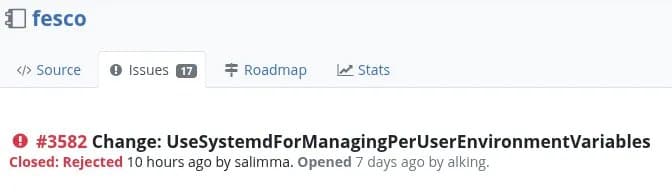
Fedora's engineering committee has rejected a proposal to use systemd for managing per-user environment variables, citing concerns about breaking systemd-less environments and container deployments.
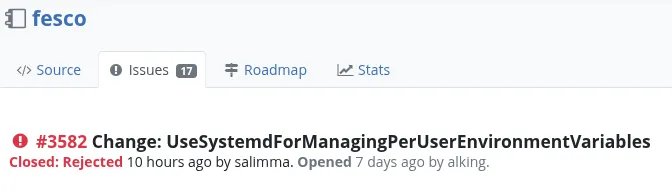
The Fedora Engineering and Steering Committee (FESCo) has rejected a proposal to use systemd's environment generator functionality for managing per-user environment variables in Fedora 45. The change, which would have replaced traditional shellrc scripts like ~/.bashrc with systemd.environment-generator, was deemed too risky for systemd-less environments and container deployments.
The Proposed Change
The proposal aimed to simplify per-user environment variable propagation by leveraging systemd's environment generator functionality. This approach would have made environment variable changes independent of a user's default shell, benefiting users who install alternative shells like Fish or Dash.
Why It Was Rejected
FESCo's primary concern centered on the potential for breaking various systems in unattended ways, particularly in systemd-less environments. Container deployments, which often run without systemd, would have been especially vulnerable to issues.
The committee emphasized that while the concept had merit, the current implementation lacked sufficient safeguards and configuration examples to ensure compatibility across different deployment scenarios.
Future Possibilities
Despite the rejection, the proposal isn't permanently dead. The FESCo committee indicated that it could be revised and resubmitted once concerns about systemd-less environments are adequately addressed and more comprehensive configuration examples are provided.
Technical Context
Currently, Fedora users manage per-user environment variables through shell-specific configuration files like ~/.bashrc, ~/.zshrc, and ~/.fishrc. This approach ensures compatibility across different shell environments but requires users to maintain multiple configuration files if they use different shells.
The systemd.environment-generator approach would have centralized this configuration, potentially simplifying management for users who frequently switch between shells or work in heterogeneous environments.
Community Reaction
The proposal generated significant discussion within the Fedora community, with 13 comments on the original announcement. While some users welcomed the potential simplification, others expressed concerns about systemd's growing footprint in user-space configuration.
Implications for Fedora Users
For now, Fedora users will continue using traditional shellrc files for environment variable management. This means maintaining separate configurations for different shells remains necessary, though it ensures maximum compatibility across all deployment scenarios, including containers and minimal installations.
Looking Ahead
This decision reflects Fedora's cautious approach to systemd integration, particularly in areas that could impact system flexibility and compatibility. As containerization and alternative init systems continue to evolve, future proposals may need to address these concerns more comprehensively to gain approval.
The rejection highlights the ongoing tension between simplification and compatibility in Linux distributions, particularly those that serve both desktop and server use cases. Fedora's decision prioritizes broad compatibility over potential convenience gains, maintaining its reputation for stability and flexibility.
The proposal's rejection also underscores the importance of thorough testing and documentation in system-level changes, especially those that could impact fundamental user-space behavior across diverse deployment scenarios.
Comments
Please log in or register to join the discussion